Film · 2017
Mother!
Darren Aronofsky
A poet, a house his wife is rebuilding by hand, and guests who will not leave.
81Punishing to sit through, out of 100 — mostly how bleak it is
- PaceBuilds, then strikes56
- ThreatMostly people72
- GoreUnflinching86
- ToneNo relief at all12
- RealityPure nightmare logic88
Era bias 80 · Modern. Texture rather than fear, so it is not part of the grade. All six scores →
The bleakest horror movies ever made →
On VHSCREAM’s six-axis scale, Mother! (2017) is most extreme on the tone axis: 12 out of 100, where 0 is a bleak, unforgiving tone and 100 is gleeful black comedy. 19% of the 320 horror works we have scored come in lower on that axis. How we score →
mother! is a 2017 horror film written and directed by Darren Aronofsky. A woman restores a burned house for her husband, a poet who cannot write, and then spends two hours failing to make his guests leave. We score it 088 on reality anchor and 086 on viscera: a pure allegory that also shows you the worst thing in it. Audiences gave it an F on CinemaScore, which almost never happens.
Scored and reviewed by VHSCREAM on · how we score
How scary is Mother!, actually?
Scored against the published rubric, here is what the numbers mean for a viewer.
Reality anchor 088 is near the top of the index. 11 works score higher. Nothing in this film obeys a rule it states: a house heals, a floor bleeds, a crowd arrives from nowhere, and a woman has a jewel instead of a heart. Viewers who need a mechanism will not be given one.
Viscera 086 is high and the last twenty minutes earn all of it. 29 works score higher. An infant killed and eaten, a woman beaten by a crowd, stabbings, a burning. Nothing is coy and nothing is lingered over for pleasure.
Tone 012 is near the floor. 60 works score lower. There is no survivor, no lesson and no relief, and the final image is the beginning of the same thing happening to somebody else.
The threat at 072 is mostly human, which surprises people. 83 works score higher. A god is at the centre of this film and he never raises a hand. Every injury in it is done by people, in a crowd, to somebody who asked them politely to stop.
Pace 056 sits just past the midpoint and the two halves are nothing alike. The first hour is a slow social creep with no shocks at all; the last half hour is a single unbroken escalation. The average is a number neither half would recognise.
Era bias 080 is modern with 16mm grain on it. Shot on film, handheld, close, with no digital sheen — but the image is contemporary rather than archaic, and we score the texture a work actually has.
On jump scares: effectively none. The frightening thing is a conversation you cannot leave.
Who should skip Mother!
Skip it if you want a plot. This is an allegory that behaves like one from the first scene. Objects mean things, people represent things, and the film will not step outside the figure to explain itself.
Skip it if the crowd will do it. The last half hour is a hundred people shouting over one person in close-up for about twenty-five minutes, and it is designed to be unbearable rather than exciting.
Skip it if the harm to an infant is a line. The baby's death and what the crowd does afterwards is the most explicit thing in the film and is not implied offscreen.
Content notes: the killing and cannibalising of a newborn, a woman beaten by a crowd, stabbing, immolation, a fatal beating between brothers, implied sexual coercion, and sustained psychological disregard played in close-up for two hours.
Watch it if you want the single most committed piece of allegorical horror a studio has financed, two of the best supporting performances of the decade, and a last act you will not need to rewatch to remember.
Mother! on six axes of fear
Every work in the index is scored on six continuous axes of fear. This is what Mother! looks like as a vector — and what each ten-point band looks like across everything else we hold.
Where that puts it: joint #6 surreal
Draft score — awaiting human review. About these scores
Disagree with a number? Say so on the axis itself. Nobody has confirmed this vector yet, and a score you challenge goes to the top of the queue to be re-scored by a human. Votes do not move the numbers — they decide what gets looked at first. How the scoring works →
Scored against the published rubric. This vector is a draft awaiting review — the method is public so you can argue with it.
Mother!: the review
A film shot entirely on one face
Matthew Libatique photographs this on 16mm, almost entirely in three set-ups: a close-up of Jennifer Lawrence, a shot over her shoulder of whatever she has just turned towards, and her point of view. There is no establishing shot of the house. There is no scene she is absent from. For roughly a hundred minutes the camera is tethered to one person's head at a distance of about a foot, and the grain of the stock keeps the image from ever settling into gloss.
That decision is the whole film. The reason mother! produces such violent reactions is not the content, which is extreme but not unusual, it is that Aronofsky gives the audience no exit from the point of view of the person being ignored. Every guest who talks over her, sits on the unbraced sink, or walks into the room she asked them to stay out of does it at the front of the frame, at conversational distance, with the camera refusing to cut away to a wide shot where it might look reasonable.
There is no score. Jóhann Jóhannsson worked on one, it was abandoned, and he took a credit for sound instead. What replaces it is the house: the creak of the staircase, the plaster, the heartbeat Lawrence hears in the walls, and about forty minutes of overlapping human noise in the last act.
The best hour of social horror anybody has made
Before any of the mythology announces itself, the first half is a comedy of manners played as a slow atrocity. A man arrives claiming to be a doctor who thought the house was a bed and breakfast. Him invites him to stay. His wife arrives the next day. She asks Mother invasive questions about her sex life in the kitchen, smokes where she was asked not to, and handles the thing she was told not to handle. Their adult sons arrive and have a fist fight about a will.
Ed Harris and Michelle Pfeiffer are extraordinary here, and Pfeiffer in particular is doing something very precise: she plays a woman whose rudeness is a kind of accurate perception. She is the only guest who notices that Mother has no life of her own, and she says so, and she is right, and she is also the reason the house will end up destroyed. Horror built out of guests who will not read the room is not new — this index holds a shelf of home invasion films — but those are about people who want to hurt you. These people want to be close to the famous man upstairs, and the hurt is incidental, which is worse.
Then it stops being a hundred people and becomes a mob
The last act is one unbroken escalation and it is where most of the walkouts happened. A poem is published; the house fills; the crowd becomes a congregation and then a market and then a militia and then an execution chamber, and the film shoots all of it in the same close-up on the same face, in a single apparently continuous rush. People who find this sequence hysterical and unearned are describing it accurately. It is hysterical, deliberately, and whether it is earned depends entirely on whether you accepted the terms in the first twenty minutes.
Jennifer Lawrence's performance is the thing that holds it. She is asked to play, for two hours, somebody whose every objection is reasonable and whose reasonableness is the trap; and then, at the end, to turn. The turn is not a scream. It is the quietest line in the film, delivered to a man she has finally understood.
Where it strains
Twofold. The allegory is airtight, which is also its limitation: once you have the key, every object in the film resolves to exactly one meaning and the film stops being able to surprise you on a rewatch. And the thesis about the muse — that the creator consumes the woman and then begins again with another — is one Aronofsky states with total conviction and very little self-suspicion. The film is harder on humanity in general than it is on the specific man at the centre of it, and it does not seem to notice.
Watch it for Lawrence, for Pfeiffer, and because it is a studio film with major stars that behaves like nothing a studio has released since. Do not watch it to relax.
The ending of Mother! explained
The ending, in full. Open it when you have seen it.
The short answer: Mother gives birth, Him hands the baby out to the crowd, and the crowd kills and eats it. Mother sets the house on fire, killing everyone in it including herself, and survives the burning as a charred body because she is not a person. Him carries her out, asks her for one last thing, and reaches into her chest to pull out a crystal. He sets it on the pedestal. The house restores itself around him and a new woman wakes in the bed and says "Where am I?". It was a cycle, and the film has shown one turn of it.
Here is what each piece of that is.
What is the crystal?
It is what is left of the previous Mother, and it is what Him needs to begin again. The film establishes it as the one object in the house that must not be touched, kept behind glass in his study, recovered from the ashes of the last fire. The Man and the Woman break it, and the room is sealed immediately afterwards — the forbidden thing, the two guests who handle it anyway, the expulsion. When Him takes a new crystal out of Mother's chest at the end, the film is saying that the thing he puts on the pedestal is her love for him, extracted, and that the house runs on it.
What does the baby scene mean?
It is the Eucharist, staged literally. Him takes the infant from his sleeping mother and passes it into the crowd of worshippers; the crowd handles it, breaks its neck, lays it on a makeshift altar and tears it apart to eat it; and when Mother finds them they tell her it is a gift and that they are sharing it. The film is not being obscure. It is pointing at a sacrament in which a congregation consumes the body of a creator's son and asking what that looks like when you are the one who carried him.
Is the whole film the Bible?
In order, yes. Him is a creator who makes a world out of nothing and loves being adored; Mother is the house and the earth that keeps it habitable; the Man and the Woman are the first guests, who break the forbidden object and are shut out of the room; their two sons fight and one kills the other in the kitchen; the crowd that arrives for the wake floods the house and bursts the plumbing; the poem Him finally writes is a book that creates a religion; the baby is the son given to the crowd. The film then runs past scripture into a war, an ideology, a refugee camp and an execution squad inside the same hallway.
So is the house the planet?
That is Aronofsky's other stated reading and both hold at once. The house is a living thing that Mother repairs with her hands and that the guests treat as inexhaustible: they take the plaster, sit on the unbraced sink until it tears out of the wall, burn things, and respond to every objection by saying there is plenty. The last act is a crowd consuming a home faster than one person can mend it, and the fire is the only thing that stops them.
Who or what is Mother?
Not a woman, which the ending settles. She is the thing that makes the creator's world liveable and the thing he uses up: she survives being beaten and burned, she has a crystal where her heart should be, and she is replaced on the final cut by somebody new in the same bed, asking the same first question. The film's cruellest joke is that she never gets a name. The credits list her as "mother", and him as "Him".
Does Mother know, at the end?
Yes, and that is the point of the last exchange. Him asks what she wants to be called and she says nothing he wants to hear; he asks for one more thing from her, and she gives it knowing what he will do with it. The film ends on her consent, which is a far bleaker note than the murder that precedes it, and the reason the last minute lands harder than the massacre.
If Mother! is your kind of fear
The eight works closest to Mother! in the index on the five axes that describe fear, the same medium first — not by genre label, and not by what other people watched.
The Substance
Coralie Fargeat · 2024 · Film
Shares explicit viscera.
83% shared signal
Infinity Pool
Brandon Cronenberg · 2023 · Film
Shares a bleak, unforgiving tone.
81% shared signal
Beau Is Afraid
Ari Aster · 2023 · Film
Shares dream logic.
79% shared signal
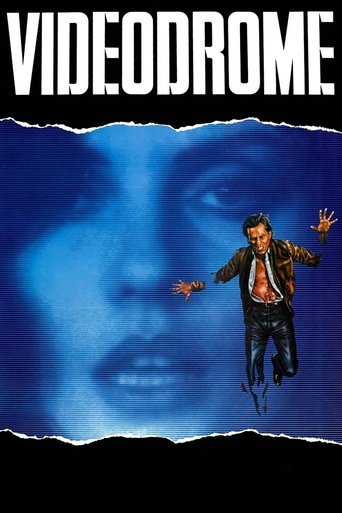
Videodrome
David Cronenberg · 1983 · Film
Shares dream logic.
79% shared signal
The Platform
Galder Gaztelu-Urrutia · 2019 · Film
Shares human monsters.
78% shared signal
The Fall of the House of Usher
Mike Flanagan · 2023 · Television
Shares explicit viscera.
79% shared signal

Threnody for the Victims of Hiroshima
Krzysztof Penderecki · 1960 · Record
Shares a bleak, unforgiving tone.
79% shared signal
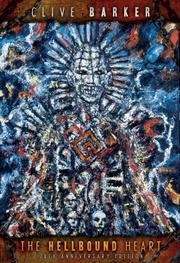
The Hellbound Heart
Clive Barker · 1986 · Book
78% shared signal
More lists like these: Movies like Videodrome
Questions about Mother!
The things people actually ask about this film, answered — including how it ends.
How does mother! end?
The crowd kills and eats the baby, Mother burns the house down with everyone in it, and Him carries her out alive and charred. He asks her for one last thing and pulls a crystal from her chest, sets it on the pedestal, and the house restores itself. A new woman wakes in the bed. The cycle begins again.
What is the crystal in mother!?
It is what remains of the previous Mother, and the thing Him needs to start a new world. It is the forbidden object the first two guests break, which is why they are shut out of the study. At the end he extracts a fresh one from Mother's chest, which tells you where the first one came from.
What does the baby scene in mother! mean?
It is the Eucharist shown literally. Him hands his newborn son to the congregation, which breaks the child's neck, lays him out and eats him, and then tells the mother it was a gift they are sharing. The film is pointing directly at a sacrament built on consuming a creator's son.
Is mother! a retelling of the Bible?
In order, yes. Him is the creator, Mother the earth, the first two guests the couple who break the forbidden thing, their sons Cain and Abel, the burst plumbing the flood, the poem a scripture, the crowd a church, the baby the son given up. The last act then runs past scripture into war and an execution room.
Who is Mother in mother!?
Not a person. She is what makes the creator's world habitable and what he spends: she survives beating and fire, carries a crystal where a heart would be, and is replaced at the end by a new woman in the same bed asking the same question. Neither she nor her husband is given a name.
Is mother! actually a horror film?
We score it 086 on viscera and 012 on tone, which puts it in the company of films nobody argues about. The confusion comes from the method: the first hour frightens through social intrusion rather than threat, and the horror arrives as a crowd rather than a monster.
What should I watch after mother!?
The Mist for the other great film about a congregation forming under pressure, Possession for the same register of domestic hysteria, and religious horror for everything here that argues with faith.
These are ranked against Mother!, not against you.
Build your own tape →