Film · 2007
The Mist
Frank Darabont
A supermarket, a white wall outside it, and a woman who knows exactly who to blame.
82Punishing to sit through, out of 100 — mostly how bleak it is
- PaceBuilds, then strikes60
- ThreatHuman and not56
- GoreExplicit76
- ToneNo relief at all6
- RealityTilts unreal48
Era bias 72 · Modern. Texture rather than fear, so it is not part of the grade. All six scores →
The bleakest horror movies ever made →
On VHSCREAM’s six-axis scale, The Mist (2007) is most extreme on the tone axis: 6 out of 100, where 0 is a bleak, unforgiving tone and 100 is gleeful black comedy. 3% of the 320 horror works we have scored come in lower on that axis. How we score →
The Mist is a 2007 horror film written and directed by Frank Darabont, from Stephen King's 1980 novella. A mist comes into a Maine town carrying things from somewhere else, and about eighty people are trapped in a supermarket with each other. We score it 006 on tone and 076 on viscera, and the tone figure is the famous one: this is the bleakest ending any studio has put on a creature feature. The creatures are not what the film is about.
Scored and reviewed by VHSCREAM on · how we score
How scary is The Mist, actually?
Scored against the published rubric, here is what the numbers mean for a viewer.
Tone 006 is near the floor of the index. 9 works score lower. A man kills his own child to spare him, minutes too early, and the film's last shot is the help arriving. There is no reading of this ending that softens it.
Viscera 076 is high. 64 works score higher. A man pulled apart by a tentacle in the loading bay, acid burns, a soldier's suicide, bodies in webs, an execution outside the doors, and a head wound in close-up.
Pace 060 sits past the midpoint. 114 works are faster. The attacks arrive on a schedule and the film never stalls, but its engine is a series of meetings rather than a chase.
The threat at 056 is split almost exactly, which is the design. The things in the mist are not human and cannot be reasoned with; the thing that gets most of the named cast killed is a congregation. The film's whole argument is that the second is the greater danger.
Reality anchor 048 is grounded. A supermarket in Maine, a military installation, a weather event. The creatures come from somewhere else and the film never explains them, but nothing in the town behaves unusually.
Era bias 072 is modern and unglamorous. Handheld, flat, over-lit, shot like television on purpose. The look is contemporary with no stylisation on it at all.
On jump scares: several, mostly in the night attack, and the loading-bay sequence is a sustained shock rather than a jump.
Who should skip The Mist
Skip it if the ending will ruin the film for you. It is the most-discussed ending in modern studio horror and a substantial number of viewers find it gratuitous. If a story killing a child in its last two minutes is a line, this is the film that crosses it.
Skip it if you came for the monsters. The effects are uneven and the film is far more interested in the people arguing in the aisles than in what is outside.
Skip it if religious fanaticism as a horror engine is exhausting rather than frightening. Mrs Carmody is in most of the middle hour and the film gives her a great deal of room.
Content notes: the killing of a child by a parent, suicide, a mob execution, religious extremism and human sacrifice, graphic creature deaths, and acid injury.
Watch it if you want the best siege horror America has made, a villain built in front of you out of ordinary ingredients, and an ending that a studio should not have let through.
The Mist on six axes of fear
Every work in the index is scored on six continuous axes of fear. This is what The Mist looks like as a vector — and what each ten-point band looks like across everything else we hold.
Where that puts it: joint #3 bleakest
Draft score — awaiting human review. About these scores
Disagree with a number? Say so on the axis itself. Nobody has confirmed this vector yet, and a score you challenge goes to the top of the queue to be re-scored by a human. Votes do not move the numbers — they decide what gets looked at first. How the scoring works →
Scored against the published rubric. This vector is a draft awaiting review — the method is public so you can argue with it.
The Mist: the review
A siege film that knows the siege is the subject
Darabont shoots the supermarket like a parliament. The geography of the store is established early and then used for politics: the loading bay where the first death happens, the stockroom where decisions get made, the pharmacy aisle where the religious faction gathers, the checkouts where the undecided stand. Every escalation outside produces a realignment inside, and the film tracks the realignment more carefully than it tracks the monsters.
Rohn Schmidt photographs it handheld, flat, slightly over-lit, with a deliberately televisual look — Darabont had been shooting a series and brought the crew — and the effect is to drain the whole thing of any glamour. There is no horror lighting in the supermarket. It looks like a supermarket with the strip lights on, full of people who have not slept, which is exactly right.
Marcia Gay Harden is the monster
Mrs Carmody is the best thing in the film and one of the most useful villains horror has produced, because the film shows you how she is built rather than asserting that she is evil. In the first act she is a local crank everybody tolerates and nobody listens to. Her method is not persuasion; it is being correct about the facts at hand. The mist is real. The things in it are real. Nobody else in the building has an explanation and she has one, and her explanation comes with instructions, which is what a frightened crowd actually wants.
By the time she is calling for a human sacrifice she has a congregation, and Darabont makes sure you have watched every individual person join it. The sequence where a soldier is handed to the crowd is the hardest thing in the film to watch, and there is not a monster in it.
Where it is weaker than its reputation
The creature effects are uneven. The CGI was made fast and cheap and some of it looks it, particularly in daylight; the tentacle sequence in the loading bay and the night assault on the windows hold up far better than anything in the open. A few characters are written as positions rather than people — the out-of-town lawyer who refuses to believe anything is a device, and André Braugher is better than the part. And the script's habit of having people announce their worldview out loud flattens a couple of scenes that the staging had already made clear.
There is also a defensible complaint about the film's view of people, which is that it does not have one so much as it has a thesis. King's novella is more interested in how quickly a social order reassembles itself; the film is interested in how quickly it curdles. Both are true about supermarkets in a crisis, and the film only shows one.
Watch it for Harden, the loading bay, the night attack, and an ending that almost nothing else in American studio horror would have been allowed to keep. Darabont reportedly gave up money to retain it.
The ending of The Mist explained
The ending, in full. Open it when you have seen it.
The short answer: five people get out of the supermarket in David's car — David, his son Billy, Amanda, Dan Miller and Irene Reppler. They drive through a ruined landscape, pass a creature the size of an office block, find David's wife dead in a web at his house, and keep going until the fuel runs out. There are four adults, one child and four bullets in the pistol. David shoots the other four, including his son, and steps out of the car to let the things in the mist take him. The mist burns off almost immediately: army units with flamethrowers, troop carriers, and trucks of survivors, including the woman who walked out of the supermarket in the first act to get to her children, with those children beside her.
Here is what that is doing.
What does the ending mean?
It is about the cost of deciding. The whole film has been an argument between a woman who offers certainty and a man who insists on acting on the evidence, and David wins that argument: he is right about the mist, right about Carmody, right that staying is death. Then he reaches the end of the evidence and acts anyway, minutes early, and the thing he was right about turns out to have an end he could not see. The soldiers arriving are not a twist and not an irony for its own sake. They are the film's last statement on judgement under pressure, which is the same subject as the supermarket.
Is that Stephen King's ending?
No. The novella ends with David, Billy, Amanda and Mrs Reppler driving south, running low on fuel, and David hearing one possible word through the static on the radio — "Hartford" — and choosing to treat it as hope. Darabont wrote the film's ending himself, and King has said publicly that he wishes he had thought of it and would have used it. The two endings are not in conflict so much as opposite answers to the same question about how much hope a story owes you.
Where does the mist come from?
The Arrowhead Project, a military installation on the ridge above the town. A soldier in the supermarket says so before he is killed: an experiment meant to look into another dimension opened a window, and something came back through it, and the mist is the atmosphere that came with them. The film is content with that much and never goes to the facility, which is the right call — the novella is equally uninterested.
Who is Mrs Carmody and why does anyone listen?
A local eccentric with a scriptural apocalypse ready-made, in a room where nobody has any other explanation. The film is careful about the order of events: she starts being believed only after the loading-bay death, gains ground after the night attack, and wins the room when the expedition to the pharmacy comes back. Every recruit she makes is somebody who has just watched the secular explanation fail. Ollie shoots her when she demands Billy, which is the only moment in the film where somebody acts early enough.
Who survives The Mist?
Nobody in David's car. He kills Billy, Amanda, Dan and Irene, and the army arrives before he can be taken. The last confirmed survivors shown are the soldiers, the people in the troop carriers, and the mother who left in the first act — the one person in the film everybody in the supermarket told to stay, who walked out alone and reached her children.
Does the ending make the rest of the film pointless?
The opposite. If David had been wrong about anything earlier the ending would be a punishment for arrogance, and it would be cheap. He is right about everything until the last decision, which is what makes the ending about the limits of being right rather than about being wrong.
If The Mist is your kind of fear
The eight works closest to The Mist in the index on the five axes that describe fear, the same medium first — not by genre label, and not by what other people watched.
Late Night with the Devil
C. & C. Cairnes · 2024 · Film
Shares a bleak, unforgiving tone.
91% shared signal
Halloween II
Rob Zombie · 2009 · Film
Shares explicit viscera.
89% shared signal
Alien: Covenant
Ridley Scott · 2017 · Film
Shares a bleak, unforgiving tone.
87% shared signal
28 Years Later
Danny Boyle · 2025 · Film
Shares explicit viscera.
86% shared signal
Halloween: The Curse of Michael Myers
Joe Chappelle · 1995 · Film
86% shared signal
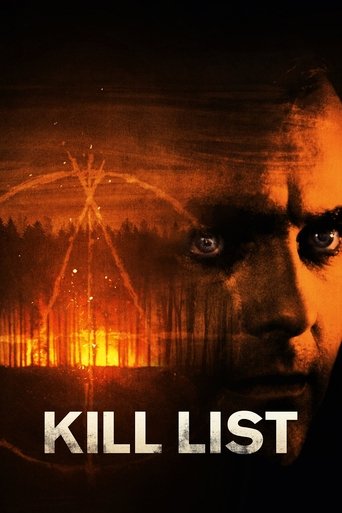
Kill List
Ben Wheatley · 2011 · Film
84% shared signal
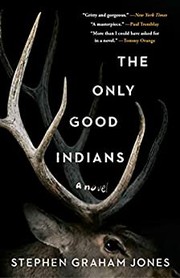
The Only Good Indians
Stephen Graham Jones · 2020 · Book
86% shared signal
The Walten Files
Martin Walls · 2020 · Web series
83% shared signal
More lists like these: Movies like 28 Years Later
Questions about The Mist
The things people actually ask about this film, answered — including how it ends.
How does The Mist end?
Five people escape by car, drive until the fuel runs out, and find no shelter. With four bullets for five people, David shoots his son and the three other adults and steps outside to be taken. The mist clears within moments: army units, troop carriers, and survivors including the mother who left in the first act.
What does the ending of The Mist mean?
It is about the limit of good judgement. David is right about everything — the mist, Mrs Carmody, the need to leave — and then acts on the evidence moments before the evidence changes. The rescue is not an irony about hope; it is the film's final argument about deciding under pressure.
Is The Mist ending the same as the book?
No. King's novella ends with the survivors driving south on low fuel while David hears one possible word on the radio and chooses to treat it as hope. Darabont wrote the film's ending himself, and King has said he wishes he had written it that way.
What is the mist in The Mist?
The result of the Arrowhead Project, a military experiment on the ridge above the town that opened a window into another dimension. A soldier in the supermarket says so before he dies. The film never visits the facility and never explains the creatures.
Who is Mrs Carmody in The Mist?
A local religious eccentric who becomes the most powerful person in the building because she is the only one with an explanation and a set of instructions. The film shows each person joining her after a secular explanation fails, and she is shot by Ollie when she demands a child be handed over.
Does anyone survive The Mist?
Nobody in David's car. The last survivors shown are the soldiers burning the mist back, the people in the troop carriers, and the mother who walked out of the supermarket alone in the first act and reached her children — the one character everybody told to stay.
What should I watch after The Mist?
Night of the Living Dead for the siege film this one is answering, mother! for the other great film about a congregation forming under pressure, and bleak horror for everything here with no exit.
These are ranked against The Mist, not against you.
Build your own tape →