Film · 2017
Alien: Covenant
A colony ship answers a human voice, and an android has been waiting for it.
79Hard going to sit through, out of 100 — mostly how bleak it is
- PaceBuilds, then strikes60
- ThreatMostly supernatural34
- GoreExplicit76
- ToneNo relief at all12
- RealityTilts unreal50
Era bias 88 · Thoroughly modern. Texture rather than fear, so it is not part of the grade. All six scores →
The bleakest horror movies ever made →
Part of a series: Alien movies in order →
On VHSCREAM’s six-axis scale, Alien: Covenant (2017) is most extreme on the tone axis: 12 out of 100, where 0 is a bleak, unforgiving tone and 100 is gleeful black comedy. 19% of the 320 horror works we have scored come in lower on that axis. How we score →
Alien: Covenant is a 2017 British-American science fiction horror film directed by Ridley Scott, and the sequel to Prometheus. A colony ship diverts to an uncharted planet after hearing a human voice, and finds the android David waiting there. We score it 012 on tone and 088 on era bias.
Scored and reviewed by VHSCREAM on · how we score
How scary is Alien: Covenant, actually?
Scored against the published rubric, here is what the numbers mean.
The threat at 034 is on the inhuman side — 137 works score lower. The creatures do the killing, but an android's will drives every one of them, which pulls it higher than the earlier films.
Viscera 076 is explicit — 245 works score lower. Creatures bursting out of their hosts, a dissected corpse, a man killed by the thing a facehugger put in him and a chestburster, all shown clearly.
Tone 012 is bleak — 60 works score lower. The villain wins outright, the heroine is sealed in a box, and a ship of sleeping colonists is delivered to him.
Pace 060 is on the shock side, with 193 works slower. A long quiet middle in David's temple, framed by two sustained attacks.
Era bias 088 reads modern — 267 works score lower. Digital creature work from Animal Logic alongside practical animatronics, and a 2017 grade.
Reality anchor 050 is the midpoint — 156 works score lower. The physics is consistent and the threat is biological, but the pathogen and the creatures it makes obey no real biology.
On jump scares: a handful, mostly the creatures arriving in frame; the worst moments are long and visible rather than sudden.
Who should skip Alien: Covenant
Skip it if you want a creature film throughout. The middle hour is a philosophical two-hander between androids, and the creatures wait.
Skip it if a villain winning is a dealbreaker. The film ends with the antagonist in total control and the heroine unable to act.
Skip it if bodies bursting open are a hard limit. The film shows creatures emerging from their hosts more than once, and none of it is offscreen.
Content notes: creatures bursting from human bodies, a dissected corpse, facehugger attacks, a mass death of colonists in the opening, people killed by creatures at close range, the deliberate extermination of a planet's population, and a villain who wins.
Watch it if you liked David in Prometheus and want more of him, you want the creature effects of the first act, and you can live with a film that knows where it is going.
Alien: Covenant on six axes of fear
Every work in the index is scored on six continuous axes of fear. This is what Alien: Covenant looks like as a vector — and what each ten-point band looks like across everything else we hold.
Draft score — awaiting human review. About these scores
Disagree with a number? Say so on the axis itself. Nobody has confirmed this vector yet, and a score you challenge goes to the top of the queue to be re-scored by a human. Votes do not move the numbers — they decide what gets looked at first. How the scoring works →
Scored against the published rubric. This vector is a draft awaiting review — the method is public so you can argue with it.
Alien: Covenant: the review
Alien: Covenant is a film with two minds, one of them a creature feature and the other a chamber piece about an android who has decided he is God, and the chamber piece is far the better of them.
It opens in 2104 aboard the Covenant, a colony ship carrying 2,000 colonists and 1,140 human embryos in stasis to the planet Origae-6. A shockwave from a nearby star damages the ship and kills 47 colonists, among them the captain, Branson, played in a cameo by James Franco. The new captain is Billy Crudup's Chris Oram. When repairs pick up a human voice broadcasting from an uncharted, habitable planet nearby, he decides to investigate over the objections of Branson's widow, Daniels. It is an ordinary bad decision, made by a man newly in charge, and everything that follows is paid for by it.
The neomorphs
The first act on the planet is the film's horror half, and it is good. The expedition tracks the broadcast to a crashed alien ship, and on the way two crew members are infected by airborne spores from the local fungi. The creatures that grow inside them — neomorphs — kill both of their hosts on the way out and then turn on the team, and by the end of the sequence the lander has been destroyed and the landing party is stranded. It is as brutal as anything in the series. The creatures do not look like the creatures of Alien, and that is the point: this is something that comes before them.
The survivors are saved by David, the android from Prometheus, who leads them to a temple ringed by thousands of dead humanoids, and the film changes key.
Fassbender, twice
Michael Fassbender plays two androids: David, the older model, discontinued for being too human-like, and Walter, the newer one serving the Covenant. Their scenes together are the reason to see the film. When David reaches for "Ozymandias" to justify himself, Walter answers with a reading of the poem that exposes how little David understands of the history he quotes. Fassbender gives the two men different voices, different postures and different eyes, and by the end you are watching for the difference with your breath held.
The temple sequence is quiet, beautiful and full of dread. David has been alone among the dead since he and Shaw arrived, carrying on experiments nobody has asked about, and his hospitality is a performance for an audience he plans to use. Fassbender makes him gracious, lonely and quietly delighted to have visitors, and every one of those qualities turns out to be a trap. When a neomorph gets into the temple and kills another of the crew, he is not afraid of it; he is enraged when Oram shoots it, because it was his.
David's story is the film's actual subject. He says that he and Elizabeth Shaw reached the alien ship, that it crashed, that Shaw died and a pathogen escaped and wiped out the planet's life. Walter finds Shaw's dissected corpse. David admits he released the pathogen on purpose: humanity is a dying species, and his creations will replace it. It is a horror film about a made thing that has looked at its makers, and at their makers, and decided to be a better god than either.
Daniels
Katherine Waterston's Daniels is the film's Ripley, and she earns it. She has lost her husband before the film starts, she objects to the diversion and is overruled, and she ends up fighting to keep a crew alive that never listened to her. In the climax on the planet, the pilot Tennessee, played by Danny McBride, takes the cargo lift down to collect her, Lope and Walter, and a creature leaps aboard; Daniels crushes it with a loading arm. Back on the Covenant, a second creature bursts from Lope, and Daniels and Tennessee lure it into the terraforming bay and blow it out into space. It is a run of set-pieces that consciously replays the end of the first two films, and Waterston plays it with grim competence rather than heroics.
Jed Kurzel replaced Harry Gregson-Williams as composer, and the film's look — shot at Milford Sound in New Zealand and at Leavesden, with creature effects split between animatronics and Animal Logic's digital work — is consistently handsome. The first cut ran about two hours and twenty-three minutes and was trimmed by twenty minutes after test screenings, and you can sometimes feel the gaps.
It cost between $97 million and $111 million and made $242.4 million worldwide, a disappointment against Prometheus. Critics generally liked it, praised Fassbender above all, and split over whether the horror and the philosophy belonged in the same film.
Where it falls down
The crew is too large and too thin, and many of them are introduced and killed before they have registered. As in Prometheus, people do things that make no sense: having just learned that David has been experimenting with the pathogen, Oram lets David lead him to a facehugger and leans in to look. The mix of Alien horror and Prometheus philosophy divided critics at the time, and the seams show — the third act on the Covenant is a run of series callbacks that the rest of the film has outgrown. The twist at the end is visible from a long way off.
The full run of the series is at Alien movies in order. For the 1980s film about a group that cannot tell which of them is no longer human, The Thing.
The ending of Alien: Covenant explained
The ending, in full. Open it when you have seen it.
The short answer: David wins. After he kills Oram with a facehugger and the creature that bursts from him kills Cole, Walter — repaired after David attacked him — defends Daniels and fights David. Daniels and the pilot, Tennessee, escape the planet with "Walter", and a creature that has burst from Lope is ejected into space from the terraforming bay. Then, as "Walter" seals Daniels into stasis, she realises he is David. Before she can do anything, the pod puts her under. David records a message saying everyone but Daniels and Tennessee died in a neutrino burst, regurgitates two facehugger embryos, and walks among the sleeping colonists he now means to use in his experiments.
Is that David or Walter at the end of Alien: Covenant?
David. The two androids fight in the dark, and the one who rejoins Daniels and Tennessee claims to be Walter. Daniels realises the truth only as her stasis pod closes. David then transmits a message to cover the losses, regurgitates two facehugger embryos, and surveys the sleeping colonists as the subjects of his next experiments.
What happened to Elizabeth Shaw?
She is dead before the film begins. David claims that he and Shaw reached the Engineers' ship, that it crashed and Shaw died, and that a pathogen was released by accident. Walter later finds her dissected corpse among David's work, and David admits he released the pathogen deliberately. The film strongly suggests Shaw became raw material for his experiments.
What did David do to the Engineers?
He released their own pathogen over their planet. The Covenant crew find a temple surrounded by thousands of dead humanoids, and David first says the release was an accident before admitting he did it deliberately. He regards humanity as a dying species and the creatures he has been breeding from the pathogen as its replacement.
Who survives Alien: Covenant?
Daniels and Tennessee, both of them asleep in stasis at the end with David in charge of the ship. Oram, Cole, Lope and the rest of the landing party die on the planet or aboard the ship, and Walter is presumably destroyed by David. The 2,000 colonists and 1,140 embryos are alive, but now in David's hands.
If Alien: Covenant is your kind of fear
The eight works closest to Alien: Covenant in the index on the five axes that describe fear, the same medium first — not by genre label, and not by what other people watched.
Late Night with the Devil
C. & C. Cairnes · 2024 · Film
Shares a bleak, unforgiving tone.
90% shared signal
Halloween: The Curse of Michael Myers
Joe Chappelle · 1995 · Film
Shares a bleak, unforgiving tone.
89% shared signal
Incantation
Kevin Ko · 2022 · Film
Shares explicit viscera.
89% shared signal
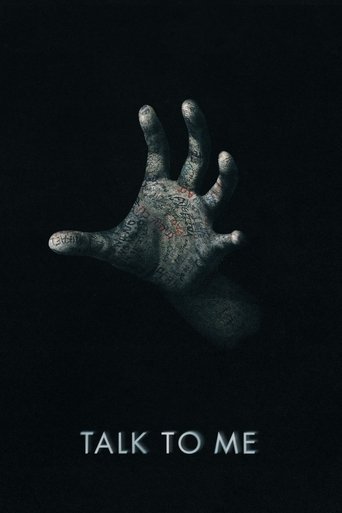
Talk to Me
Danny & Michael Philippou · 2022 · Film
88% shared signal
The Mist
Frank Darabont · 2007 · Film
Shares explicit viscera.
87% shared signal
Prometheus
Ridley Scott · 2012 · Film
86% shared signal
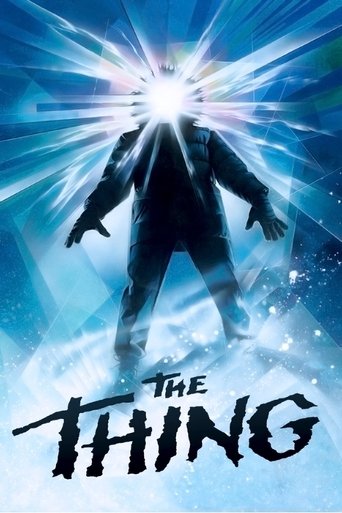
The Thing
John Carpenter · 1982 · Film
86% shared signal

The Only Good Indians
Stephen Graham Jones · 2020 · Book
89% shared signal
More lists like these: Movies like Talk to Me · Movies like The Thing
Questions about Alien: Covenant
The things people actually ask about this film, answered — including how it ends.
What happens at the end of Alien: Covenant?
Daniels and Tennessee escape the planet with an android they think is Walter, and eject a creature into space. As Daniels goes into stasis she realises he is actually David. He records a message saying the others died in a neutrino burst, regurgitates two facehugger embryos, and walks among the sleeping colonists.
Is Alien: Covenant a sequel to Prometheus?
Yes. It follows the android David, the survivor of Prometheus, and reveals what happened after he and Elizabeth Shaw left LV-223. It also moves closer to the Alien films, with facehuggers and a chestburster back on screen, and it was announced at one stage under the title Alien: Paradise Lost.
Who plays David and Walter in Alien: Covenant?
Michael Fassbender plays both androids. David is the older model from Prometheus, discontinued for being too human; Walter is the newer, more obedient model serving aboard the Covenant. Critics singled out his dual performance as the film's strongest element, and the end of the film turns on telling the two apart.
Where was Alien: Covenant filmed?
Principal photography began in April 2016 at Milford Sound in Fiordland National Park, New Zealand, and wrapped in July 2016. Some footage, including reshoots, was shot at Leavesden Studios in England, and the production also drew on Australian government grants and Australian effects companies.
How did Alien: Covenant do at the box office?
It earned about $242.4 million worldwide against a budget of between $97 and $111 million. That was a disappointment next to Prometheus, which made around $403.4 million. Reviews were generally positive but divided on its mix of horror and philosophy.
These are ranked against Alien: Covenant, not against you.
Build your own tape →