Film · 2024
The Substance
Coralie Fargeat
A better version of you, every seven days, and a bill that comes due all at once.
72Hard going to sit through, out of 100 — mostly how bleak it is
- PaceBuilds, then strikes52
- ThreatMostly people72
- GoreUnflinching94
- ToneBleak34
- RealityDream logic70
Era bias 94 · Thoroughly modern. Texture rather than fear, so it is not part of the grade. All six scores →
The goriest horror movies ever made →
On VHSCREAM’s six-axis scale, The Substance (2024) is most extreme on the viscera axis: 94 out of 100, where 0 is restraint over gore and 100 is explicit viscera. 98% of the 320 horror works we have scored come in lower on that axis. How we score →
The Substance is a 2024 body horror film written and directed by Coralie Fargeat. Elisabeth Sparkle is fired from her television aerobics show on her fiftieth birthday and takes a black-market drug that produces a younger version of her, on the condition that the two of them share one life a week at a time. We score it 094 on viscera and 072 on the threat axis. It is one of the most explicit things in this index that is also a comedy, behind Braindead.
Scored and reviewed by VHSCREAM on · how we score
How scary is The Substance, actually?
Scored against the published rubric, here is what the numbers mean for a viewer.
Viscera 094 is near the ceiling of the index. 4 works score higher. A spine opened from the inside, sustained self-injection, a body aged into ruin in close-up, a birth from a back, and a finale that empties a theatre's worth of blood onto an audience.
The threat at 072 leans human, which needs explaining for a film with a monster in it. 83 works score higher. Nothing supernatural chooses anything here. The drug has no agency, the producer is a buffoon, and every injury in the film is administered by Elisabeth to herself under rules she agreed to. The axis measures where the danger originates.
Era bias 094 is at the modern end. 317 works score lower. Immaculate 2024 digital photography, a pop-saturated grade, extreme wide-angle work and a sound design built to be felt in the chest.
Reality anchor 070 is surreal. 245 works score lower. A city, a flat, a studio, a bathroom — all solid, all specific — and one impossible drug whose consequences stop obeying biology entirely in the last half hour.
Tone 034 is bleak with real comedy in it. 89 works score higher. The subject is a woman destroying herself to stay employable and the register is frequently farce, which is the film's method rather than a lapse.
Pace 052 is just on the shock side. 151 works are slower. Two hours twenty with a long patient middle and a final act that does not stop.
On jump scares: almost none. Everything that hurts in this film is held and looked at.
Who should skip The Substance
Skip it if body horror is a hard limit. We score it 094 on viscera. There is sustained needle use, surgery on a conscious body, a spine, and a last act that is mostly fluid.
Skip it if a two-hour film built on one idea will exhaust you. The premise is fully stated in twenty minutes and the middle act repeats its cycle three times.
Skip it if you need the satire to have an opponent. Harvey is a cartoon and nobody in the film argues back, so the film's target never gets a hearing.
Content notes: extended body horror and self-surgery, needle use throughout, disordered eating and body dysmorphia, ageing depicted as mutilation, nudity in a context of exploitation, and an extremely graphic final sequence.
Watch it if you want the most committed horror film of its year, Demi Moore in the best role anybody has given her, and a last twenty minutes that goes as far as the argument requires.
The Substance on six axes of fear
Every work in the index is scored on six continuous axes of fear. This is what The Substance looks like as a vector — and what each ten-point band looks like across everything else we hold.
Where that puts it: joint #2 modern · #5 goriest
Draft score — awaiting human review. About these scores
Disagree with a number? Say so on the axis itself. Nobody has confirmed this vector yet, and a score you challenge goes to the top of the queue to be re-scored by a human. Votes do not move the numbers — they decide what gets looked at first. How the scoring works →
Scored against the published rubric. This vector is a draft awaiting review — the method is public so you can argue with it.
The Substance: the review
The rule, and the film's refusal to let anybody off it
The premise is a fable and the film is rigorous about it. Elisabeth takes the Substance and Sue comes out of her spine. One body is awake for seven days while the other lies in the bathroom on a feed, and then they swap. Respect the balance. The instruction sheet says it in those words and the voice on the phone repeats it: you are one. You cannot escape from yourself.
Everything that follows is Sue taking an extra day, and then another, and Elisabeth paying for it in her own tissue. Fargeat films the cost with a precision that makes the body horror argumentative rather than decorative: an extra night out costs a finger joint, then a vertebra, then a decade. The arithmetic is visible and it is the best thing in the film.
Demi Moore
The performance the film is built on and the reason it is not merely a provocation. Moore plays Elisabeth as somebody who has spent thirty years being looked at and knows exactly what the arithmetic of that is, and the sequence everybody talks about — getting ready for a date, checking herself, wiping the lipstick off, starting again, until she cannot leave the flat — has no gore in it and is harder to watch than the spine.
Margaret Qualley has the harder trick in some ways: Sue has to be the same person with nothing behind her yet, and she plays her as somebody doing an impression of what a desirable woman is supposed to be, which is precisely right.
The last twenty minutes
Monstro ElisaSue, the New Year's Eve broadcast, the blood. This is where the film divides audiences completely and I think the maximalism is the correct choice. The film's subject is a system that consumes women and then asks why they are not prettier about it, and a tasteful ending would have been a betrayal of its own thesis. So it goes to the broadest, wettest, most Grand Guignol register available and sprays a theatre.
What keeps it from being merely a stunt is the very last image, which is quiet.
Where it strains
Dennis Quaid's Harvey is a cartoon, by design, and the design costs the film something: there is nobody human on the other side of the argument, so the satire has no resistance. The middle act repeats its beat — Sue overstays, Elisabeth decays, repeat — three times when twice would do. And the film is two hours and twenty minutes of a premise that is fully legible in twenty.
It is still the most completely committed horror film of its year and the only one that earned its reputation entirely on craft.
The ending of The Substance explained
The ending, in full. Open it when you have seen it.
The short answer: Sue's body begins to fail on the night of the New Year's Eve broadcast, so she uses the Substance on herself, which produces a single deformed mass of both of them — the thing the film calls Monstro ElisaSue. It goes on stage in Elisabeth's old dress, the audience turns on it, and it is torn apart and sprays the theatre with blood. The mass collapses in the street. Elisabeth's face detaches from it, crawls along the pavement to her star on the Walk of Fame, settles onto it and dissolves. The last shot is a cleaner washing the star.
Here is how the film gets there.
What are the rules of the Substance?
One: the drug produces another self, who emerges from the spine of the original. Two: you switch every seven days, exactly. Three: the dormant body must be maintained on a stabilising fluid drawn from the other. And the one the film repeats until it is a verdict — you are one; you cannot escape from yourself. There is no version in which Sue wins and Elisabeth loses, because they are the same person.
What happens when Sue breaks the rules?
Elisabeth ages, grotesquely and locally. Every hour Sue steals is taken out of a specific part of Elisabeth's body: a finger, then a hand, then her spine, then her face. By the third act Elisabeth is ancient and barely mobile, and the film is explicit that this is not punishment from outside — it is the balance being drawn from the only account there is.
What is Monstro ElisaSue?
What you get when a body that is already a copy takes the drug again. Sue, falling apart on the night of the broadcast, uses the Substance on herself, and what emerges is a single mass carrying pieces of both of them — limbs, faces, Elisabeth's features in the wrong places. It puts on the dress and goes on television, because that is the only thing either of them ever wanted.
What does the ending mean?
That the deal was never between two people. The mass is destroyed by the audience it went out to please, and what survives is the one part of Elisabeth that the industry ever valued — her face — which crawls to the star with her name on it and dies there. Then somebody mops it. The film's argument is finished in that shot: the system does not notice, and the pavement gets cleaned.
Is there a villain?
Not really, and that is the film's weakest and bravest decision at once. Harvey is a cartoon of a producer. The Substance has no company, no motive and a voice on a phone. The thing doing the damage is a set of expectations that Elisabeth has internalised so completely that she administers it to herself, which is why the threat axis reads as human.
Why is it so funny?
Because Fargeat is working in a register the film never abandons: the instruction leaflet, the bathroom tiles, the chicken leg, the way Harvey eats. The comedy is not relief, it is the same material seen from one step back, and the final act is a farce played at full volume with real horror inside it.
If The Substance is your kind of fear
The eight works closest to The Substance in the index on the five axes that describe fear, the same medium first — not by genre label, and not by what other people watched.
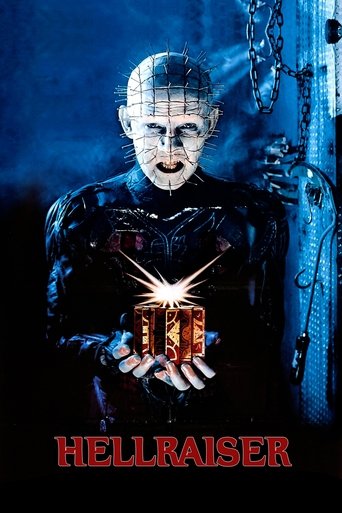
Hellraiser
Clive Barker · 1987 · Film
Shares explicit viscera.
83% shared signal
Mother!
Darren Aronofsky · 2017 · Film
Shares human monsters.
83% shared signal

Kill List
Ben Wheatley · 2011 · Film
Shares explicit viscera.
82% shared signal
Infinity Pool
Brandon Cronenberg · 2023 · Film
Shares human monsters.
82% shared signal
Terrifier 3
Damien Leone · 2024 · Film
80% shared signal
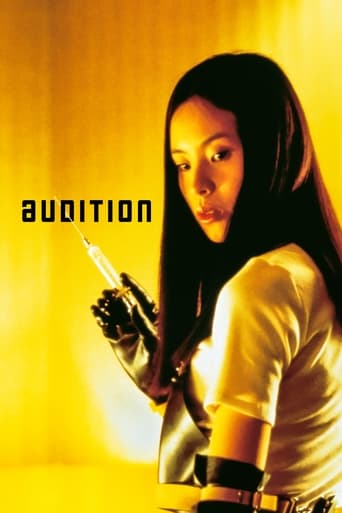
Audition
Takashi Miike · 1999 · Film
80% shared signal
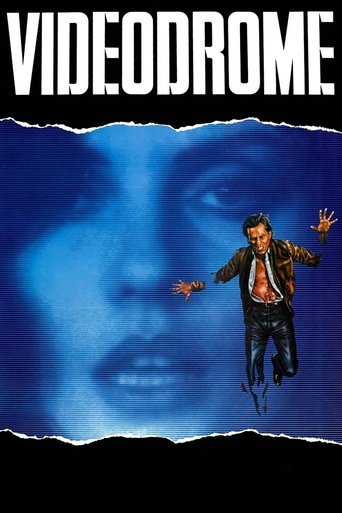
Videodrome
David Cronenberg · 1983 · Film
Shares dream logic.
79% shared signal
The Fall of the House of Usher
Mike Flanagan · 2023 · Television
87% shared signal
More lists like these: Movies like Videodrome
Questions about The Substance
The things people actually ask about this film, answered — including how it ends.
How does The Substance end?
Sue's body fails before the New Year's Eve broadcast, so she takes the Substance again and becomes Monstro ElisaSue, a single mass of both of them. It performs, the audience destroys it, and it sprays the theatre with blood. Elisabeth's face detaches, crawls to her star on the Walk of Fame and dissolves there.
What are the rules of the Substance in the film?
The drug produces another self from your spine; you switch bodies every seven days exactly; the dormant body is kept on a stabilising fluid drawn from the other. And the one the film repeats as a verdict: you are one, and you cannot escape from yourself.
What is Monstro ElisaSue?
What a copy becomes when it takes the drug again. Sue uses the Substance on herself and the result is one mass carrying both their bodies — limbs and faces in the wrong places. It puts on Elisabeth's dress and goes on television, which is the only thing either version ever wanted.
Why does Elisabeth age so badly?
Because every hour Sue overstays is withdrawn from a specific part of Elisabeth's body — a finger, a hand, her spine, her face. It is not a punishment from outside. There is one account and the balance is drawn from it, which is the film's whole argument.
Is The Substance a comedy?
Partly, deliberately, and it never stops being a horror film. We score it 034 on tone: the leaflet, the bathroom, the chicken leg and the producer are played as farce, and the material underneath them is a woman destroying herself to stay employed.
How gory is The Substance?
Extremely. We score it 094 on viscera, higher than 313 of the 320 works in this index, with conscious self-surgery, sustained needle use and a finale that covers a theatre. It is one of the most explicit films we hold.
What should I watch after The Substance?
Possession for the other great film about a body refusing its own life, Videodrome for the founding text of this kind of horror, and body horror for the subgenre and what it measures.
These are ranked against The Substance, not against you.
Build your own tape →