
Film · 1999
Audition
Takashi Miike
A romance for ninety minutes. Then a very long ten.
Most extreme on THE THREAT — human monsters at 090
On VHSCREAM’s six-axis scale, Audition (1999) is most extreme on the threat axis: 90 out of 100, where 0 is a supernatural threat and 100 is human monsters. 92% of the 105 horror works we have scored come in lower on that axis. How we score →
Audition is a 1999 Japanese horror film directed by Takashi Miike, adapting Ryu Murakami's novel. A widower lets a friend stage a fake film audition so he can find a new wife, and chooses the applicant who seems most damaged. We score it 090 on the threat axis — joint-seventh of 105 works, the human end of the scale — and 088 on viscera.
Scored and reviewed by VHSCREAM on · how we score
Audition: the review
Audition is two films joined at the hip and the first one is a melancholy romantic drama, which is precisely why the second one works.
Miike spends an hour on a quiet, well-observed, almost gentle study of middle-aged loneliness. Aoyama has been a widower for seven years; his teenage son suggests, kindly, that he should remarry; his friend Yoshikawa, a producer, proposes using a casting call for a film they have no intention of making. The audition sequence is funny and shameful in equal measure — two middle-aged men reading résumés aloud and ranking women — and the film is entirely clear that what they are doing is contemptible. Aoyama picks Asami because her application essay describes dance as a form of accepting death, and because she is, as he puts it, pure.
What makes the first hour unsettling on rewatch is that the dread is seeded in it by framing alone. A long static shot of Asami's apartment: a telephone on bare floorboards, a woman sitting motionless beside it, and a canvas sack behind her. Nothing happens. The sack moves.
The investigation is the best part of the film
Everything in Asami's history dissolves when Aoyama checks it. The record-company contact who recommended her has been dead for a year. The ballet teacher is in a wheelchair with no feet. The bar where she worked is boarded up and its owner was dismembered — a body recovered with three extra fingers, an extra tongue and two extra ears. Miike plays these as procedural discoveries, and each one is worse than anything the final act shows.
And then the structure breaks
From roughly the eighty-minute mark the film stops distinguishing memory, dream and event. Scenes repeat with different contents; Aoyama's dead wife and Asami exchange places; a conversation plays out twice with different endings. This is the deliberate design of Murakami's novel carried into the film, and it is also what lets the final sequence be unbearable without being gratuitous: you cannot settle on what is happening, so you cannot distance yourself from it.
Where it is weak
The dream logic in the last half hour tips into incoherence rather than ambiguity in two or three places. Shigehiko is thinly written and exists to resolve the climax. And the film's register-change is so complete that a significant number of viewers feel it has cheated them, which is a defensible position.
For the same sustained physical cruelty with a philosophy attached, Martyrs; for the same year's Japanese horror doing the opposite with restraint, Ringu; for the same unflinching prose cruelty, The Girl Next Door.
The ending of Audition explained
Total spoilers from here. Everything above this line is spoiler-free.
The short answer: Aoyama drinks a whisky Asami has drugged with a paralytic and wakes on the floor of his own living room, conscious and unable to move. Asami, barefoot and cheerful, explains that his wife, his son and his dog are all rivals for his attention, and that she intends to remove everything that is not her. She pushes long acupuncture needles into his abdomen and then beneath each eye, repeating a word of delight as she does it, and explains that the needles are placed so that he can feel everything and cannot pass out. Then she saws his left foot off below the knee with a length of piano wire. Shigehiko comes home, fights her on the stairs, and sprays her with the same paralytic; she falls down the staircase and breaks her neck. The final shots intercut Asami dying at the foot of the stairs with earlier scenes, and Aoyama on the floor with the needles still in him, as the two of them exchange lines that may have been spoken at any point in the film.
Who is Asami Yamazaki?
A former ballet dancer, ended by a hip injury, whose documented history does not exist. The film establishes, mostly by implication, that she was severely abused as a child — a flashback shows a man branding a child's thigh with a hot iron while she is forced to dance — and that she has since removed parts of several people. The man in the sack in her apartment is a former client or captor, tongueless, footless and earless, whom she feeds by vomiting into a bowl. She is the most frightening character Miike has filmed and she is not presented as a monster.
Is the second half of Audition a dream?
The film will not say, and that is structural rather than evasive. From the midpoint, sequences contradict each other: Aoyama goes to Asami's apartment twice with different outcomes, his dead wife appears in a hospital bed, a conversation with his son happens in two versions. The cleanest reading is that everything from the whisky onwards is real and the material before it is partly Aoyama's reconstruction; the second cleanest is the reverse. Murakami's novel is similarly constructed, and Miike has declined to adjudicate.
What is in the sack in Asami's apartment?
A living man, missing his tongue, both feet and both ears, kept in a canvas sack on the floor of an otherwise empty room. The film reveals him in one of the great long takes in horror: a static shot held for an uncomfortable period until the sack moves, then a cut to him being fed. He is the evidence that everything Aoyama suspected is both true and worse.
What does Asami say while using the needles?
A repeated, delighted word that English subtitles render variously as "deeper", "it hurts" or as the untranslated giggle kiri kiri kiri. The Japanese is onomatopoeic for a twisting, boring motion — the sound of something being screwed in. Eihi Shiina delivers it as pleasure rather than rage, and it is the single most imitated sound in modern horror.
How does Audition end for Aoyama?
Alive, paralysed, with needles in his abdomen and under his eyes and his left foot severed. Shigehiko stops Asami but not before any of that, and the film's closing minutes refuse to show a rescue, a hospital or an aftermath. The last image is a man on the floor of his own house, awake, and a dead woman at the bottom of his stairs, intercut with the two of them in bed earlier, which may or may not have happened.
How scary is Audition, actually?
Scored against the published rubric, here is what the numbers mean.
The threat at 090 is near the human ceiling — only 6 works score higher. There is nothing supernatural in the film; the structure is unreliable and the antagonist is a woman with a bag of tools.
Viscera 088 is very high — only 8 works score higher. Needles into an abdomen and under eyes, an amputation with piano wire, a dismembered body described in detail, and a man kept alive with parts removed.
Tone 016 is bleak — 40 works score lower. No reprieve, no recovery shown, and the one moment of tenderness in the last reel may be a hallucination.
Era bias 038 reads analog — 47 works score lower. 1999 Japanese 35mm, practical effects, and a plot that runs on landlines, fax paper and VHS.
Reality anchor 052 is almost exactly the midpoint, which is the only honest score for a film that stops marking the boundary between event and dream at the eighty-minute mark.
Pace 038 is on the dread side — 54 works are slower. The first hour is a romantic drama and the last twenty minutes are not.
On jump scares: one, and it is a sack on a floor.
Audition on six axes of fear
Every work in the index is scored on six continuous axes of fear. This is what Audition looks like as a vector.
Where that puts it: #5 human monsters · #7 goriest
Disagree with a number? Say so on the axis itself. Nobody has confirmed this vector yet, and a score you challenge goes to the top of the queue to be re-scored by a human. Votes do not move the numbers — they decide what gets looked at first. How the scoring works →
Scored against the published rubric. This vector is a draft awaiting review — the method is public so you can argue with it.
Who should skip Audition
Skip it if graphic torture is a hard limit. The last fifteen minutes are a sustained, deliberate, closely-filmed torture sequence and the film does not cut away from it.
Skip it if child abuse is a hard limit. Asami's history includes a flashback of a child being branded with a hot iron, and the film returns to it.
Skip it if a tonal switch will feel like a betrayal. The first hour gives no indication of what the last twenty minutes are, and that is deliberate.
Content notes: extended graphic torture including needles inserted under the eyes, an amputation by wire shown on screen, the branding of a child, a man held captive with his tongue, feet and ears removed, forced feeding by vomiting, dismemberment described in detail, animal death, and a protracted depiction of a woman being chosen for her damage.
Watch it if you want the film that defined extreme Japanese horror for the West, you can take an hour of quiet drama before the trap closes, and you want to see a horror film in which the man's behaviour in the first act is the reason the second act is not meaningless.
Where to find it
Streaming on Fandor · Screambox · AsianCrush +5 ↗Physical copies on eBay ↗Availability from JustWatch via TMDB. We earn nothing from these links.
Nothing loads from YouTube until you press play.
If Audition is your kind of fear
The eight works closest to Audition in the index, ranked by distance across all six axes — not by genre label, and not by what other people watched.

Kill List
Ben Wheatley · 2011 · Film
Shares a bleak, unforgiving tone.
82% shared signal
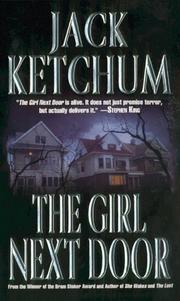
The Girl Next Door
Jack Ketchum · 1989 · Book
Shares human monsters.
75% shared signal
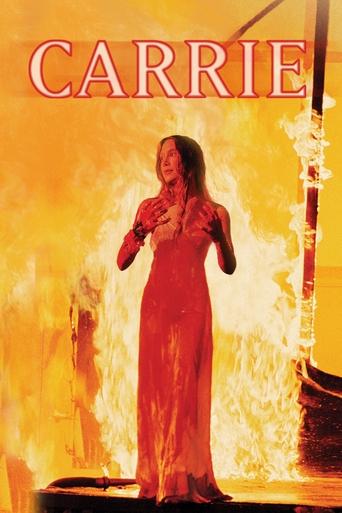
Carrie
Brian De Palma · 1976 · Film
Shares a bleak, unforgiving tone.
73% shared signal

Threnody for the Victims of Hiroshima
Krzysztof Penderecki · 1960 · Record
Shares human monsters.
73% shared signal

Martyrs
Pascal Laugier · 2008 · Film
Shares explicit viscera.
72% shared signal

Saw
James Wan · 2004 · Film
Shares explicit viscera.
72% shared signal

Tender Is the Flesh
Agustina Bazterrica · 2017 · Book
69% shared signal

Midsommar
Ari Aster · 2019 · Film
68% shared signal
Questions about Audition
The things people actually ask about this film, answered.
What happens at the end of Audition?
Asami drugs Aoyama with a paralytic, pushes acupuncture needles into his abdomen and under his eyes, and saws off his left foot with piano wire. His son comes home, fights her, sprays her with the same drug, and she falls down the stairs and breaks her neck. The final scenes intercut her death with moments that may never have happened.
Who is Asami in Audition?
A former ballet dancer whose entire documented history turns out to be false. The film implies severe childhood abuse, including a branding, and establishes that she has mutilated several people — including the man she keeps alive in a sack in her apartment, missing his tongue, feet and ears.
Is the second half of Audition a dream?
The film refuses to say. From the midpoint, scenes contradict one another — two different visits to Asami's apartment, a dead wife in a hospital bed, a conversation in two versions. Both the novel and the film are built to leave it unresolved.
What is in the bag in Audition?
A living man kept in a canvas sack, with his tongue, both feet and both ears removed, whom Asami feeds by vomiting into a bowl. The reveal is a long static shot held until the sack moves, and it confirms that everything Aoyama has discovered is true.
How graphic is Audition?
Extremely. We score it 088 on viscera, near the top of our index. The needle sequence and the amputation are shown directly and at length, and the film's reputation for walkouts at its 2000 festival screenings is deserved.
Is Audition based on a book?
Yes — Ryu Murakami's 1997 novel of the same name. The novel's scrambled chronology and its refusal to confirm which events happened are the source of the film's structure, and Miike keeps both.
These are ranked against Audition, not against you.
Build your own tape →