Television · 2013
Hannibal
Bryan Fuller
Murder arranged as still life, on network television, at ten in the evening.
71Hard going to sit through, out of 100 — mostly how bleak it is
- PaceSlow burn24
- ThreatPeople, entirely92
- GoreUnflinching86
- ToneBleak20
- RealityDream logic70
Era bias 82 · Modern. Texture rather than fear, so it is not part of the grade. All six scores →
On VHSCREAM’s six-axis scale, Hannibal (2013) is most extreme on the threat axis: 92 out of 100, where 0 is a threat that is not human and 100 is human monsters. 89% of the 320 horror works we have scored come in lower on that axis. How we score →
Hannibal is a television series that ran for three seasons from 2013, developed by Bryan Fuller, with Mads Mikkelsen as Hannibal Lecter and Hugh Dancy as the FBI profiler who can reconstruct a murder by standing in it. We score it 092 on threat, almost the ceiling of the human end, and 086 on viscera — and it was broadcast on network television, which remains difficult to believe.
Scored and reviewed by VHSCREAM on · how we score
How scary is Hannibal, actually?
Scored against the published rubric, here is what the numbers mean for a viewer.
Threat 092 is the signature and is near the ceiling. Only 23 works score higher. Nothing in three seasons is supernatural. The stag, the Wendigo and the dream sequences are all inside Will's head, and every death is caused by a human being with a plan.
Viscera 086 is extraordinary for broadcast television. Only 29 works score higher. Bodies as sculpture, surgery performed on conscious people, cannibalism as cookery, and one sequence involving a bone saw that should not have been permitted on NBC.
Pace 024 is deep in dread. 257 works are faster. This is a slow, formal, deliberately hypnotic series. Episodes end without resolution and the plot moves at the speed of two men's conversations.
Reality anchor 070 is high for a show with no supernatural content. 245 works score lower. Will's subjectivity takes over the camera repeatedly, and the series treats hallucination as photography rather than as a signposted dream.
Tone 020 is bleak, with more jokes than you remember. 136 works score lower. Almost everybody Will loves is destroyed and the series finds Hannibal's manners genuinely funny throughout, which makes it worse.
Era bias 082 is modern. 102 works score higher. Digital, glossy, colour-graded within an inch of its life — and that polish is doing thematic work rather than decorating.
On jump scares: very few. The series unsettles by composition and by holding shots too long.
Who should skip Hannibal
Skip it if cannibalism as cuisine will not be funny or bearable. It is a running motif, filmed as food photography, and the series expects you to find it both appalling and appetising.
Skip it if you need television to resolve. Three seasons, cancelled, ending on a fall with no confirmed outcome.
Skip the first six episodes at your peril and the Italian stretch without one. Season one takes a while to stop being a procedural; season three's first half is the one place the show is genuinely boring.
Content notes: extreme and stylised gore throughout, cannibalism, surgery on conscious victims, the killing of families including children, animal death, psychological abuse by a therapist, and sustained manipulation of a mentally ill man by his doctor.
Watch it if you want the most beautiful thing in this index and one of the most explicit, you can take three seasons at a dream's pace, and a horror series whose subject is the pleasure of looking sounds worth thirty-nine hours.
Hannibal on six axes of fear
Every work in the index is scored on six continuous axes of fear. This is what Hannibal looks like as a vector — and what each ten-point band looks like across everything else we hold.
Where that puts it: #1 goriest · #4 surreal · joint #6 bleakest · joint #6 slow burn
Draft score — awaiting human review. About these scores
Disagree with a number? Say so on the axis itself. Nobody has confirmed this vector yet, and a score you challenge goes to the top of the queue to be re-scored by a human. Votes do not move the numbers — they decide what gets looked at first. How the scoring works →
Scored against the published rubric. This vector is a draft awaiting review — the method is public so you can argue with it.
Hannibal: the review
The most beautiful horror ever put on television, and that is the problem it solves
Hannibal should not have worked. A prequel to a film everybody had seen, on NBC, at ten o'clock, about a cannibal. What Fuller did instead was make an opera: slow, scored with Brian Reitzell's industrial scrape, lit like a Dutch still life, and willing to hold on a corpse arranged into a mushroom bed or a totem pole or an angel with its lungs spread as wings for long enough that you notice the composition before you notice the atrocity.
That is the series' actual argument. It is about aesthetics as a moral failure — about the fact that Hannibal's tableaux are beautiful, that the show makes you look at them, and that looking is a kind of participation. Will Graham's whole gift is empathy, and his whole curse is that empathy with a killer means reconstructing the pleasure too. By the end of the second season the series has stopped being about catching anybody.
Mikkelsen and Dancy
Mikkelsen made the correct decision, which was not to compete with Hopkins. His Hannibal is not theatrical; he is courteous, faintly bored, and physically wrong in ways you cannot place — the stillness, the way he eats. The performance is funnier than people remember and it is never winking.
Dancy has the harder role and is the reason the series is horror rather than crime. Will's deterioration in the first season — the encephalitis, the sleepwalking, the stag, the lost hours — is filmed as subjective breakdown rather than as plot, and the show commits to his point of view so completely that the audience loses track of what happened alongside him. Gillian Anderson, Laurence Fishburne and Caroline Dhavernas all do more than the scripts strictly require.
Where it strains
The case-of-the-week structure in the first season is often silly: a killer who makes a totem pole, a killer who grows mushrooms in people, a killer who turns people into a cello. Several are memorable images attached to no character at all. The third season splits in half and the Italian stretch is gorgeous and inert — a great deal of Florence, very little happening — before the Red Dragon material arrives and restores the show in its last six episodes.
And the dialogue, in bad patches, mistakes abstraction for profundity. Characters say things like "the mathematics of human behaviour" and the series means them.
Why the threat is 092
Because there is nothing supernatural in it anywhere. The stag is a hallucination, the Wendigo is a hallucination, and every single thing that happens is done by a person with a scalpel. We score a great many prestige horror series lower on that axis because they keep a ghost somewhere. Hannibal has nothing but people, and it sits with Psycho at 096 and Scream at 096 rather than with anything on television.
The ending of Hannibal explained
The ending, in full. Open it when you have seen it.
The short answer: Will and Hannibal kill Francis Dolarhyde together on a clifftop at Hannibal's house, soaked in blood. Will tells Hannibal it is beautiful. Then he embraces him and pulls them both over the edge into the sea. The series was cancelled and the fall is the last thing in it, deliberately left as an ending and as an opening.
Here is how the series gets there.
Does Will catch Hannibal?
Yes, twice, and neither time is the point. The second season ends with Hannibal having been identified and escaping to Europe, leaving almost everybody Will cares about bleeding on a kitchen floor. The third season's first half is a pursuit, and when Hannibal is finally taken it is because he surrenders — he turns himself in so that Will cannot stop thinking about him.
What is the Red Dragon arc?
The last six episodes adapt Thomas Harris's Red Dragon: Francis Dolarhyde, the Tooth Fairy, murdering families and believing he is becoming a dragon. Richard Armitage plays him as genuinely pitiable, and the series uses him to force the question it has been avoiding — Will needs Hannibal's help to catch him, and asking for it is the thing he cannot come back from.
What happens on the cliff?
Hannibal is released as bait, Dolarhyde attacks them both at Hannibal's cliffside house, and the two of them kill him together in a sequence shot like a dance and scored like a love scene. Afterwards Will says "it's beautiful" — admitting, finally, that he has always seen it that way. Then he holds Hannibal and goes over the cliff, taking them both.
Do they survive?
The series does not say. There is no body, the drop is survivable in the way television drops are, and a post-credits scene shows Bedelia Du Maurier at a dinner table with her own leg served to her and three places set. Fuller intended it as both a conclusion and a door. The show was cancelled before he could use it.
Is it worth watching if there is no fourth season?
Yes. The fall is a real ending — the whole series has been building to Will admitting what he is, and he admits it and then acts on it. Nothing is unresolved except whether two men survived a fall, and that is the least interesting question in it.
If Hannibal is your kind of fear
The eight works closest to Hannibal in the index on the five axes that describe fear, the same medium first — not by genre label, and not by what other people watched.
Yellowjackets
Ashley Lyle & Bart Nickerson · 2021 · Television
Shares human monsters.
83% shared signal
The Platform
Galder Gaztelu-Urrutia · 2019 · Film
Shares explicit viscera.
89% shared signal
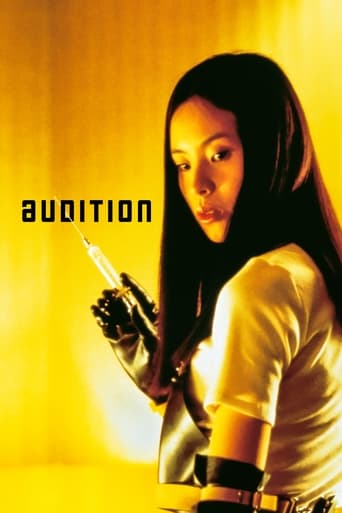
Audition
Takashi Miike · 1999 · Film
Shares a bleak, unforgiving tone.
86% shared signal
Infinity Pool
Brandon Cronenberg · 2023 · Film
Shares explicit viscera.
86% shared signal
Gerald's Game
Mike Flanagan · 2017 · Film
Shares slow-burn dread.
84% shared signal
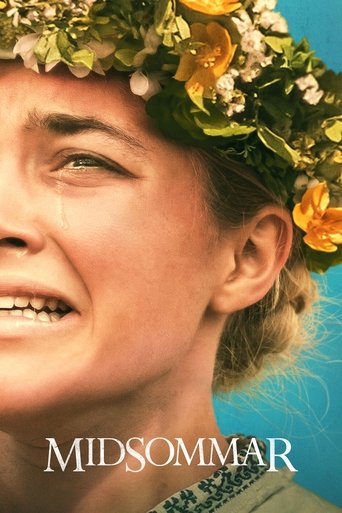
Midsommar
Ari Aster · 2019 · Film
Shares human monsters.
82% shared signal
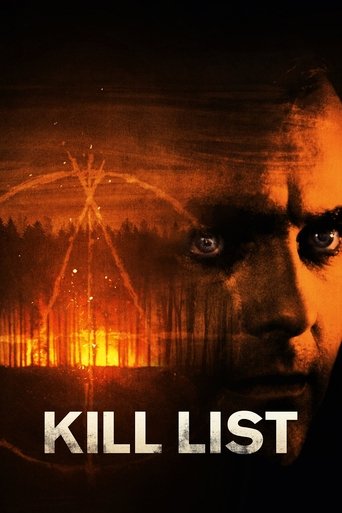
Kill List
Ben Wheatley · 2011 · Film
Shares a bleak, unforgiving tone.
80% shared signal

The Texas Chain Saw Massacre (OST)
Tobe Hooper & Wayne Bell · 1974 · Record
80% shared signal
More lists like these: Movies like Midsommar
Questions about Hannibal
The things people actually ask about this series, answered — including how it ends.
How does Hannibal end?
Will and Hannibal kill Francis Dolarhyde together at Hannibal's cliffside house. Will tells Hannibal it is beautiful, then embraces him and pulls them both off the cliff into the sea. No bodies are shown. A post-credits scene finds Bedelia Du Maurier at a table with her own leg served and three places set.
Do Will and Hannibal survive the fall?
The series never says, and it was cancelled before it could answer. Bryan Fuller intended the fall as both a real ending and a possible beginning, and the post-credits scene implies at least one of them lived.
Do I need to have seen the films first?
No. The series covers the period before Red Dragon and then adapts it, and recasts everybody. Watching Hopkins first mostly works against Mikkelsen, who is deliberately doing something else.
Is Hannibal too gory for television?
It plainly was. We score it 086 on viscera, higher than 283 of the 320 works in this index, which is remarkable for a programme broadcast by NBC at ten o'clock. Episodes were pulled and re-edited during its run.
Is Hannibal horror or crime drama?
Horror, on the measurement. We score the threat at 092 — the human end — and the viscera at 086, and the series' interest is in aesthetics and complicity rather than in investigation. Nothing in it is supernatural.
What should I watch after Hannibal?
Twin Peaks: The Return for the other television series that treats dream logic as photography, Audition for beauty turning into surgery, and The Last House on Needless Street for the same trick of an account you cannot trust played on the page.
These are ranked against Hannibal, not against you.
Build your own tape →