
Book · 2021
The Last House on Needless Street
Catriona Ward
A boarded-up house, a daughter who is sometimes there, and a cat who reads scripture.
63Hard going to sit through, out of 100 — mostly how bleak it is
- PaceSlow burn22
- ThreatMostly people78
- GoreShows some of it44
- ToneNo relief at all10
- RealityDream logic72
Era bias 90 · Thoroughly modern. Texture rather than fear, so it is not part of the grade. All six scores →
On VHSCREAM’s six-axis scale, The Last House on Needless Street (2021) is most extreme on the era-bias axis: 90 out of 100, where 0 is analog-era texture and 100 is modern craft. 91% of the 320 horror works we have scored come in lower on that axis. How we score →
The Last House on Needless Street is a 2021 novel by Catriona Ward. A boarded-up house at the end of a dead-end street beside a lake and a wood. Inside: Ted, who drinks and does not go out; his daughter Lauren, who is sometimes there; and Olivia the cat, who reads scripture and narrates. Next door, a woman has moved in to prove Ted took her sister. We score it 078 on threat and 072 on reality anchor.
Scored and reviewed by VHSCREAM on · how we score
How scary is The Last House on Needless Street, actually?
Scored against the published rubric, here is what the numbers mean for a reader.
Threat 078 is the human end, and nothing supernatural happens anywhere. 240 works score lower. The dangers are a mother who made her child ill, a neighbour whose certainty is not interested in being wrong, and the inside of one man's head.
Reality anchor 072 is high for a novel with no supernatural content. 256 works score lower. The house, the lake and the street are ordinary; the narration is not, and the reader spends most of the book inside an account that does not fit together.
Tone 010 is near the floor. 40 works score lower. The subject is the long aftermath of child abuse, nothing is undone, and the novel's gentlest reading — that Ted's mind did what it had to — is still unbearable.
Viscera 044 is moderate and mostly withheld. 204 works score higher. There is real violence, including to animals, and Ward's instinct is to place it just offstage and let the aftermath do the work.
Era bias 090 is modern. 11 works score higher. Contemporary American suburb, contemporary prose, a boarded-up house with a working television.
Pace 022 is dread. 266 works are faster. Three alternating voices, long domestic stretches, and perhaps four moments of incident before the final act.
On jump scares: none. The disorientation is the effect.
Who should skip The Last House on Needless Street
Skip it if child abuse is a limit. It is the subject, not a backstory beat, and the novel's central location is the room it happened in.
Skip it if animal harm will stop you. There is violence to animals, some of it recounted by a narrator who does not understand what they are describing, which some readers have found worse than an explicit account.
Skip it if you want a clean mystery. The disappearance plot is deliberately a misdirection, and readers who came for a whodunnit have reliably felt the book changed the subject on them.
Content notes: sustained childhood abuse including medically induced illness and confinement, dissociative identity disorder as a central subject, harm to animals, alcoholism, a missing child, and a character's wrongful certainty causing real damage.
Read it if you want the best-constructed horror novel of the 2020s, you are willing to be misled honestly, and a book that makes you complicit in misjudging its protagonist sounds like a worthwhile experience rather than a trick.
The Last House on Needless Street on six axes of fear
Every work in the index is scored on six continuous axes of fear. This is what The Last House on Needless Street looks like as a vector — and what each ten-point band looks like across everything else we hold.
Where that puts it: joint #7 bleakest · #9 surreal
Draft score — awaiting human review. About these scores
Disagree with a number? Say so on the axis itself. Nobody has confirmed this vector yet, and a score you challenge goes to the top of the queue to be re-scored by a human. Votes do not move the numbers — they decide what gets looked at first. How the scoring works →
Scored against the published rubric. This vector is a draft awaiting review — the method is public so you can argue with it.
Where to start with horror books →
Where to find it
Buy from an indie bookshop ↗Out-of-print copies on eBay ↗We earn nothing from these links.
The Last House on Needless Street: the review
A book that is about the thing it looks like it is about, in the wrong direction
Needless Street arrives disguised as a serial-killer-next-door novel and spends two hundred pages encouraging you to read it that way. A man with no social skills, a house with boards over the windows, a child who appears and disappears, an eleven-year-old disappearance from the lake beach, a neighbour conducting an amateur investigation. Every piece is placed to be assembled into the obvious shape.
It is not that shape. What Ward is actually writing is a novel about a man so comprehensively damaged in childhood that his mind has partitioned itself to survive, and the reader's eagerness to cast him as a predator is part of the novel's subject. That is a difficult thing to pull off without the reveal feeling like a cheat, and the reason it works is that Ward plays fair: every detail that reads as sinister on a first pass is accurate on a second, describing something entirely different.
Olivia is the best narrative device in recent horror
A chapter narrated by a cat should be unbearable. Olivia is instead the most compelling voice in the book — deeply concerned with the Bible, contemptuous of Ted's housekeeping, worried about the "hunting trips", and gradually, horribly legible as something other than a cat. The clues are in her vocabulary and in what she cannot perceive, and re-reading her first chapter after finishing the novel is the single best argument for the book's construction.
Lauren works the same way. She is furious with her father in the specific register of an eleven-year-old, and the gaps in her account — why she is only there sometimes, what the chapel is, who the Bug Man is — are doing structural work rather than withholding for effect.
Ted, and the thing the novel is for
Ted's mother is the horror of this book. A nurse; a woman who made her son ill in order to care for him, who confined him, who was the whole of his world. Everything strange about the adult Ted is an adaptation to her, and Ward's achievement is that by the end you understand his house — the boards, the locks, the routines, the things in the garden — as a set of entirely reasonable responses to what happened in it.
That reading is also why the threat score sits at 078, the human end. Nothing supernatural happens. The frightening things are a mother, a neighbour's certainty, and what a person will build to keep themselves alive.
Where it strains
Ward signposts one or two reversals too hard in the back half, and a reader who has met this structure before will be ahead of the book by the halfway mark. Dee's investigation is the weakest strand: her certainty is thematically necessary and her scenes are the least alive. And the novel's treatment of dissociative identity is handled with obvious care and a great deal of affection, which has not stopped it being contested — Ward addresses this directly in an afterword, and anybody reading it as clinical description rather than as fiction should start there.
The ending of The Last House on Needless Street explained
The ending, in full. Open it when you have seen it.
The short answer: the twist is structural rather than a whodunnit. Ted, Lauren and Olivia are not three people and a cat; they are one person. Ted has dissociative identity disorder caused by severe, sustained childhood abuse by his mother, and the voices the novel has been alternating between are parts of him. The disappearance the neighbour is investigating does not resolve the way she — or the reader — has been led to expect, and her certainty about Ted is wrong.
Here is what the novel is actually doing.
Who is Olivia?
An alter. Not a cat, and not a trick played on the reader for its own sake: Olivia exists because a child needed something in the house that could not be hurt the way he was being hurt, and the parts of the narration that never made sense for a cat — the reading, the reasoning, the specific blind spots about the house — are the evidence. Ward places them from the first chapter.
Who is Lauren?
Also an alter, and the one carrying the anger. The reason she is only sometimes present, the reason her account of her father is irreconcilable with Ted's account of himself, and the reason nobody outside the house has ever met her, all follow from that.
Is Ted a killer?
The novel's whole design is built on letting you assume he is. He is not what Dee believes he is, and the book's position is that her certainty — reasonable, sympathetic, evidence-shaped — is itself a harm. What Ted is, is a survivor of something that happened in that house to him.
What is the chapel?
The worst room in the book, and the place Ted's mother kept him. It is where the novel's horror actually lives, and every locked door and boarded window in the present is an answer to it.
Why does the re-read matter so much?
Because nothing in the first two hundred pages is a lie. The "hunting trips", the gaps in the calendar, the way Olivia describes the kitchen, the things Lauren is not allowed to do — all of it is literally accurate and all of it means something other than what it first appears to. That is the difference between a twist and a cheat, and it is why this book has the reputation it has.
If The Last House on Needless Street is your kind of fear
The eight works closest to The Last House on Needless Street in the index on the five axes that describe fear, the same medium first — not by genre label, and not by what other people watched.
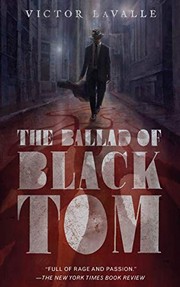
The Ballad of Black Tom
Victor LaValle · 2016 · Book
Shares modern craft.
84% shared signal

Deathconsciousness
Have a Nice Life · 2008 · Record
Shares a bleak, unforgiving tone.
87% shared signal
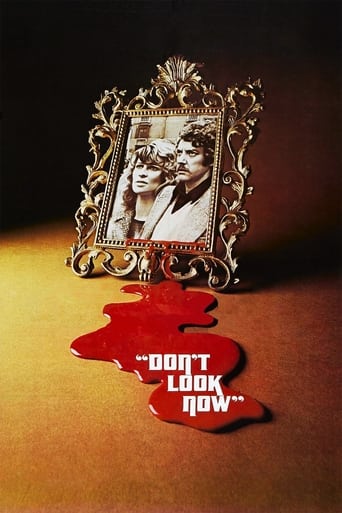
Don't Look Now
Nicolas Roeg · 1973 · Film
Shares slow-burn dread.
87% shared signal
Cure
Kiyoshi Kurosawa · 1997 · Film
Shares human monsters.
86% shared signal
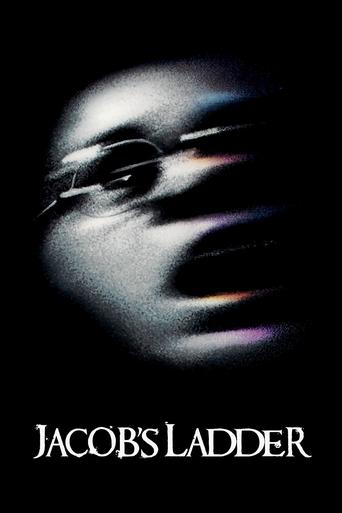
Jacob's Ladder
Adrian Lyne · 1990 · Film
Shares dream logic.
85% shared signal
The Killing of a Sacred Deer
Yorgos Lanthimos · 2017 · Film
Shares a bleak, unforgiving tone.
85% shared signal
Longlegs
Osgood Perkins · 2024 · Film
Shares slow-burn dread.
84% shared signal
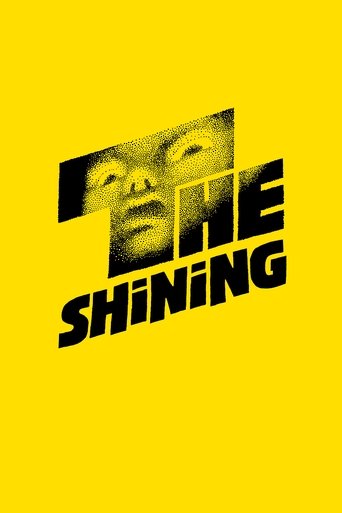
The Shining
Stanley Kubrick · 1980 · Film
83% shared signal
More lists like these: Movies like Jacob's Ladder · Movies like The Shining
Questions about The Last House on Needless Street
The things people actually ask about this book, answered — including how it ends.
What is the twist in The Last House on Needless Street?
Ted, Lauren and Olivia the cat are not separate characters. They are parts of one person: Ted has dissociative identity disorder caused by severe childhood abuse, and the novel's alternating narrators are alters. The disappearance his neighbour is investigating does not resolve the way the setup implies, and her certainty about him is wrong.
Who is Olivia in The Last House on Needless Street?
An alter, not a cat. The signals are present from her first chapter — what she reads, how she reasons, and the specific things about the house she cannot perceive — and none of them is a lie on a re-read.
Is Ted the killer in The Last House on Needless Street?
No, and the novel is built to make you assume he is. Part of its subject is how readily a damaged, isolated man is cast as a predator, and how much harm that certainty does.
Is The Last House on Needless Street a supernatural novel?
No. Nothing supernatural happens. We score the threat at 078 — the human end of our axis — because every danger in it is a person: a mother, a neighbour, and the consequences of what was done to a child.
Does the book handle dissociative identity disorder responsibly?
Ward writes it with evident care and addresses the question directly in an afterword, and the depiction has still been contested. It is fiction built on a condition rather than a clinical account, and the afterword is the place to start if that distinction matters to you.
What should I read after The Last House on Needless Street?
The Turn of the Screw for the original narrator you cannot trust, House of Leaves for a book whose own apparatus disagrees with itself, and Lake Mungo for the same trick of an account that is accurate and wrong at once.
These are ranked against The Last House on Needless Street, not against you.
Build your own tape →