Film · 1997
Cure
Kiyoshi Kurosawa
Every killer is caught at the scene, remembers nothing, and has carved the same X.
66Hard going to sit through, out of 100 — mostly how bleak it is
- PacePure slow burn14
- ThreatMostly people80
- GoreShows some of it54
- ToneNo relief at all6
- RealityTilts unreal52
Era bias 36 · Neither era. Texture rather than fear, so it is not part of the grade. All six scores →
The bleakest horror movies ever made →
On VHSCREAM’s six-axis scale, Cure (1997) is most extreme on the tone axis: 6 out of 100, where 0 is a bleak, unforgiving tone and 100 is gleeful black comedy. 3% of the 320 horror works we have scored come in lower on that axis. How we score →
Cure is a 1997 Japanese horror film written and directed by Kiyoshi Kurosawa. A detective investigates a series of murders in which the killer is always found at the scene, cooperative, with no motive and no memory, and every victim carries the same X cut from the throat down. We score it 006 on tone and 014 on pace, which is near the floor of both. It is the most quietly destructive film in this index.
Scored and reviewed by VHSCREAM on · how we score
How scary is Cure, actually?
Scored against the published rubric, here is what the numbers mean for a viewer.
Tone 006 is near the floor of the index. 9 works score lower. A carer is relieved of the person he was caring for, a detective is relieved of his conscience, and the film's final image is the next one starting.
Pace 014 is dread, and it is structural. 294 works are faster. Static wide shots held past comfort, no coverage, no score, and violence that happens at the edge of the frame without the camera acknowledging it.
The threat at 080 is human. 71 works score higher. There is no monster in this film. Everybody who kills in it is an ordinary person doing something they wanted to do, and the man who gets them there is a young man with a lighter.
Viscera 054 is moderate and clinical. 166 works score higher. The X wound is explicit and shown more than once, and the film has no interest in staging any of it for effect.
Era bias 036 is analog. Grey institutional interiors, 35mm, drained colour, no gloss. The look is late-nineties Japanese realism rather than horror lighting.
Reality anchor 052 sits almost exactly at the midpoint. Police stations, hospitals and apartments, all solid, with a mechanism the film refuses to make physical.
On jump scares: none. Not one. The frightening thing is a wide shot of a room.
Who should skip Cure
Skip it if you need the rules explained. The film declines to say what Mamiya is or how it passes, and that refusal is the design rather than an omission.
Skip it if a slow Japanese procedural is not the evening. Two hours of static compositions, no score, and a middle hour that repeats its own structure on purpose.
Skip it if the caring relationship will land badly. The wife's illness and her husband's exhaustion are handled without sentiment, and what the film does with his relief is the hardest thing in it.
Content notes: repeated murders including spousal and workplace killings, graphic throat and chest wounds, suicide, the institutionalisation and death of a mentally ill woman, and a protagonist's unexamined relief at a bereavement.
Watch it if you want the film that invented the register half of modern horror is written in, a performance of exhaustion nobody has bettered, and an ending that reframes every scene before it.
Cure on six axes of fear
Every work in the index is scored on six continuous axes of fear. This is what Cure looks like as a vector — and what each ten-point band looks like across everything else we hold.
Where that puts it: joint #3 bleakest · joint #5 slow burn
Draft score — awaiting human review. About these scores
Disagree with a number? Say so on the axis itself. Nobody has confirmed this vector yet, and a score you challenge goes to the top of the queue to be re-scored by a human. Votes do not move the numbers — they decide what gets looked at first. How the scoring works →
Scored against the published rubric. This vector is a draft awaiting review — the method is public so you can argue with it.
Cure: the review
The camera will not help you
Kurosawa and his cinematographer Tokushō Kikumura shoot almost the entire film in static wide shots held several seconds longer than the action needs, from a position nobody in the scene occupies. There is no coverage. When something happens in the corner of the frame, the camera does not move, and when a character leaves the room the camera stays in the empty room.
That is not a stylistic flourish, it is the film's argument made in grammar. Cure is about a thing that gets into people through an opening they did not know was there, and the way Kurosawa films it means the audience spends two hours watching rooms in which something could be about to happen and having no editorial guidance about where to look. Almost nothing in the film is scored. The sound is traffic, strip lights, a washing machine, wind across a roof.
A detective who is already finished
Kōji Yakusho plays Takabe as a man running on nothing. His wife Fumie has a degenerative illness and has been institutionalised; he visits her, manages her, lies to his colleagues about how she is, and the performance is built out of the specific exhaustion of somebody doing unpaid care work on top of a job that is also unpaid care work. He is not a troubled detective in the genre sense. He is tired in a way the film treats as dangerous.
Yakusho's achievement is that none of this is announced. There is one scene in a hospital corridor where he says something almost cheerful about his wife to a colleague and then stands still for several seconds afterwards, and it tells you everything about what is being held down.
Masato Hagiwara's Mamiya is the other half. He has no long-term memory, or claims not to, and his method is to answer every question with a question about the person asking it. Who are you? Tell me about yourself. He carries a lighter and a glass of water and uses either to put somebody under, and what he produces afterwards is not a command but a release. He is a young man in a wet shirt, slightly feminine, slightly bored, absolutely patient.
The scene that explains the method
There is a sequence in an interrogation room where a police officer who has been in the room with Mamiya for twenty minutes stands up and shoots his own colleague. Kurosawa does not cut to a reaction. There is no music sting and no slow motion. A man walks across a room and does a thing, and the camera holds the wide shot, and the film goes on to the next scene.
What Mamiya does is never explained as a power. The film buries its material in a psychologist's archive instead: nineteenth-century mesmerism, a Japanese practitioner, lecture tapes, hypnotic suggestion as a medical fashion that was abandoned for good reasons. The horror is that none of this is supernatural. It is a technique, it worked, somebody wrote it down, and it has been picked up again by a person who does not want anything.
Where it strains
Length and opacity, and the second is deliberate enough that complaining about it is partly beside the point. Still: the middle hour repeats its structure — a killing, an interview, Mamiya in a new building — more times than the escalation needs, and the archive material is delivered in two long expository stretches that sit oddly against a film otherwise allergic to explanation. Sakuma, the psychologist advising Takabe, exists mostly to receive information.
And a viewer who needs a mechanism will finish this film angry. Cure declines, at every opportunity, to say what Mamiya is. That is the correct choice and it is a real cost.
Watch it for Yakusho, for the interrogation room, and because it is the film every slow, cold, procedural horror of the last twenty-five years is standing on.
The ending of Cure explained
The ending, in full. Open it when you have seen it.
The short answer: Takabe tracks Mamiya to an abandoned building, and Mamiya tells him that he has finally found what he was looking for — that Takabe has been looking for permission. Takabe shoots him dead. Fumie is found dead shortly afterwards, and Takabe's reaction is not grief. The last scene is Takabe eating calmly in a restaurant, apparently well for the first time in the film, and the waitress who served him walking out through the room with a long knife. He is the carrier now, and the film ends on the wide shot rather than on the act.
Here is how that works.
What does Mamiya actually do?
He asks who you are, repeatedly, while you look at a flame or a glass of water, and he keeps asking until something answers. He does not plant an instruction. The film is explicit that what comes out of each killer was already in them: a teacher who resented his wife, a doctor with contempt for a patient, an officer who despised his partner. Mamiya removes the part of a person that was holding the answer down. The title is not ironic in the way people expect. Something genuinely is cured.
What is the X?
The signature cut, from the base of the throat down across the chest, opening the carotid. It is what every killer makes and none of them can say why. The film ties it loosely to the mesmerist material in Sakuma's archive, as a mark used by a nineteenth-century practitioner, and refuses to make it a symbol with a meaning. It is a shape that comes out with everything else.
Is Mamiya supernatural?
The film never says so and everything it shows is technique. He has no powers on screen beyond patience and suggestion, and he can be shot, which Takabe demonstrates. What is left unexplained is transmission: the thing Mamiya is carrying does not die when he does, which is the film's only genuinely uncanny claim and the one it makes last.
What happens to Takabe's wife?
Fumie dies. The film gives it to you obliquely, through a report and a reaction, and the reaction is the point: Takabe has spent the whole film managing a woman he loves and cannot help, and the scene where he learns she is gone is played without any of the strain he has carried everywhere else. The relief is unbearable and the film will not let you look away from it.
What does the final scene mean?
Takabe is well, and being well is what the film means by infected. He eats, he is calm, he is pleasant to the staff. Then the waitress he spoke to walks across the restaurant with a knife and the camera holds in wide shot. Whatever Mamiya was doing, Takabe is doing now, and he is better placed to do it: a police detective can go anywhere, speak to anyone, and ask them who they are.
Why is it called Cure?
Because the film means it. Mamiya's victims are not possessed, they are unburdened, and every one of them is the version of themselves they had been suppressing. The question the film leaves is whether a society that requires that much suppression is well, and it declines to answer that too.
If Cure is your kind of fear
The eight works closest to Cure in the index on the five axes that describe fear, the same medium first — not by genre label, and not by what other people watched.
The Killing of a Sacred Deer
Yorgos Lanthimos · 2017 · Film
Shares a bleak, unforgiving tone.
87% shared signal

Midsommar
Ari Aster · 2019 · Film
Shares human monsters.
83% shared signal
Longlegs
Osgood Perkins · 2024 · Film
Shares slow-burn dread.
83% shared signal
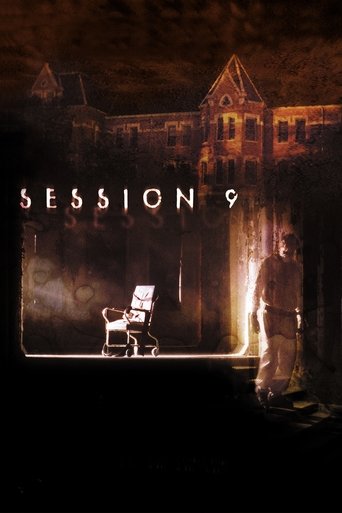
Session 9
Brad Anderson · 2001 · Film
Shares a bleak, unforgiving tone.
81% shared signal

The Last House on Needless Street
Catriona Ward · 2021 · Book
Shares human monsters.
86% shared signal
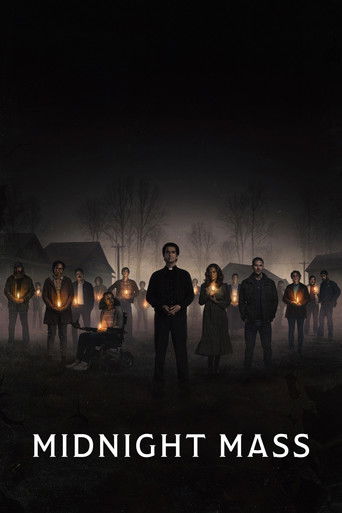
Midnight Mass
Mike Flanagan · 2021 · Television
Shares slow-burn dread.
83% shared signal

The Texas Chain Saw Massacre (OST)
Tobe Hooper & Wayne Bell · 1974 · Record
81% shared signal

Frankenstein
Mary Shelley · 1818 · Book
80% shared signal
More lists like these: Movies like Midsommar · Movies like Session 9 · Shows like Midnight Mass · Books like Frankenstein
Questions about Cure
The things people actually ask about this film, answered — including how it ends.
How does Cure end?
Takabe corners Mamiya in an abandoned building, is told he has been looking for permission, and shoots him. His wife dies soon after and he is not grieved by it. The last scene is Takabe calm in a restaurant and the waitress walking out through the room with a knife, which means it has passed to him.
What does Mamiya do to people in Cure?
He asks who they are, over and over, while they watch a flame or a glass of water, until something answers. He does not give an instruction. Everything his victims do was already in them — a resented wife, a despised colleague — and what he removes is whatever was keeping it down.
What does the X mean in Cure?
It is the cut every killer makes, from the throat down across the chest, and none of them can say why. The film connects it loosely to nineteenth-century mesmerist material in a psychologist's archive and then refuses to give it a meaning. It comes out with everything else that comes out.
Is Mamiya supernatural in Cure?
The film never says so, and everything it shows is technique rather than power. He can be shot, and he is. The one uncanny thing is transmission: what he carries does not die with him, which is the claim the film saves for its last two minutes.
Does Takabe become the next Mamiya?
That is what the final scene states. He is calm and apparently well for the first time in the film, and the waitress he has just spoken to walks through the restaurant with a knife. A detective can go anywhere and ask anyone who they are, which makes him better equipped for it than Mamiya was.
Is Cure actually scary?
Not in the way the word usually means — we score it 014 on pace with no jump scares at all. The fear is positional: static wide shots of ordinary rooms in which something might be about to happen, and no camera movement to tell you where to look. Viewers find it stays with them for days.
What should I watch after Cure?
Audition for the other great Japanese horror of the same years, Session 9 for the same procedural dread in an American register, and psychological horror for everything here that works this way.
These are ranked against Cure, not against you.
Build your own tape →