Film · 1997
Alien Resurrection
Jean-Pierre Jeunet
Ripley cloned two hundred years on, with something of the queen left in her.
60Hard going to sit through, out of 100 — mostly how bleak it is
- PaceBuilds, then strikes64
- ThreatMostly supernatural26
- GoreExplicit68
- ToneGrim, with air46
- RealityTilts unreal58
Era bias 34 · Analog-leaning. Texture rather than fear, so it is not part of the grade. All six scores →
The most supernatural horror movies ever made →
Part of a series: Alien movies in order →
On VHSCREAM’s six-axis scale, Alien Resurrection (1997) is most extreme on the threat axis: 26 out of 100, where 0 is a threat that is not human and 100 is human monsters. 31% of the 320 horror works we have scored come in lower on that axis. How we score →
Alien Resurrection is a 1997 American science fiction horror film directed by Jean-Pierre Jeunet and written by Joss Whedon. Two hundred years after Ripley's death, military scientists clone her to harvest the queen inside her, and the creatures they breed get loose. We score it 026 on the threat axis and 068 on viscera.
Scored and reviewed by VHSCREAM on · how we score
How scary is Alien Resurrection, actually?
Scored against the published rubric, here is what the numbers mean.
The threat at 026 is on the supernatural side — 100 works score lower. The creatures do the killing. Wren and the military are the reason they exist, which pulls the score up from where the series usually sits.
Viscera 068 is explicit — 209 works score lower. Chestbursters, acid wounds, a creature giving birth, and the Newborn's death, which is shown in detail.
Tone 046 is close to the middle — 263 works score lower. It is a dark comedy as much as a horror film, the quips never stop, and the survivors win.
Pace 064 is on the shock side, with 228 works slower. It is a chase across a ship, broken by attacks.
Era bias 034 sits on the analog side — 110 works score lower. Mostly practical creatures and sets with early digital work visible at the edges, and a heavy 1990s colour grade.
Reality anchor 058 leans surreal — 190 works score lower. Cloning, a psychic link to the creatures, a human hybrid and Jeunet's heightened design push it well away from the procedural grounding of the earlier entries.
On jump scares: a few, and the film is usually more interested in the grotesque than in the sting.
Who should skip Alien Resurrection
Skip it if you want Alien's dread. This is a black comedy with horror set-pieces, and the creatures are often background to the banter.
Skip it if body horror involving birth is a hard limit. The climax is a creature giving birth to a human hybrid, and the film lingers on it.
Skip it if you hated Alien 3 for being bleak. This one swings so far the other way that it frequently stops being frightening at all.
Content notes: chestbursters, people abducted and used as hosts for breeding, a woman cloned and experimented on, a live birth by a creature, a creature torn apart by decompression in detail, acid injuries, a self-sacrifice, and gunfire.
Watch it if you want the oddest entry in the series, you like Jeunet's grotesque design sense, and you want to see Weaver play Ripley as something no longer quite human.
Alien Resurrection on six axes of fear
Every work in the index is scored on six continuous axes of fear. This is what Alien Resurrection looks like as a vector — and what each ten-point band looks like across everything else we hold.
Draft score — awaiting human review. About these scores
Disagree with a number? Say so on the axis itself. Nobody has confirmed this vector yet, and a score you challenge goes to the top of the queue to be re-scored by a human. Votes do not move the numbers — they decide what gets looked at first. How the scoring works →
Scored against the published rubric. This vector is a draft awaiting review — the method is public so you can argue with it.
Alien Resurrection: the review
Alien Resurrection is the strangest film in the series and openly enjoys itself, which is either its whole appeal or the reason it fails, depending on what you came to the series for.
The premise is a provocation. Ripley died in a furnace at the end of Alien 3, holding the queen. Two hundred years later, scientists aboard the military ship Auriga have cloned her from blood samples taken on Fiorina 161, and the eighth attempt — Ripley 8 — has the queen's DNA tangled up in her own. She is stronger and faster than a human, her blood is acidic, she can sense the creatures, and she remembers some of Ripley's life without being Ripley. Sigourney Weaver plays her as something amused and predatory, a woman who looks at the humans around her the way the creatures do, and it is the most interesting thing anyone has done with the character since the first film.
A Jeunet film with the alien in it
Jean-Pierre Jeunet, a French director, made it a dark comedy as well as a horror film. The Auriga is all grime and cramped machinery; the mercenaries of the Betty, who have been delivering abducted humans to the ship to be used as hosts, are a gallery of grotesques. Ron Perlman's Johner is a thug who thinks he is funny. Dominique Pinon's Vriess is the one the film likes most. Winona Ryder's Annalee Call is the one with a secret.
The breeding programme does exactly what anyone who has seen the earlier films expects. The creatures escape and kill most of the crew, including General Perez and the mercenary captain Elgyn, and Dr. Wren reveals that the ship's emergency protocol is to return to Earth — which would deliver the creatures there. The survivors set out across the ship for the Betty, to escape and destroy the Auriga behind them.
The underwater sequence
The best set-piece in the film is a swim through a flooded kitchen with the creatures hunting the group underwater, and it is a genuinely new idea for the series: creatures that move through water better than people do, in a space where nobody can shoot or breathe. It was the first thing shot, in a tank holding 548,000 gallons on a converted Fox soundstage. Ryder had nearly drowned at twelve and had not been in water since; she did the scene anyway. The sequence costs the group Hillard, taken by a creature, and Christie, blinded and sacrificing himself to kill one, and it is the stretch of the film where the horror is played completely straight.
The film's other famous moment is an accident of commitment. Weaver insisted on doing a backward basketball throw herself rather than faking it, made it on the first take, and Perlman's genuine reaction had to be cut around.
The Newborn
The last act is where the film goes furthest. Ripley 8 is taken to the creatures' nest, where she finds Gediman still alive and cocooned, and where the queen gives birth to a human-like hybrid that recognises Ripley 8 as its mother. It kills the queen and the scientist Gediman. The film plays this as tragedy and grotesque comedy at once, and whether that works is the biggest split in how people take the film. It is one of the most explicit pieces of body horror in the series, and the hybrid's death is unforgettable.
The supporting cast is stranger and better than the film usually gets credit for. Dan Hedaya's General Perez commands the Auriga with total confidence in a programme that is about to kill him. Brad Dourif's Gediman is a scientist who loves the creatures far more than the people they are bred from, and the film gives him exactly the end he has been asking for. J. E. Freeman's Wren is a scientist who will shoot anyone, ally or not, to get off the ship alive. Michael Wincott's Elgyn, the mercenary captain, is gone early, which is a pity. Leland Orser's Purvis, carrying an embryo he did not ask for, gets the film's most satisfying death: when Wren takes Call hostage, Purvis grabs him, and the creature in Purvis's chest bursts out through both of them.
Tom Woodruff Jr. plays the lead creature, the queen and the Newborn, and the suit work gives them a physical weight. The film cost $70 million, made $161.4 million worldwide, and took less in the United States and Canada than any other entry in the series. Weaver was widely praised; the screenplay took most of the blame. Seen now, it plays as a genuine oddity, a big studio sequel handed to a European fabulist who treated it as a fairy tale about monstrous motherhood.
Where it falls down
The tone wobbles badly. Whedon's script is full of quips, and Jeunet's direction plays them at a slant, and the result is a film where the creatures stop being frightening for long stretches because nobody on screen seems to find them frightening either. The Auriga is one long corridor; the geography of the escape is hard to track. Several of the mercenaries die without the film registering it. Whedon himself said it followed his script but was poorly executed, and Roger Ebert named it one of the worst films of 1997. Both are too harsh. Neither is baseless.
For the series in order, start with Alien and the full sequence at Alien movies in order. For body horror that takes the merging of human and creature seriously all the way down, The Fly.
The ending of Alien Resurrection explained
The ending, in full. Open it when you have seen it.
The short answer: Ripley 8, Call, Johner and Vriess escape on the Betty, and the Auriga crashes into Earth and explodes. On the way, Wren shoots Call and reveals she is a synthetic; Call uses the ship's computer to set the Auriga on a collision course with Earth. Wren takes Call hostage, and Purvis, who has a creature embryo inside him, grabs Wren as it bursts out, killing them both. Ripley 8 is taken to the nest, where the queen gives birth to a human hybrid, the Newborn, which kills the queen and Gediman and follows Ripley 8 to the Betty. It kills DiStephano and attacks Call. Ripley 8 melts a small hole in a window with her acidic blood, and the Newborn is pulled through it by decompression and torn apart. Looking down at Earth, Call asks what she will do now, and Ripley 8 answers: "I'm a stranger here myself."
What is Ripley 8 in Alien Resurrection?
A clone of Ellen Ripley made from blood samples taken on Fiorina 161, two hundred years after her death. Because Ripley died carrying a queen embryo, the cloning mixed the two: Ripley 8 has enhanced strength and reflexes, acidic blood, a psychic link to the creatures and fragments of Ripley's memories. The scientists' interest is in the creatures; Ripley 8 is what was left over.
Is Call a robot in Alien Resurrection?
Yes. Winona Ryder's Annalee Call is revealed to be a synthetic when Wren shoots her and she survives. She came aboard with the mercenaries to stop the breeding programme. Ripley 8 takes her to the ship's chapel so she can interface with the computer, and Call uses that access to send the Auriga into Earth.
What is the Newborn at the end of Alien Resurrection?
A human-like hybrid born to the queen. It sees Ripley 8 as its mother rather than the queen, kills the queen and Gediman, and follows Ripley 8 onto the Betty. After it kills DiStephano and attacks Call, Ripley 8 uses her acid blood to melt a hole in a window, and the decompression pulls the creature through it and tears it apart.
Does the Auriga hit Earth?
Yes. Call sets the ship on a collision course, and the Auriga hits Earth and explodes, destroying the creatures aboard. The theatrical film ends with the Betty in orbit and the survivors looking down at the planet. Imagery of the Betty landing in a ruined Paris exists only in deleted scenes from the special edition.
If Alien Resurrection is your kind of fear
The eight works closest to Alien Resurrection in the index on the five axes that describe fear, the same medium first — not by genre label, and not by what other people watched.
Weapons
Zach Cregger · 2025 · Film
Shares a threat that is not human.
94% shared signal
Sinners
Ryan Coogler · 2025 · Film
Shares explicit viscera.
90% shared signal
An American Werewolf in London
John Landis · 1981 · Film
Shares a threat that is not human.
90% shared signal
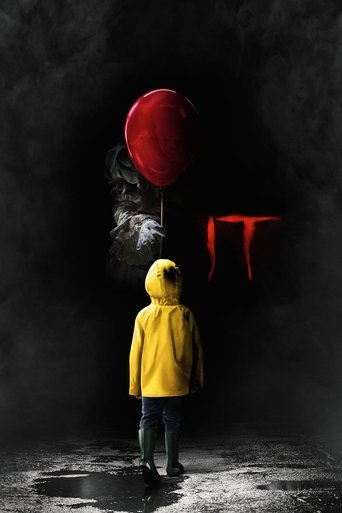
It
Andy Muschietti · 2017 · Film
90% shared signal
The Howling
Joe Dante · 1981 · Film
Shares explicit viscera.
89% shared signal
It Chapter Two
Andy Muschietti · 2019 · Film
89% shared signal
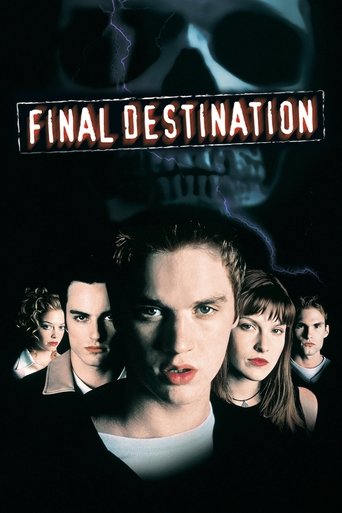
Final Destination
James Wong · 2000 · Film
89% shared signal
Jason Goes to Hell: The Final Friday
Adam Marcus · 1993 · Film
89% shared signal
More lists like these: Movies like Weapons · Movies like Sinners · Movies like It · Movies like Final Destination
Questions about Alien Resurrection
The things people actually ask about this film, answered — including how it ends.
What happens at the end of Alien Resurrection?
Ripley 8, Call, Johner and Vriess escape aboard the Betty as the Auriga crashes into Earth and explodes. The Newborn, a human hybrid born to the queen, follows them aboard and kills DiStephano. Ripley 8 melts a hole in a window with her acid blood, and decompression pulls the creature through it.
How is Ripley alive in Alien Resurrection?
She is not, exactly. Two hundred years after she died on Fiorina 161, military scientists clone her from preserved blood samples. Ripley 8 has the queen's DNA mixed with her own, giving her acid blood, enhanced strength and a link to the creatures, along with some of the original Ripley's memories.
Who survives Alien Resurrection?
Four survive: Ripley 8, the synthetic Annalee Call, and the mercenaries Johner and Vriess. Elgyn, General Perez, Christie, Hillard, DiStephano, Purvis, Wren and Gediman all die, as do the queen and the Newborn. The Auriga itself is destroyed when it hits Earth.
Who wrote Alien Resurrection?
Joss Whedon, from characters created by Dan O'Bannon and Ronald Shusett. Whedon was unhappy with the finished film, saying it followed his script but was poorly executed. The director, Jean-Pierre Jeunet, made it partly as a dark comedy, which is where much of its divisive tone comes from.
Did Sigourney Weaver really make the basketball shot in Alien Resurrection?
Yes. Weaver insisted on making the backward throw herself rather than using a machine or digital effects, and she made it on the first take. Ron Perlman broke character in surprise, and the editors cut around his reaction to keep the shot.
Was Alien Resurrection a box office success?
Modestly. It earned about $161.4 million worldwide on a $70 million budget, but its $47.8 million in the United States and Canada was the lowest of the series in that market. Reviews were mixed, with praise for Weaver and Jeunet's visuals and criticism aimed mostly at the screenplay.
These are ranked against Alien Resurrection, not against you.
Build your own tape →