Film · 2025
Weapons
Seventeen children leave their houses at 2:17 in the morning. Six adults guess wrong.
64Hard going to sit through, out of 100 — mostly how bleak it is
- PaceBuilds, then strikes62
- ThreatMostly supernatural30
- GoreExplicit68
- ToneGrim, with air38
- RealityTilts unreal52
Era bias 88 · Thoroughly modern. Texture rather than fear, so it is not part of the grade. All six scores →
The most supernatural horror movies ever made →
On VHSCREAM’s six-axis scale, Weapons (2025) is most extreme on the threat axis: 30 out of 100, where 0 is a threat that is not human and 100 is human monsters. 36% of the 320 horror works we have scored come in lower on that axis. How we score →
Weapons is a 2025 American horror film written and directed by Zach Cregger. At 2:17 one morning, seventeen children from a single classroom get out of bed, walk out of their front doors with their arms held back, and run into the dark. One child from that class stayed home. The film is told in chapters, each from a different adult failing to work out why. We score it 030 on threat, which puts the danger on the supernatural side, and 068 on viscera.
Scored and reviewed by VHSCREAM on · how we score
How scary is Weapons, actually?
Scored against the published rubric, here is what the numbers mean for a viewer.
Threat 030 is the signature, and it will surprise people. 114 works score lower. Weapons feels like a film about human awfulness — a town, a school board, a father, a bottle — and almost all of that is texture. The thing taking children is a witch, and the film offers no reading in which she is not. On this axis it sits near Suspiria rather than anywhere near a film about people.
Viscera 068 is a hard R and saves most of it for the end. 209 works score lower. The first ninety minutes are unusually dry for a film this frightening; the last twenty are not, and one sustained attack is as explicit as anything in this index outside extreme horror.
Pace 062 is on the shock side, in bursts. 92 works are faster. The chapter structure means the film keeps restarting its own tension, and each chapter has a hard jolt in it. The dread does not accumulate so much as reload.
Tone 038 is bleak with real jokes in it. 238 works score lower. Cregger writes embarrassment better than almost anyone working in horror, and the laughs are at the expense of people being institutionally useless while a child is missing. It is funny and it is not relief.
Era bias 088 is the modern end. 30 works score higher. Digital clarity, drone work, phone screens, a clean mix. This looks and sounds like 2025 and makes no attempt not to.
Reality anchor 052 keeps it in the suburb. Magic exists and nothing else bends. The streets, the school, the police station and the basement are all exactly what they appear to be, which is why the basement works.
On jump scares: several, well built. The 2:17 footage and the hallway in the final act will get you. None of them is cheap.
Who should skip Weapons
Skip it if children in danger is a hard limit. Seventeen of them are taken in the first two minutes and the film is about where they went. One child is used as an instrument against his own classmates for months, and his chapter is written to make you feel the length of it.
Skip it if you need a mystery to explain its rules. Weapons never says what Gladys can do or what it costs her. Viewers who want a system will find the climax arbitrary.
Skip it if a scapegoating plot will get under your skin. A large part of the film is a woman being destroyed socially for something she did not do, filmed close and without relief, and she never receives an apology.
Content notes: mass abduction of children, a child held under coercive control, graphic mauling, suicide, domestic imprisonment of elderly parents, alcoholism, drug use, animal death, and a sustained sequence of a crowd turning on an innocent person.
Watch it if you want the most inventive wide-release horror film in years, you can take a structure that keeps changing protagonist, and you want to meet a monster that is not a remake of another monster.
Weapons on six axes of fear
Every work in the index is scored on six continuous axes of fear. This is what Weapons looks like as a vector — and what each ten-point band looks like across everything else we hold.
Draft score — awaiting human review. About these scores
Disagree with a number? Say so on the axis itself. Nobody has confirmed this vector yet, and a score you challenge goes to the top of the queue to be re-scored by a human. Votes do not move the numbers — they decide what gets looked at first. How the scoring works →
Scored against the published rubric. This vector is a draft awaiting review — the method is public so you can argue with it.
Weapons: the review
The structure is the horror
Weapons opens with a child's voice telling you what happened and then spends two hours refusing to let any adult arrive at the same information. The chapters are named for people — the teacher, the father, the cop, the principal, the addict, the child who stayed, and finally the thing itself — and each one begins slightly before the last one ended, so you watch the same week from inside six different kinds of not knowing.
That sounds like a formal exercise and it is the opposite. The reason it works is that each narrator is wrong in a way that is specific to them. Justine, who taught the class, assumes she is the suspect because a town needs one. Archer, whose son is gone, assumes somebody is lying to him, and he is right, and he is looking at the wrong people. Paul assumes the case is a career problem. Marcus assumes it is a liability problem. The film is extremely funny about this, in the flat, embarrassed register Cregger used in Barbarian, and the comedy is load-bearing: by the time the audience is ahead of the characters, being ahead has become unbearable rather than satisfying.
Julia Garner and Josh Brolin are carrying different films
Garner's Justine is the best thing in it. She plays a woman being slowly excommunicated by a community that has decided, without saying so, that she is the only available explanation — the parked cars outside her house, the drinking, the boss who keeps being supportive in a way that means the opposite. Brolin's Archer is in a revenge thriller that has no target, and he is very good at playing a man whose grief has nowhere to go and so goes toward whoever is nearest.
They barely share the film, which is the one real structural cost. Weapons has seven protagonists and consequently no relationship to develop, and the back half has to generate its momentum from plot rather than from anybody's interior life.
Amy Madigan is giving the performance of the year and it is almost too big
Aunt Gladys arrives in the film as a houseguest and leaves it as one of the few genuinely new monsters in modern studio horror. Madigan plays her broad — the wig, the teeth, the terrible cheerfulness — and the choice is correct, because Gladys is a parasite who has decided to be charming about it. She is also the point at which Weapons declares what it is. The film has spent an hour looking like a mystery about a town, and the answer is a witch in a basement who needs other people's life to keep her own going, and who found the easiest supply of it in a house where nobody was going to be believed.
The reason we score threat at 030 rather than up the human end is that this is not a film about a woman who does terrible things. Gladys does magic — hair, dolls, hypnosis, a basement full of children standing still — and the film never offers a non-supernatural reading. The human failure in Weapons is everywhere, and it is not the threat. It is the thing that gives the threat room to work.
Where it is thin
The rules are never stated, so the climax has to invent its own limits as it goes, and a viewer who wants to know what Gladys can and cannot do will be left guessing. Two of the seven chapters could be one. And the final act, for all its ferocity, resolves a supernatural problem with a physical solution in a way the preceding ninety minutes had not quite set up.
What it gets right is rarer. Weapons is a wide-release horror film with an original premise, a structure nobody would have greenlit from a pitch, a monster that is not a reference to another monster, and an image — arms back, running, 2:17 — that will outlive it.
The ending of Weapons explained
The ending, in full. Open it when you have seen it.
The short answer: Aunt Gladys, a witch, has been keeping Alex's parents under her control and used Alex to take the rest of his class. The children are in her basement. Alex turns her own method against her, and the freed children kill her. Archer finds his son. Justine survives, and the town's apology is not shown.
Here is how the film gets there.
What is Aunt Gladys?
A witch, and specifically a parasite. Gladys sustains herself by taking the life of others, and her magic works through personal objects — hair, in particular — and through small figures that stand in for the people she controls. She arrived at Alex's house as a relative in need, took his parents first, and then used him to deliver seventeen more.
Why did the children run at 2:17?
Because Alex, under her instruction, brought her something of each of them. The run is the moment her hold completes. The arms-back posture is not explained in the film and is the better for it — it reads as a body being driven rather than a person running.
Why was Alex left behind?
He was not spared. He was the instrument. Gladys needed somebody inside the class with access to the other children, and she needed him functional enough to go to school, so she kept him awake and used him. His chapter is the film's worst, in the sense that it is the one where you understand that the child everyone assumed was lucky has been the most thoroughly used person in the story.
How is Gladys killed?
Alex works out that what she does to other people can be done to her, takes what he needs of hers, and uses it to break her control over the children in the basement. They are not rescued so much as released, and what they do to her immediately afterwards is the most violent sequence in the film. The film lets it run.
Does Weapons have a happy ending?
Partly, and it is careful about which part. Archer gets Matthew back. The children are alive. Justine is alive and has lost her job, her reputation and most of a year, and the film gives her no scene in which anyone admits they were wrong. That omission is deliberate: the town's behaviour was not a mistake it will apologise for, it was the mechanism that let a witch operate in plain view for months.
If Weapons is your kind of fear
The eight works closest to Weapons in the index on the five axes that describe fear, the same medium first — not by genre label, and not by what other people watched.
Alien Resurrection
Jean-Pierre Jeunet · 1997 · Film
Shares a threat that is not human.
94% shared signal
The Howling
Joe Dante · 1981 · Film
Shares explicit viscera.
92% shared signal
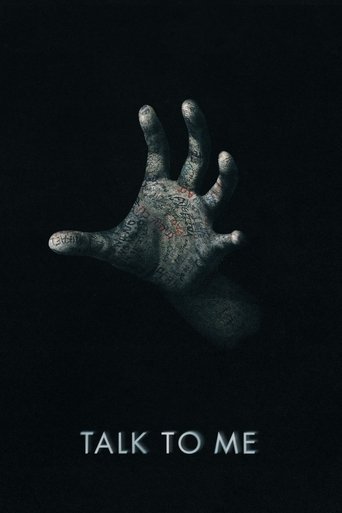
Talk to Me
Danny & Michael Philippou · 2022 · Film
Shares a threat that is not human.
91% shared signal
Sinners
Ryan Coogler · 2025 · Film
Shares explicit viscera.
89% shared signal
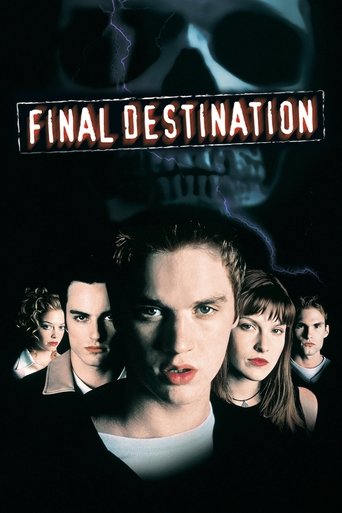
Final Destination
James Wong · 2000 · Film
88% shared signal
Friday the 13th Part VII: The New Blood
John Carl Buechler · 1988 · Film
88% shared signal
An American Werewolf in London
John Landis · 1981 · Film
88% shared signal
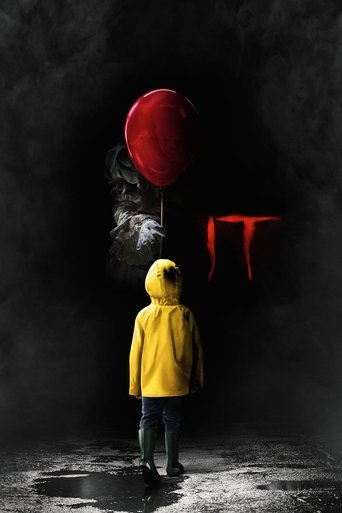
It
Andy Muschietti · 2017 · Film
88% shared signal
See the full list of movies like Weapons →
More lists like these: Movies like Talk to Me · Movies like Sinners · Movies like Final Destination · Movies like It
Questions about Weapons
The things people actually ask about this film, answered — including how it ends.
What happens at the end of Weapons?
Alex works out that Gladys's own methods can be used against her, takes what he needs of hers, and breaks her control over the children held in her basement. The freed children kill her. Archer is reunited with his son Matthew, and Justine survives without ever being publicly cleared.
What is Aunt Gladys in Weapons?
A witch who sustains herself on other people's lives. She works through personal objects — hair above all — and through small figures representing the people she controls. She took Alex's parents first, then used Alex to reach the seventeen children in his class.
Why did the kids run at 2:17 in Weapons?
Because Alex, under Gladys's control, had collected something personal from each of them, and 2:17 is the moment her hold over the class completed. The film never explains the arms-back posture, which reads as a body being driven rather than a child choosing to run.
Is Weapons connected to Barbarian?
No. Both are written and directed by Zach Cregger and both use a structure that withholds the real subject for an hour, but there is no shared story, character or setting.
Is Weapons scary or funny?
Both, deliberately. We score it 038 on tone, which is bleak, but the comedy is constant and it is aimed at adults being useless rather than at the horror. If you want the version of that balance with vampires in it, Sinners is the other 2025 film in this index that mixes registers; if you want the comedy foregrounded, horror comedy is the guide.
Is Weapons very gory?
In the last act. We score it 068 on viscera, higher than 209 of the 320 works in this index. The build-up is nearly bloodless and then one extended attack is extremely graphic.
What should I watch after Weapons?
For witchcraft treated with total seriousness, The Witch. For a family destroyed by something older than it that was in the house the whole time, Hereditary. For a town that has decided who the problem is, The Wicker Man.
These are ranked against Weapons, not against you.
Build your own tape →