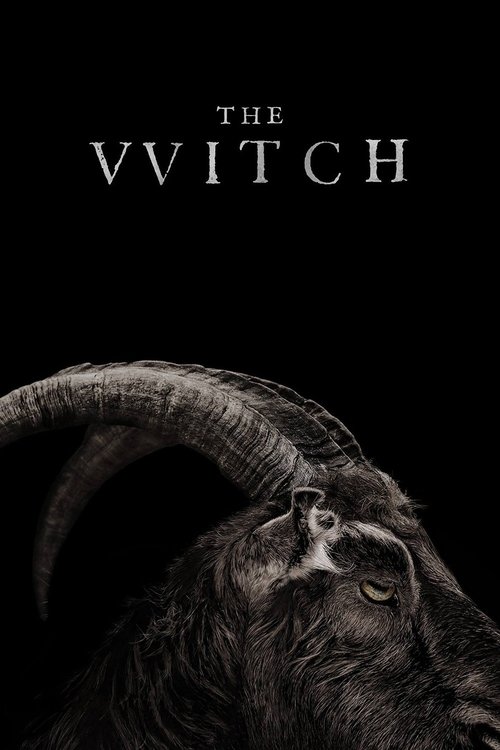
Film · 2015
The Witch
Period-accurate misery and a goat. The family destroys itself first.
Most extreme on TONE — a bleak, unforgiving tone at 008
On VHSCREAM’s six-axis scale, The Witch (2015) is most extreme on the tone axis: 8 out of 100, where 0 is a bleak, unforgiving tone and 100 is gleeful black comedy. 10% of the 105 horror works we have scored come in lower on that axis. How we score →
The Witch is a 2015 folk horror film written and directed by Robert Eggers, his debut, set in 1630s New England and subtitled A New-England Folktale. A Puritan family banished to the edge of a wood destroys itself over a missing infant. We score it 008 on tone — only 11 works in an index of 105 are bleaker, and only 2 films — and 018 on pace, which makes it one of the slowest things we hold.
Scored and reviewed by VHSCREAM on · how we score
The Witch: the review
The horror is the household
A witch exists in this film. She is real, she takes the baby, and the film is not interested in making you doubt it. What the film is interested in is the hundred minutes between the taking and the ending, during which a family of seven dismantles itself with no supernatural assistance whatsoever.
William cannot farm, cannot admit it, and sells his wife's silver cup to buy a hunting trap he is too proud to mention. Katherine grieves in a way that curdles into blame. The twins are unbearable in the specific way that small children are unbearable, and they are the ones who name Thomasin as a witch, and they are believed. By the time anything overtly supernatural happens to the family, the family is already over.
That is the film's argument: a community that believes a daughter might be a witch will produce one.
The research is the atmosphere
Eggers built the dialogue out of period journals, trial records and pamphlets, and then asked actors to deliver it straight. It is initially impenetrable and then, somewhere around the twenty-minute mark, it stops being a costume and becomes the only possible way these people could speak. Ralph Ineson's voice does half the work — a man praying in a register that is already a death rattle.
Everything else is correspondingly austere: natural light, a farm built to the period, no score in the conventional sense but Mark Korven's scraped and sawed strings, which sound less like music than like something being tuned in the next field. Anya Taylor-Joy, in her first lead, has to carry a film in which almost every other character is accusing her, and does it mostly with her face.
Where it divides people
The Witch was sold as terrifying and is not, in the jump-out sense, frightening at all. It is oppressive. The dread is domestic, theological and cumulative, and if you do not find a Puritan family arguing about grace inherently tense then there is a long stretch here where very little occurs.
It also arguably overcommits to Caleb. His seduction and death are the one place where the film reaches for conventional horror imagery, and the register wobbles — a film this disciplined about restraint suddenly showing you a thing in a cloak.
But the ending is close to perfect, and it is perfect because of all that austerity. A hundred minutes of a girl being told what she is, and then a goat asks her a question.
The ending of The Witch explained
Total spoilers from here. Everything above this line is spoiler-free.
The short answer: everyone in the family is dead except Thomasin. She kills her mother in self-defence, is left alone on the ruined farm, and speaks to Black Phillip, who answers her in a man's voice and asks whether she would like to live deliciously. She signs her name in his book, walks naked into the wood, joins a coven around a fire, and rises laughing above the trees.
Here is the chain.
What happens to the baby, Samuel?
Samuel is taken by the witch in the wood. This happens early and is never in doubt — the film shows the witch's hands. The family's refusal to accept a supernatural explanation is what starts the collapse.
Why is Thomasin accused of witchcraft?
The twins accuse her, and nobody defends her. Mercy and Jonas name her as a witch, first as a game. Katherine takes it up. William, who has already lied about the silver cup and his own competence, trades his daughter's reputation rather than admit anything.
What happens to Caleb?
Caleb is seduced and dies, and Thomasin is blamed. He encounters the witch as a young woman in the wood, returns ruined, and dies praying. The twins' accusation hardens into the family's explanation.
Who kills William?
William is killed by Black Phillip. The goat gores him against the collapsing woodpile — the one moment where the film confirms what Phillip is before the final scene.
Why does Thomasin kill her mother?
Katherine attacks her first. Driven past reason and having seen a vision of nursing Samuel, Katherine tries to strangle her daughter. Thomasin takes up a billhook. It is self-defence and the film stages it as such.
What does Black Phillip say to Thomasin?
Black Phillip speaks. Thomasin addresses the goat the way the twins claimed to, and it answers: a man's voice, asking what she wants of life, offering butter, pretty dresses, the world. She asks it to guide her hand, signs the book she cannot read, and goes into the wood.
What does the ending of The Witch mean?
The film's last line of dialogue is a question about pleasure, and that is the point. Thomasin has spent the entire film being told she is wicked by everyone with authority over her — father, mother, siblings, scripture. The coven is the first thing in her life to offer her anything. The ascent is shot as rapture, with Korven's strings turning into something like a choir, and Thomasin laughs.
That is why the ending unsettles rather than satisfies. It is a horror film in which the devil is real, the witchcraft is real, and the damnation is still the best offer the girl ever received. The family's Puritanism did not protect her from the wood. It delivered her to it.
How scary is The Witch, actually?
Scored against the published rubric, here is what the numbers mean for a viewer.
Tone 008 is the signature. Only 11 works in the index are bleaker, and only 2 films — Martyrs at 003 and Possession at 006. It shares its 008 with Hereditary, and the two are a useful pair: Hereditary is bleak because the family never had a choice, The Witch is bleak because they did and chose this.
Pace 018 is slower than almost anything we score. Only 18 works in the index sit lower, and only 7 films. This is a 92-minute film in which the first overt horror beat after the opening is close to forty minutes away. If pacing is where you lose patience, lose it here rather than halfway.
Viscera 038 is well below the median. 44 works score lower, but the index median film is 044, so this is a restrained film by our measure — two or three hard images, mostly brief, and the worst of them involving a goat and a woodpile.
Threat 030 puts it on the supernatural side, which is the honest reading. The witch is real and the devil speaks. But note how high the human damage runs anyway: everything that destroys this family is done by its members.
Era bias 078 is the surprise. 70 works score lower, meaning The Witch reads as modern craft rather than analog texture despite being set in 1630. It is shot clean, with natural light and digital clarity. It is a contemporary film about the past, not a film pretending to be from the past.
On jump scares: two, maybe three, and none of them cheap. The fear here is theological and domestic. Nothing chases anyone.
The Witch on six axes of fear
Every work in the index is scored on six continuous axes of fear. This is what The Witch looks like as a vector.
Where that puts it: #6 bleakest · #9 slow burn
Disagree with a number? Say so on the axis itself. Nobody has confirmed this vector yet, and a score you challenge goes to the top of the queue to be re-scored by a human. Votes do not move the numbers — they decide what gets looked at first. How the scoring works →
Scored against the published rubric. This vector is a draft awaiting review — the method is public so you can argue with it.
Who should skip The Witch
Skip it if the dialogue will defeat you. This is period English delivered without concession, and some viewers never acclimatise. Subtitles help more than they should and are not an admission of anything.
Skip it if you were promised the scariest film of the year. It was marketed that way and it is not that film. It is a slow, oppressive, theologically serious drama with a witch in it. Audiences who wanted scares gave it one of the worst exit polls of its year, and they were not wrong about what they got.
Skip it if religious cruelty toward a child is a hard limit. Thomasin is accused, restrained, locked up and prayed over by her own parents for the length of the film. The supernatural is the relief.
Content notes: the abduction and implied death of an infant, the death of a child, a mother's attempted murder of her daughter, a parricidal animal attack, a woman nursing a bird, brief nudity in a ritual context, and sustained psychological abuse of a teenage girl by her family.
Watch it if you want the most rigorously made horror debut of the last decade, you will accept 1630s diction, and you want an ending that is a genuine liberation and still frightening.
Where to find it
Streaming on Netflix ↗Physical copies on eBay ↗Availability from JustWatch via TMDB. We earn nothing from these links.
Nothing loads from YouTube until you press play.
If The Witch is your kind of fear
The eight works closest to The Witch in the index, ranked by distance across all six axes — not by genre label, and not by what other people watched.
The Fisherman
John Langan · 2016 · Book
Shares a bleak, unforgiving tone.
90% shared signal
The Babadook
Jennifer Kent · 2014 · Film
Shares modern craft.
88% shared signal
A Dark Song
Liam Gavin · 2016 · Film
Shares slow-burn dread.
87% shared signal
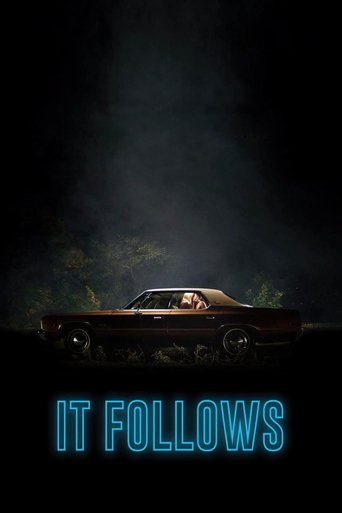
It Follows
David Robert Mitchell · 2014 · Film
Shares a bleak, unforgiving tone.
87% shared signal
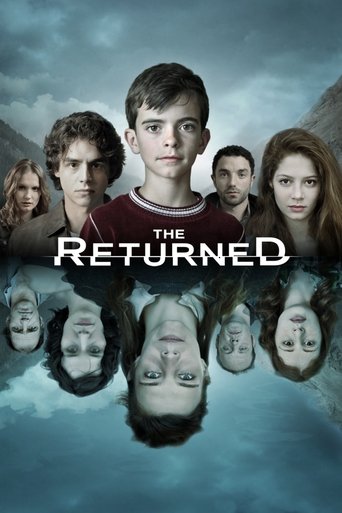
Les Revenants
Canal+ · 2012 · Television
Shares a supernatural threat.
87% shared signal
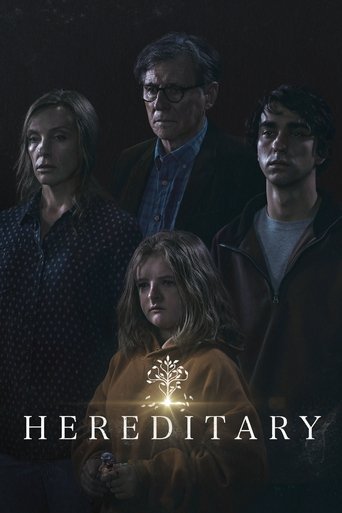
Hereditary
Ari Aster · 2018 · Film
Shares modern craft.
86% shared signal
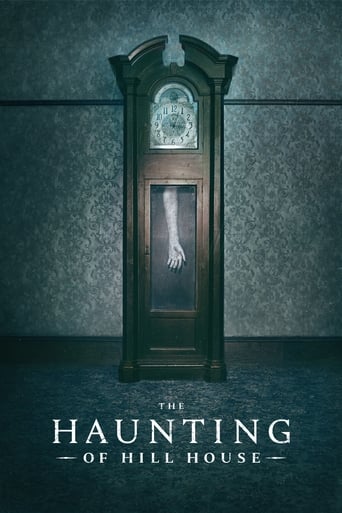
The Haunting of Hill House
Mike Flanagan · 2018 · Television
Shares slow-burn dread.
85% shared signal

Hereditary (OST)
Colin Stetson · 2018 · Record
Shares a supernatural threat.
85% shared signal
See the full list of movies like The Witch →
Questions about The Witch
The things people actually ask about this film, answered.
What happens at the end of The Witch?
Thomasin's whole family is dead — her brother killed by the witch, her father gored by Black Phillip, her mother killed by Thomasin in self-defence. She then speaks to Black Phillip, who answers in a man's voice, signs his book, walks into the wood, joins a coven around a fire and rises laughing above the trees.
What is Black Phillip in The Witch?
Black Phillip is the devil, in the form of the family's goat. The film withholds confirmation until near the end, when the goat kills William and then speaks to Thomasin in a man's voice, offering her butter, pretty dresses and the world in exchange for her signature.
What does "wouldst thou like to live deliciously" mean?
It is Black Phillip's offer to Thomasin: a life of pleasure and plenty in exchange for her soul. The line lands because the film has spent ninety minutes showing her a life of scarcity, accusation and prayer, which makes damnation the first generous offer anyone has made her.
Is The Witch actually scary?
Not in the startle sense. There are two or three jump beats and we score it 038 on viscera, below the median film in our index. What it has is 008 on tone — joint-third-bleakest of our films — and 018 on pace. It is oppressive rather than frightening, and viewers expecting the latter are often disappointed.
Is The Witch historically accurate?
The language is, substantially. Eggers built the dialogue from period journals, pamphlets and witch-trial records, and the farm, clothing and tools were reconstructed to 1630s practice. The events are invented, though they draw on the documented logic of real New England witchcraft accusations.
Why is it spelled The VVitch?
The on-screen title uses two V characters in place of a W, following early modern printing where the letter W was commonly set as a doubled V. It is a typographic period detail, not a different title, and the film is usually listed as The Witch.
These are ranked against The Witch, not against you.
Build your own tape →