
Book · 2022
Our Wives Under the Sea
Julia Armfield
Her wife comes back from the deep sea, sits in the bath for hours, and will not stop drinking salt water.
61Hard going to sit through, out of 100 — mostly how bleak it is
- PacePure slow burn14
- ThreatMostly supernatural26
- GoreShows some of it44
- ToneNo relief at all10
- RealityTilts unreal62
Era bias 92 · Thoroughly modern. Texture rather than fear, so it is not part of the grade. All six scores →
On VHSCREAM’s six-axis scale, Our Wives Under the Sea (2022) is most extreme on the era-bias axis: 92 out of 100, where 0 is analog-era texture and 100 is modern craft. 97% of the 320 horror works we have scored come in lower on that axis. How we score →
Our Wives Under the Sea is a 2022 novel by Julia Armfield. Leah, a marine biologist, comes back from a deep-sea mission that went six months longer than it was supposed to, and her wife Miri watches her stop being able to live in air — hours in the bath, the taps run salt, a body that will not keep its edges. We score it 014 on pace and 010 on tone.
Scored and reviewed by VHSCREAM on · how we score
How scary is Our Wives Under the Sea, actually?
Scored against the published rubric, here is what the numbers mean for a reader.
Pace 014 is deep in dread, and for some readers past it. Only 18 works are slower. There is no event in this novel that could be called a set piece. The unit of change is a week, and the only acceleration is in the last twenty pages.
Tone 010 is deep in the bleak end. 40 works score lower. A wife is lost across the length of the book, slowly, with no possibility of intervention, and the ending is a release rather than a resolution.
Threat 026 is the supernatural end. 214 works score higher. Whatever came to the submersible has no stated motive, no form and no interest in anybody. The nearest thing to a human antagonist is an organisation with a hold queue, and negligence is not malice.
Viscera 044 is moderate and will be read as higher than it is. 204 works score higher. Blood from the ears and nose, skin coming away, a body losing cohesion — all of it close-up and none of it loud. Compare The Troop at 092 for what the top of this axis actually looks like.
Era bias 092 is the modern end. 309 works score lower. A 2022 novel of mobile phones, hold music, grief forums and a flat with a bath in it.
Reality anchor 062 is a shade surreal. A city, a flat, a car, a coast — and one thing in the water with no rules attached to it, which is the whole of the unreality and all of it offstage.
On jump scares: none, and no scene in the book is constructed to startle.
Who should skip Our Wives Under the Sea
Skip it if you need something to happen. We score this 014 on pace. The novel is a woman watching her wife decline, in detail, for most of its length, and the submarine sections are recollection rather than action.
Skip it if you want the deep sea explained. Nothing is. There is no creature reveal, no document dump, no scientist with a theory that holds.
Skip it if terminal illness in a partner is too close. The mechanism is unreal and the experience being described is not, and readers who have done this with a real person find the bathroom sections unbearable in a way the book intends.
Content notes: the prolonged physical decline and death of a spouse, bereavement of a parent, bodily dissolution, self-neglect, drowning, and institutional abandonment of a family.
Read it if you want body horror with no monster in it, the best deep-sea dread written this decade, and a ghost story in which the person haunting the flat is still in it.
Our Wives Under the Sea on six axes of fear
Every work in the index is scored on six continuous axes of fear. This is what Our Wives Under the Sea looks like as a vector — and what each ten-point band looks like across everything else we hold.
Where that puts it: joint #6 slow burn · joint #7 bleakest
Draft score — awaiting human review. About these scores
Disagree with a number? Say so on the axis itself. Nobody has confirmed this vector yet, and a score you challenge goes to the top of the queue to be re-scored by a human. Votes do not move the numbers — they decide what gets looked at first. How the scoring works →
Scored against the published rubric. This vector is a draft awaiting review — the method is public so you can argue with it.
Where to start with horror books →
Where to find it
Buy from an indie bookshop ↗Out-of-print copies on eBay ↗We earn nothing from these links.
Our Wives Under the Sea: the review
A marriage, and the thing that comes back wearing half of it
The horror here is domestic and it is administrative. Leah returns from the water and Miri has to deal with it alone: a wife who sits in the bath until the water goes cold and then runs it again, who drinks from the tap and then from the sea, whose nosebleeds start and do not stop, whose skin begins to come away in the manner of something softening rather than something tearing. And a research centre that will not take her calls. The novel's most sustained source of dread is a telephone line that plays hold music.
That is the book's real argument and the reason it belongs on a horror shelf rather than a literary-fiction one. Our Wives Under the Sea is not interested in frightening you with the deep. It is interested in what it is like to be the only person who can see that somebody is going. Everybody else — the Centre, Miri's friend Carmen, the internet grief forum Miri reads at four in the morning — has a category for what is happening that does not match the evidence in the bathroom.
The structure does the work
The chapters descend. Miri's present-day sections are headed with the zones of the ocean — sunlight, twilight, midnight, abyssal, hadal — and the book sinks through them as Leah does, so that the form is the diagnosis. Interleaved with those are Leah's own account of the mission: a three-person submersible, a routine descent, a failure, and a long time on the bottom with the lights off to save power.
Armfield is extremely good at the submarine material and almost entirely uninterested in explaining it. There is a thing down there. Something comes, or something is already there, and it is rendered as light and pressure and a sound the hull makes. Leah's crewmates, Jelka and Matteo, respond to it in two different registers of religion. Neither of them comes back up. The novel never tells you what it was and this is the correct decision by a wide margin — the one chapter that gestures at an explanation is the weakest in the book.
Where the body horror actually sits
This is a body horror novel in the strict sense that the guide uses: the threat is the tissue, the change cannot be refused, and nobody is to blame. What is unusual is the direction of the change. Most body horror is additive — something grows, erupts, attaches. Leah's is subtractive and specifically aqueous: she is not becoming a monster, she is becoming the medium she was in. Water does not have a shape and neither, eventually, does she.
It is also body horror with the volume turned all the way down, which is not the same as body horror with the stakes turned down. There is no sequence designed to make you flinch. There is a woman in a bath, a wife on the other side of the door, and a slow accumulation of detail — a sound in the plumbing, salt on a worktop, a skin cell under a thumbnail — that lands harder than an eruption would. Annihilation is the useful comparison: Vandermeer sends a woman into the strange place and lets her write field notes, and Armfield keeps the strange place entirely offstage and watches it arrive at a flat in a city.
Where it strains
The grief writing occasionally gets ahead of the horror writing. Miri's mother died not long before the mission and the novel runs that bereavement in parallel, and in two or three passages the parallel is drawn for you rather than left standing — the prose explains the metaphor it has already built perfectly well. Carmen is a thin character doing a structural job. And the Centre, which is terrifying as an answering machine, becomes slightly less terrifying every time the novel implies a conspiracy behind it; the institutional horror here works better as negligence than as design.
It is also a book that a certain kind of reader will put down at page forty because nothing is happening. Nothing is happening is the content. We score it 014 on pace and that number is the honest warning label.
The ending of Our Wives Under the Sea explained
The ending, in full. Open it when you have seen it.
The short answer: Leah does not recover and was never going to. Her body continues to break down into water, and when she can no longer be kept in the flat, Miri drives her to the coast and carries her into the sea, and lets go. The novel ends with Miri in the water alone. What happened on the seabed is never explained: something came, the two other crew members were lost to it, and Leah came back changed. The book's final position is that the sea took her and the return was the delay rather than the rescue.
Here is how the novel gets there.
What happened in the submarine?
A routine descent for the Centre went wrong and the submersible sank past its working depth to the seabed, where it stayed for roughly six months — the official account given to the families was weeks. They had power, then less power, then none to spare, and spent much of it in the dark. Something arrived in that time, described by Leah in terms of light and sound and pressure rather than shape. The vessel eventually rose, which nobody can account for.
What happens to Jelka and Matteo?
Neither comes back. The two crewmates meet what is down there in opposite devotional registers — Jelka with something close to welcome, Matteo with something close to terror — and the novel is deliberately sparing about the mechanics of their deaths. Leah is the only person who returns from the mission, which is the first fact the Centre declines to discuss.
What is the Centre?
A privately funded marine research body that sent three people down, told their families very little, and then handled Leah's return as a paperwork matter. Miri's attempts to reach anybody are the novel's running source of dread. The book stops short of a conspiracy and the restraint is deliberate: an institution that simply does not have a procedure for this is more frightening than one that planned it.
What is happening to Leah's body?
She is reverting to water. The progression is slow and legible — thirst for salt, immersion for longer and longer periods, bleeding, skin loosening, then losing definition altogether — and the novel treats it as a terminal illness rather than a transformation into something. There is no creature at the end of it. There is less and less Leah.
How does the novel actually end?
Miri takes her to the sea. The final chapter is a drive, a beach and a release, written as a decision made out of love and with no alternative available, and the last of the book is Miri standing in water that is now also her wife. Nothing is restored and nothing is explained.
Is it a horror novel or a literary one?
Both, and the distinction is doing less work than people want it to. The mechanism is pure body horror — irreversible physical change, witnessed in detail, with no villain — and the delivery is literary fiction's. Readers who come for a monster will find a bathroom.
If Our Wives Under the Sea is your kind of fear
The eight works closest to Our Wives Under the Sea in the index on the five axes that describe fear, the same medium first — not by genre label, and not by what other people watched.
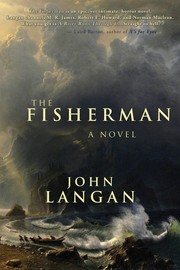
The Fisherman
John Langan · 2016 · Book
Shares slow-burn dread.
93% shared signal

Ghost Story
Peter Straub · 1979 · Book
Shares a bleak, unforgiving tone.
89% shared signal
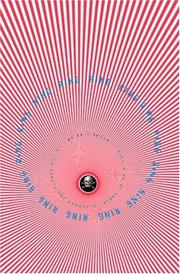
Ring
Koji Suzuki · 1991 · Book
Shares a threat that is not human.
88% shared signal

The Witch
Robert Eggers · 2015 · Film
Shares a bleak, unforgiving tone.
93% shared signal
Under the Skin
Jonathan Glazer · 2013 · Film
Shares slow-burn dread.
91% shared signal
A Tale of Two Sisters
Kim Jee-Woon · 2003 · Film
87% shared signal

Channel Zero: Candle Cove
Nick Antosca · 2016 · Television
Shares a threat that is not human.
87% shared signal

Hereditary (OST)
Colin Stetson · 2018 · Record
86% shared signal
More lists like these: Movies like The Witch
Questions about Our Wives Under the Sea
The things people actually ask about this book, answered — including how it ends.
What happens at the end of Our Wives Under the Sea?
Leah's body continues breaking down into water and cannot be kept in the flat, so Miri drives her to the coast, carries her into the sea and lets her go. The novel closes with Miri alone in the water. Nothing about the mission is explained and nothing is recovered.
What happened to Leah in the submarine?
The submersible sank past its working depth and sat on the seabed for around six months, mostly in darkness. Something arrived, described only as light and sound and pressure. Her two crewmates were lost to it, the vessel rose for reasons nobody can account for, and Leah came back changed.
Is Our Wives Under the Sea a horror novel?
Yes, on our reading, and specifically a body horror novel — the threat is the tissue, the change is irreversible and no villain is available. It is also literary fiction about bereavement. Readers expecting a creature will find a woman in a bath and a wife on the other side of the door.
Is Our Wives Under the Sea scary?
It is frightening rather than startling. We score it 014 on pace and 044 on viscera, so nothing in it is built to make you jump and a good deal of it is built to make you look at a body. The dread is cumulative and it is mostly about helplessness.
What is the Centre in Our Wives Under the Sea?
The research body that funded the dive and then handled Leah's return as an administrative matter. Miri's unanswered calls to it are the novel's most sustained source of dread, and the book deliberately stops short of making it a conspiracy — an institution with no procedure is worse.
What should I read after Our Wives Under the Sea?
Annihilation for a woman writing field notes inside the strange place rather than after it, The Last House on Needless Street for grief structured as a puzzle, and body horror for the subgenre this belongs to and does not resemble.
These are ranked against Our Wives Under the Sea, not against you.
Build your own tape →