
Book · 1991
Ring
Koji Suzuki
The novel is closer to a procedural. Colder than the film.
Most extreme on TONE — a bleak, unforgiving tone at 014
On VHSCREAM’s six-axis scale, Ring (1991) is most extreme on the tone axis: 14 out of 100, where 0 is a bleak, unforgiving tone and 100 is gleeful black comedy. 29% of the 105 horror works we have scored come in lower on that axis. How we score →
Ring is a 1991 novel by Koji Suzuki, the source of Hideo Nakata's Ringu and of the American remake. A journalist investigating four simultaneous teenage deaths finds a videotape that kills whoever watches it inside a week. We score it 014 on tone — 30 works score lower — and 025 on the threat axis.
Scored and reviewed by VHSCREAM on · how we score
Ring: the review
Ring is not the film, and the single most useful thing to know about it is that it is a detective novel about epidemiology.
Suzuki's Asakawa is a male newspaper journalist with a wife and a small daughter, not a single mother, and the book's register is procedural throughout: timetables, autopsy reports, hospital records, a rented cabin's guest book, a phone call to a research institute, mileage. There is almost no atmosphere in the Nakata sense. What there is instead is an investigation conducted under a seven-day deadline by a man who keeps a notebook, and the pleasure of the novel is watching a solvable problem get solved too slowly.
The other difference is Ryuji Takayama, who in the film is a mildly odd academic and in the novel is something else entirely: a philosophy lecturer, Asakawa's old schoolfriend, brilliant, cheerfully amoral, and a man who tells Asakawa he is a serial rapist and is never convincingly contradicted. He is the novel's most interesting creation and he is deeply uncomfortable to read. Asakawa needs him, works with him, and does not resolve what he thinks about him.
The curse is a virus and the book means it literally
This is where Ring parts company with every adaptation. Suzuki's tape does not summon a ghost; it transmits a pathogen. The mechanism is described in medical terms — the victims die of a sarcoma that forms in a coronary artery, which is observable at post-mortem — and the research institute material frames Sadako's power as a biological agent that found a vector in magnetic tape. By the end the novel is explicitly talking about reproduction, mutation and host behaviour, and the sequels push further in that direction. It is a science fiction novel with a well in it.
Sadako's history is longer and stranger than the films admit
Shizuko Yamamura's public demonstration and ruin, Professor Ikuma's involvement, the theatre troupe in Tokyo, the sanatorium, and the specific medical fact the novel uses as its final turn — that Sadako had androgen insensitivity and was biologically intersex, which Dr Nagao discovers while assaulting her and which is part of why he kills her. Suzuki's handling of this is of its time and reads badly now, and it is also structurally load-bearing, because it is what makes her inability to leave anything behind except the tape total.
Where it is weaker than its reputation
The prose, in translation, is flat and functional. Asakawa's wife and daughter exist as stakes. The exposition is delivered in long conversations. And the novel's one genuine failure of nerve is that it explains everything, which is the exact quality Nakata removed to make the film frightening.
For the film that made it famous by withholding, Ringu; for the American remake that explained it differently again, The Ring; for the other great novel about a cursed document that destroys its investigator, House of Leaves.
The ending of Ring explained
Total spoilers from here. Everything above this line is spoiler-free.
The short answer: Asakawa and Ryuji locate the well under the floor of the Pacific Land cabin, recover Sadako's remains, and arrange for them to be returned to her family — and believe that this is the "charm" the tape refers to. It is not. Ryuji dies on schedule the following day. Asakawa, going back over everything they did differently, works out what actually saved him: he had made a copy of the tape and shown it to Ryuji. Propagation is the charm. The novel ends with Asakawa driving to his parents-in-law's house with duplicate tapes, intending to have them watch it, because his wife and his daughter have both seen it and the only way to save them is to infect somebody else. He is calculating how many more copies will be needed.
What is the charm in Ring?
The tape's own recording tells the viewer that there is a way to avoid dying, and the teenagers who first watched it taped over that section as a joke, which is why nobody knows what it is. Asakawa and Ryuji assume it is a funerary obligation — find the body, give it rest — and act on that. The real charm is to copy the tape and show it to another person inside the week. It does not lift the curse; it extends the chain, and the novel is explicit that every survivor has condemned somebody.
Who is Sadako Yamamura?
The daughter of Shizuko Yamamura, a psychic from Izu Oshima who was publicly discredited after a demonstration arranged by Professor Heihachiro Ikuma, and who later killed herself. Sadako inherited and exceeded her mother's abilities: thoughtography, the projection of images onto film, and the capacity to kill with intention. She worked briefly with a Tokyo theatre troupe, where a death followed her. She was killed by Dr Jotaro Nagao at the sanatorium where Ikuma was being treated, after he raped her, and thrown into a well on the site that later became the Pacific Land resort. She did not die at once.
Is the curse in Ring a ghost or a virus?
A virus, unambiguously, and the novel keeps the medical frame throughout. Victims die of a sarcoma in the coronary artery, visible at autopsy; the pathology is consistent; the institute material treats Sadako's power as a biological agent; and the tape is a vector rather than a haunting. The adaptations convert this into a ghost story, which is why their endings feel supernatural and Suzuki's feels like an outbreak.
How does the novel differ from the film Ringu?
Substantially. Asakawa is a man with a wife and daughter rather than a single mother; Ryuji is a self-declared rapist rather than a quiet ex-husband; the curse is explained as a virus rather than withheld; Sadako's intersex condition is central; the tape's contents and the well's location are handled as detective work; and the novel ends with Asakawa actively planning further infections rather than driving away from the decision. Nakata kept the well, the seven days and the copying rule and threw out nearly everything else.
What happens in the Ring sequels?
Suzuki wrote Spiral (1995) and Loop (1998), and they take the virus premise literally. Spiral follows a pathologist performing Ryuji's autopsy and establishes that the ring virus can reproduce through written accounts as well as video. Loop reframes the entire series as something other than a horror story. Anyone who found the first novel's epidemiology the interesting part should read on; anyone who wanted ghosts should stop.
How scary is Ring, actually?
Scored against the published rubric, here is what the numbers mean.
Tone 014 is bleak — 30 works score lower. Nothing is cured, the protagonist's last act is to deliberately infect two elderly people, and he is already counting the copies he will need after that.
The threat at 025 is on the supernatural side — 24 works score lower, although the novel is doing something unusual: the agent is a pathogen, and the human crimes behind it — the assault, the murder, the discrediting of Sadako's mother — are all ordinary.
Viscera 030 is low — 30 works score lower. An autopsy, a body recovered from a well, and an assault described without detail. The deaths are cardiac.
Era bias 032 reads analog — 43 works score lower. It is a novel of 1991 Japan: VHS decks, payphones, newspaper archives, rental cabins and a car with a map in it.
Pace 022 is slow — 25 works are slower. It is an investigation with a deadline and almost no incident.
Reality anchor 052 is almost exactly the midpoint. One impossible premise, then autopsy reports.
On shocks: almost none. The novel's method is a countdown, not a jolt.
Ring on six axes of fear
Every work in the index is scored on six continuous axes of fear. This is what Ring looks like as a vector.
Where that puts it: #4 supernatural · #6 without gore · #7 bleakest · #8 slow burn
Disagree with a number? Say so on the axis itself. Nobody has confirmed this vector yet, and a score you challenge goes to the top of the queue to be re-scored by a human. Votes do not move the numbers — they decide what gets looked at first. How the scoring works →
Scored against the published rubric. This vector is a draft awaiting review — the method is public so you can argue with it.
Who should skip Ring
Skip it if sexual violence is a hard limit. Sadako's death follows a rape, and one of the two protagonists tells the other at length that he is a serial rapist.
Skip it if the novel's treatment of an intersex character will be hurtful. Sadako's condition is revealed as a medical twist and framed in 1991 terms that have not aged at all well.
Skip it if you want the film's atmosphere. There is almost none. This is a procedural, and everything Nakata made frightening by withholding, Suzuki explains.
Content notes: rape described and discussed, a character who declares himself a serial rapist, the murder of a young woman and her disposal in a well, an intersex character's body used as a plot revelation, a suicide, autopsy detail, and a protagonist who knowingly infects relatives to save his family.
Read it if you want the source that every version of this story comes from, you prefer investigation to atmosphere, and you want to see a horror premise that is genuinely built as an epidemiology problem rather than a haunting.
Where to start with horror books →
Where to find it
Buy from an indie bookshop ↗Out-of-print copies on eBay ↗We earn nothing from these links.
If Ring is your kind of fear
The eight works closest to Ring in the index, ranked by distance across all six axes — not by genre label, and not by what other people watched.
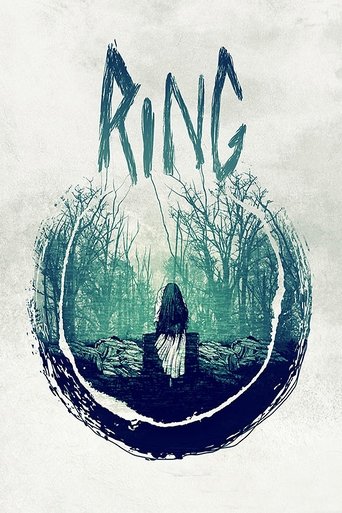
Ringu
Hideo Nakata · 1998 · Film
Shares a bleak, unforgiving tone.
91% shared signal
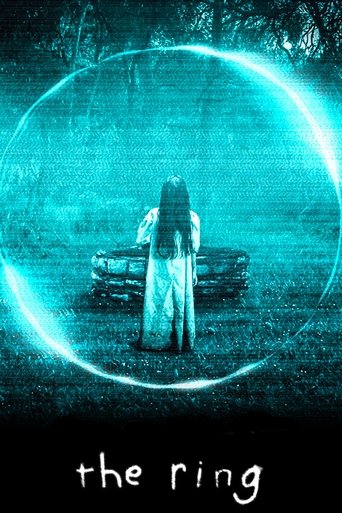
The Ring
Gore Verbinski · 2002 · Film
Shares a supernatural threat.
89% shared signal
The Elementals
Michael McDowell · 1981 · Book
Shares slow-burn dread.
88% shared signal
Ghost Story
Peter Straub · 1979 · Book
Shares analog-era texture.
86% shared signal

The Fog (OST)
John Carpenter · 1980 · Record
Shares restraint over gore.
84% shared signal
Dracula
Bram Stoker · 1897 · Book
Shares slow-burn dread.
83% shared signal
Let the Right One In
Tomas Alfredson · 2008 · Film
Shares a bleak, unforgiving tone.
82% shared signal
The Shining
Stephen King · 1977 · Book
Shares analog-era texture.
81% shared signal
Questions about Ring
The things people actually ask about this book, answered.
What happens at the end of Ring?
Asakawa and Ryuji recover Sadako's body and believe that is the charm. Ryuji dies on schedule anyway. Asakawa works out that he survived because he copied the tape and showed it to Ryuji, and the novel ends with him driving to his in-laws' house with duplicates to save his wife and daughter.
What is the charm in Ring?
Copying the tape and showing it to another person within the week. The tape's own instructions were taped over by the teenagers who first watched it, which is why nobody knows. Asakawa's assumption that it means giving Sadako's remains rest is wrong, and Ryuji dies proving it.
Who is Sadako in the novel Ring?
The daughter of Shizuko Yamamura, a psychic publicly discredited in a staged demonstration. Sadako had thoughtography and could kill with intention. Dr Nagao raped and murdered her at a sanatorium and threw her into a well, where she survived for some time.
Is the curse in Ring a ghost or a virus?
A virus. The novel keeps a medical frame throughout — victims die of a coronary sarcoma visible at autopsy — and treats the tape as a vector. The films convert it into a haunting, which is the single biggest difference between them.
How is the novel Ring different from Ringu?
Asakawa is a married male journalist rather than a single mother; Ryuji is a self-confessed rapist; the curse is explained as a pathogen; Sadako's intersex condition is central; and the ending has Asakawa actively planning to infect his in-laws rather than simply driving.
Should I read the Ring sequels?
Only if the epidemiology was the part that interested you. Spiral takes the virus premise into pathology and establishes that the infection can spread through written accounts; Loop reframes the whole series as something other than horror. Readers who wanted ghosts should stop at the first book.
These are ranked against Ring, not against you.
Build your own tape →