
Book · 1983
The Woman in Black
Susan Hill
See her once and a child dies. Not yours, and not the one who looked.
52Strong to sit through, out of 100 — mostly how bleak it is
- PaceSlow burn18
- ThreatMostly supernatural20
- GoreHolds back16
- ToneNo relief at all12
- RealityTilts unreal46
Era bias 20 · Analog-leaning. Texture rather than fear, so it is not part of the grade. All six scores →
The bleakest horror novels ever written →
On VHSCREAM’s six-axis scale, The Woman in Black (1983) is most extreme on the tone axis: 12 out of 100, where 0 is a bleak, unforgiving tone and 100 is gleeful black comedy. 19% of the 320 horror works we have scored come in lower on that axis. How we score →
The Woman in Black is a 1983 novel by Susan Hill, written as a deliberate Victorian ghost story. A young solicitor, Arthur Kipps, is sent to settle the estate of a dead widow at a house on a tidal causeway, and sees a woman in black at the funeral. We score it 012 on tone — bleaker than most of the index — and 016 on viscera, because nothing is shown and it does not need to be.
Scored and reviewed by VHSCREAM on · how we score
How scary is The Woman in Black, actually?
Scored against the published rubric, here is what the numbers mean for a reader.
Tone 012 is the signature. 60 works score lower. The book offers a recovery and then takes it back, the loss falls on a child, and nothing is explained or avenged. There is no warmth anywhere in the last four pages.
Viscera 016 shows essentially nothing. 294 works score higher. A drowning described from a distance, an accident reported after the fact. The novel's effects are entirely auditory and architectural.
Threat 020 is the supernatural end. 245 works score higher. Jennet is a revenant with no interest in negotiation, and the people of Crythin Gifford are frightened rather than hostile.
Pace 018 is deep in dread. 277 works are faster. A short novel that spends most of its length on fog, tide tables and a man refusing to believe his own ears.
Era bias 020 is analog, and the number is about texture rather than date. 230 works score higher. This was published in 1983 and reads as 1900: gas, horses, a dictated will, a London chambers. Nothing about it is of its own decade.
Reality anchor 046 keeps it grounded. The marsh, the causeway, the tide and the house all obey their own rules precisely, which is what makes the one thing that does not stand out.
On jump scares: two, and both are sounds.
Who should skip The Woman in Black
Skip it if the death of a child is a limit. The novel's premise is that children die when she is seen, and the ending delivers on it specifically and without consolation.
Skip it if you need a resolution. Nothing is laid to rest. The curse is not broken, the ghost is not confronted and the narrator's loss is permanent.
Skip it if harm to a dog will stop you. Spider is in genuine danger in the novel's best sequence, and Hill knows exactly what she is doing with that.
Content notes: the death of a child, bereavement of a spouse, a drowning, a dog in peril, forced separation of a mother and infant, and a sustained sequence of entrapment and isolation.
Read it if you want the most frightening short book in this index, you like a ghost story that operates the Victorian machinery without a single joke, and you can take an ending that gives you hope on purpose.
The Woman in Black on six axes of fear
Every work in the index is scored on six continuous axes of fear. This is what The Woman in Black looks like as a vector — and what each ten-point band looks like across everything else we hold.
Where that puts it: joint #4 without gore · joint #8 supernatural · joint #10 slow burn
Draft score — awaiting human review. About these scores
Disagree with a number? Say so on the axis itself. Nobody has confirmed this vector yet, and a score you challenge goes to the top of the queue to be re-scored by a human. Votes do not move the numbers — they decide what gets looked at first. How the scoring works →
Scored against the published rubric. This vector is a draft awaiting review — the method is public so you can argue with it.
Where to start with horror books →
Where to find it
Buy from an indie bookshop ↗Out-of-print copies on eBay ↗We earn nothing from these links.
The Woman in Black: the review
A pastiche that is better than most of the originals
Hill set out to write the kind of ghost story M. R. James wrote and did it without a trace of irony, which in 1983 was an eccentric project and now looks like the only sensible one. Everything is in place: the framing device at Christmas, the sceptical professional narrator, the locals who will not discuss it, the house reachable only at low tide, the sealed nursery. None of it is winked at. The book's whole method is to take the apparatus completely seriously and operate it perfectly.
What makes it work rather than merely competent is the rule, and the rule is the cruellest device in the English ghost story. The woman in black is seen; after she is seen, a child in the district dies. Not the person who saw her. A child. That single displacement turns every sighting from a fright into a sentence passed on somebody else, and it means the novel's horror is not what happens to Kipps at Eel Marsh House. It is what happens afterwards, to someone who was never there.
Eel Marsh House
The central sequence — Kipps alone, the causeway covered, fog on the marsh, the sound of a pony and trap drowning out in the water that he can hear but not reach, over and over — is one of the great sustained passages of dread in the form. Hill does almost nothing: a sound, a dog, a locked door, a rocking chair that has been used. The famous set piece in the nursery works because she has spent sixty pages establishing that this is a book which will not cheat.
Spider the dog is the best supporting character in any ghost story. Hill understood that the reader will tolerate almost any threat to the narrator and none at all to his dog, and uses that knowledge without mercy.
Where it strains
It is short and it is thin in the middle; the Crythin Gifford material repeats the same beat of locals changing the subject three or four times. Kipps is a type rather than a person, which is faithful to the models and still a limitation. And the exposition of Jennet's history arrives in a bundle of documents in a way James himself would have handled more deftly.
Against that, it is the most frightening book in this index per page, and the ending is the single most merciless conclusion in the English ghost story. The stage adaptation has run for decades and the 2012 film softens the one thing that cannot be softened.
The ending of The Woman in Black explained
The ending, in full. Open it when you have seen it.
The short answer: Kipps survives Eel Marsh House, returns to London, marries and has a son. Years later, at a fair, he sees the woman in black. His wife and child are in a pony trap; she causes the pony to bolt. The child is killed and his wife dies of her injuries soon after. The rule is not broken, Kipps is not spared, and the manuscript we have been reading is his account written long afterwards.
Here is how the novel gets there.
Who is the woman in black?
Jennet Humfrye. She had a son out of wedlock, Nathaniel, and her family forced her to give him to her married sister Alice Drablow on the condition that she never claim him. She stayed in the house as an onlooker while her child was raised as somebody else's.
What happened to her son?
He drowned. The pony trap carrying him across the marsh went off the causeway in fog, and Jennet watched it from a window of Eel Marsh House, unable to reach it. The sound Kipps keeps hearing out on the water is that.
What is the rule?
Whenever Jennet is seen, a child of the district dies. The novel establishes it through the locals' refusal to speak and through the deaths that follow Kipps's own sightings. It is never presented as vengeance against anybody specific — it is the mechanism of a grief that has nothing left to aim at.
Why is the ending considered so cruel?
Because the novel has already given Kipps his escape. He leaves, recovers, builds a life, and the horror reaches him years later through the one thing it has been promised it will take. There is no final confrontation, no lifting of the curse and no reason. Hill grants a reprieve purely so that she can withdraw it, and the last lines are flat rather than dramatic, which makes it worse.
Is the film ending the same?
No. The 2012 adaptation changes the fate of the family and adds a measure of reunion that the novel pointedly withholds. The stage play, which has run in London since 1989, keeps the book's logic and its bleakness.
If The Woman in Black is your kind of fear
The eight works closest to The Woman in Black in the index on the five axes that describe fear, the same medium first — not by genre label, and not by what other people watched.
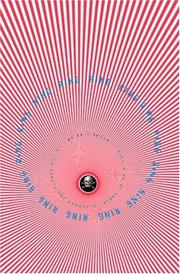
Ring
Koji Suzuki · 1991 · Book
Shares a bleak, unforgiving tone.
90% shared signal

The Thing (OST)
Ennio Morricone · 1982 · Record
Shares slow-burn dread.
95% shared signal
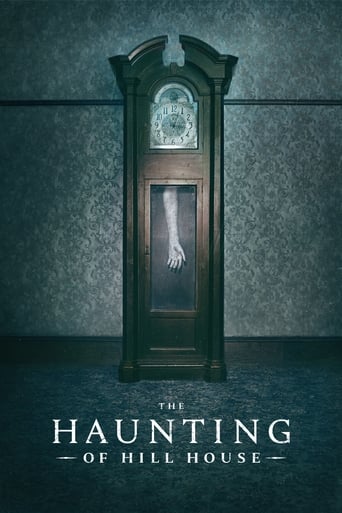
The Haunting of Hill House
Mike Flanagan · 2018 · Television
Shares a threat that is not human.
92% shared signal
The Haunting of Bly Manor
Mike Flanagan · 2020 · Television
Shares restraint over gore.
91% shared signal
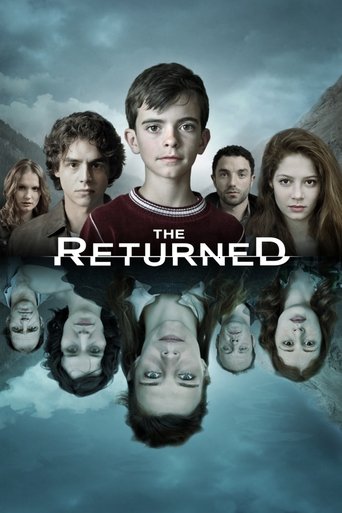
Les Revenants
Canal+ · 2012 · Television
Shares a bleak, unforgiving tone.
90% shared signal

The Fog (OST)
John Carpenter · 1980 · Record
Shares restraint over gore.
89% shared signal
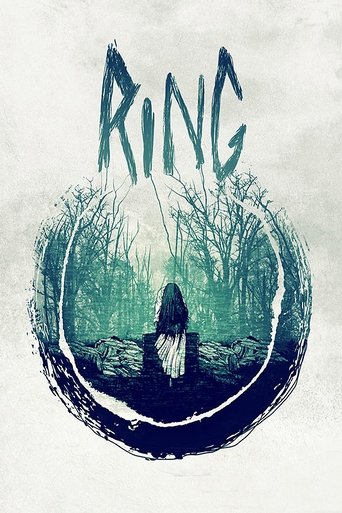
Ringu
Hideo Nakata · 1998 · Film
Shares a threat that is not human.
89% shared signal
The Others
Alejandro Amenábar · 2001 · Film
Shares slow-burn dread.
88% shared signal
More lists like these: Shows like The Haunting of Hill House
Questions about The Woman in Black
The things people actually ask about this book, answered — including how it ends.
How does The Woman in Black end?
Kipps survives the house, returns to London, marries and has a son. Years later he sees the woman in black at a fair; she causes the pony pulling his wife and child's trap to bolt. The child is killed and his wife dies of her injuries. The curse is never broken and no explanation is offered.
Who is the woman in black?
Jennet Humfrye. Forced to give her illegitimate son Nathaniel to her married sister and barred from claiming him, she watched from a window as the pony trap carrying him went off the causeway and drowned. Whenever she is seen afterwards, a child in the district dies.
What is the rule in The Woman in Black?
A sighting of Jennet is followed by the death of a child — not of the person who saw her. That displacement is the novel's cruellest device: every appearance is a sentence passed on somebody who was never involved.
Is the book different from the film?
Substantially at the end. The 2012 film changes the fate of Kipps's family and supplies a form of reunion the novel refuses. The long-running stage adaptation keeps the book's ending.
Is The Woman in Black actually scary?
Yes, and it is the most frightening book in this index relative to its length. We score it 016 on viscera, so almost nothing is shown, and 018 on pace. The effects are sound, fog and a locked nursery.
What should I read after The Woman in Black?
The Turn of the Screw for the model Hill is working from, The Haunting of Hill House for the version where the haunting may be the narrator, and Ghost Story for the American answer to the same tradition.
These are ranked against The Woman in Black, not against you.
Build your own tape →