
On VHSCREAM’s six-axis scale, Ghost Story (1979) is most extreme on the era-bias axis: 18 out of 100, where 0 is analog-era texture and 100 is modern craft. 30% of the 105 horror works we have scored come in lower on that axis. How we score →
Ghost Story is a 1979 novel by Peter Straub. Four elderly men in a small town in upstate New York have spent fifty years telling each other ghost stories to avoid telling the one that matters, and the thing they did in 1929 has come back for them. We score it 060 on reality anchor — 66 works score lower — and 018 on tone.
Scored and reviewed by VHSCREAM on · how we score
Ghost Story: the review
Ghost Story is the best American ghost novel of the twentieth century and it is mostly about guilt, male friendship and the specific cowardice of respectable men.
The Chowder Society is five lawyers and doctors in Milburn who meet in dinner jackets to drink and tell each other frightening stories. Straub's structure keeps them at the centre and lets the horror accumulate around them: one of them dies at a party in the first pages, the survivors begin having the same dream, a novelist nephew arrives with his own account of a woman who was not a woman, and the town starts to go wrong by degrees — a farmer's livestock, a boy who will not come home, a snowfall that does not stop.
The writing is the reason it lasts. Straub is a far more careful stylist than the horror bestseller list of 1979 would suggest: the prose is cool, slightly formal, and willing to spend a chapter on an old man's memory of a face. Milburn is one of the best-realised towns in the genre and the novel is genuinely interested in what fifty years of shared silence does to four friendships.
It is a novel about telling stories, and it means it structurally
Ghost stories are told inside it constantly — by the Society, by the nephew in his own manuscript, in a long middle section set fifty years earlier — and the book's monsters are explicitly made out of what people imagine. The novel's position is that the shapeshifters take the shapes human beings have given them, which is why they arrive as the figures from the stories the men have been telling, and why the only weapon that works is attention.
The 1929 section is the best part
Eva Galli's death, told at length in the middle of the novel, is as good as anything in American horror: five young men, a party, a scuffle, a woman on the floor, a decision made in panic, a car rolled into a pond, and a face at the rear window as it goes under. Everything in the present-day plot is the bill for that evening, and the novel is unsentimental about the fact that what they were protecting was their careers.
Where it is hard going
It is long and the structure is deliberately fractured — three parts, multiple narrators, a manuscript inside the novel, flashbacks inside flashbacks — and readers looking for forward motion find the first two hundred pages slow. The Bate brothers are more effective as a threat than as characters. And the final confrontation, which runs through a derelict cinema and a hotel, is less frightening than the middle of the book.
For the ghost novel Straub is writing in the tradition of, The Haunting of Hill House; for the same Southern-Gothic family debt coming due, The Elementals; for the same town closing around something, Pet Sematary.
The ending of Ghost Story explained
Total spoilers from here. Everything above this line is spoiler-free.
The short answer: the entity has been working through a succession of women — Alma Mobley, who destroyed Don Wanderley's life; Anna Mostyn, who arrives in Milburn claiming to be Eva Galli's niece; and, fifty years earlier, Eva Galli herself. It is not a ghost. The novel calls its kind Manitou: shapeshifters who have been taken for vampires and werewolves and whatever else the people of a given century had available, and who assume the shapes human imagination hands them. The Chowder Society did not kill a woman in 1929; they attacked one of these things, failed, and gave it a grievance. It is served by Gregory and Fenny Bate, two dead brothers. By the climax most of the Society is dead and Milburn has been emptied. Don Wanderley, the teenager Peter Barnes and Ricky Hawthorne — the last of the five — hunt it down, kill the Bate brothers in a brutal fight at the old Rialto theatre, and corner the Galli creature; Peter stabs it, but it escapes in the form of a bird. The novel's frame, which opens the book, is the aftermath: Don travelling with a young girl who is the thing returned in a new identity. He ends that identity, and he kills the creature itself in its last form — a wasp, held in his hand.
What did the Chowder Society do in 1929?
Five young men — Sears James, Ricky Hawthorne, Lewis Benedikt, John Jaffrey and Edward Wanderley — were at Eva Galli's house for an evening when a scuffle broke out and she was knocked down and appeared to be dead. Terrified of the scandal and of what it would do to their prospects, they put her body into a car and ran it into a pond. As it sank, they saw her face at the rear window, looking at them. All five spent the next fifty years not discussing it, and the Chowder Society's custom of telling ghost stories is what they do instead.
What are the shapeshifters in Ghost Story?
Beings the novel names Manitou, which are not ghosts, not demons and not undead. They are ancient, they recur across history under whatever name a culture has for them — vampire, werewolf, revenant — and they take their forms from human imagination, which is why they keep appearing as figures out of stories. The novel's most frightening implication is that the Chowder Society's lifelong habit of telling each other ghost stories has been supplying the vocabulary.
Who is Alma Mobley?
The woman Don Wanderley fell in love with and nearly married, and the subject of the novel he wrote afterwards. She is the same entity that was Eva Galli and that arrives in Milburn as Anna Mostyn — the names are an anagram family, which the book expects you to notice. Don's manuscript about her, included inside the novel, is both the evidence that brings him to Milburn and the clearest account of what the creature does to a person it has decided to ruin.
Who are Gregory and Fenny Bate?
Two brothers, long dead, who serve the shapeshifter and do the physical work: a predatory older brother and a small, pathetic, barefoot younger one who is the most unsettling figure in the book. They are killed at the Rialto in the novel's most violent sequence, and the detail that Fenny has to be destroyed rather than defeated is the point at which the novel stops being a ghost story and becomes something closer to a war.
How does Ghost Story end?
With a wasp. After the Rialto, the creature escapes as a bird, and the novel's frame picks up with Don Wanderley travelling with a child who is the thing in its newest shape. He ends that shape, and then kills the creature itself in its final, reduced form, which he is holding in his hand on the last page. The structure is a closed loop: the opening chapters of the book are the last events chronologically.
Is Ghost Story like the 1981 film?
Barely. The film keeps the Chowder Society, the drowning and Alma Mobley, drops the Manitou cosmology, the Bate brothers, the town's destruction and Don's manuscript, and resolves it as a straightforward revenge haunting. The novel is three times as long and considerably stranger.
How scary is Ghost Story, actually?
Scored against the published rubric, here is what the numbers mean.
Reality anchor 060 leans towards dream logic — 66 works score lower. The shared dream, the shapeshifting, the nested manuscripts and the closed-loop frame all refuse a stable account.
Tone 018 is bleak — 47 works score lower. Four of the five friends die, a town's population is killed, and the one survivor of the original group ends the book old and alone.
Viscera 044 is just under the median — 51 works score lower. Livestock mutilation, two very violent deaths at the theatre, several bodies, and a drowning.
Era bias 018 is deep analog — only 31 works score lower. A 1979 novel split between 1929 and the late seventies, with no technology beyond a car, a telephone and a typewriter.
Pace 024 is slow — 29 works are slower. The first third is dinners, memories and a town being described.
The threat at 040 is on the supernatural side — 54 works score lower, though the novel insists that the original crime was entirely human and entirely ordinary.
On shocks: a handful. The novel's worst moment is a face at a car window, and it has no competition.
Ghost Story on six axes of fear
Every work in the index is scored on six continuous axes of fear. This is what Ghost Story looks like as a vector.
Where that puts it: #7 surreal · #10 without gore · #10 slow burn · #10 supernatural
Disagree with a number? Say so on the axis itself. Nobody has confirmed this vector yet, and a score you challenge goes to the top of the queue to be re-scored by a human. Votes do not move the numbers — they decide what gets looked at first. How the scoring works →
Scored against the published rubric. This vector is a draft awaiting review — the method is public so you can argue with it.
Who should skip Ghost Story
Skip it if length and structure will defeat you. It is long, told in three parts across two timelines with a novel embedded inside it, and it withholds forward motion for two hundred pages.
Skip it if a child in danger is a hard limit. A boy disappears early, Peter Barnes is a teenager in sustained peril, and the frame narrative involves a girl.
Skip it if animal mutilation is a hard limit. The town's deterioration is signalled through livestock and the descriptions are specific.
Content notes: a woman's death and disposal by drowning, the deaths of most of a town's population, animal mutilation described in detail, a child's disappearance, a very violent extended fight sequence, sexual manipulation used as a weapon, and a man's life systematically destroyed by a partner.
Read it if you want the best American ghost novel of its century, you can take two hundred unhurried pages before the shape of it appears, and you want to read the single best chapter in horror about four respectable men making a decision in a panic.
Where to start with horror books →
Where to find it
Buy from an indie bookshop ↗Out-of-print copies on eBay ↗We earn nothing from these links.
If Ghost Story is your kind of fear
The eight works closest to Ghost Story in the index, ranked by distance across all six axes — not by genre label, and not by what other people watched.
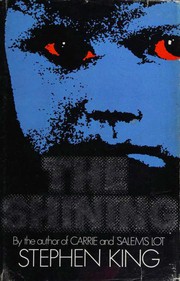
The Shining
Stephen King · 1977 · Book
Shares analog-era texture.
93% shared signal
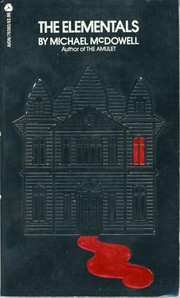
The Elementals
Michael McDowell · 1981 · Book
Shares slow-burn dread.
88% shared signal
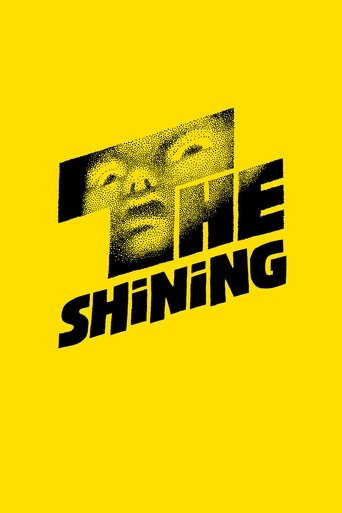
The Shining
Stanley Kubrick · 1980 · Film
Shares a bleak, unforgiving tone.
87% shared signal
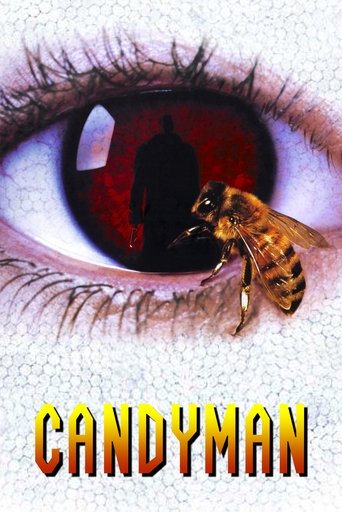
Candyman
Bernard Rose · 1992 · Film
Shares a bleak, unforgiving tone.
86% shared signal
Ring
Koji Suzuki · 1991 · Book
Shares slow-burn dread.
86% shared signal
Dracula
Bram Stoker · 1897 · Book
Shares analog-era texture.
85% shared signal

Frankenstein
Mary Shelley · 1818 · Book
84% shared signal
Don't Look Now
Nicolas Roeg · 1973 · Film
84% shared signal
Questions about Ghost Story
The things people actually ask about this book, answered.
What happens at the end of Ghost Story?
Don, Peter and Ricky kill the Bate brothers at the Rialto theatre and wound the shapeshifter, which escapes as a bird. The novel's opening frame is the aftermath: Don travelling with a girl who is its new identity. He ends that identity and kills the creature in its last form, a wasp, in his hand.
What did the Chowder Society do in 1929?
Five young men knocked Eva Galli down during a scuffle at her house, believed she was dead, and sank her body in a car to avoid scandal. As it went under they saw her face at the rear window. None of them spoke about it again for fifty years.
What are the creatures in Ghost Story?
Shapeshifters the novel calls Manitou — ancient beings that recur under whatever name a culture supplies, from vampire to werewolf, and that take their forms from human imagination. They are not ghosts, and the Society's lifelong habit of telling ghost stories has been feeding them material.
Who is Alma Mobley in Ghost Story?
The same entity as Eva Galli and Anna Mostyn, under another anagram of the same name. She destroyed Don Wanderley's life before the novel's present-day events, and the manuscript he wrote about it is embedded in the book as its clearest piece of evidence.
Is Ghost Story scary?
Cumulatively, yes. We score it 024 on pace and 060 on reality anchor: it is slow, structurally fractured, and its fear is built out of guilt, a town emptying in the snow, and one image of a woman looking out of a sinking car.
Is the 1981 film faithful to Peter Straub's novel?
No. The film keeps the Chowder Society, the drowning and Alma Mobley, and discards the Manitou, the Bate brothers, the destruction of the town and the embedded manuscript, turning it into a conventional revenge haunting about a third the length.
These are ranked against Ghost Story, not against you.
Build your own tape →