
Record · 1982
The Thing (OST)
Ennio Morricone
A resting heartbeat that tells you nothing for ninety minutes, including at the end.
54Strong to sit through, out of 100 — mostly how bleak it is
- PacePure slow burn14
- ThreatMostly supernatural24
- GoreHolds back22
- ToneNo relief at all10
- RealityTilts unreal46
Era bias 14 · Analog to the bone. Texture rather than fear, so it is not part of the grade. All six scores →
The bleakest horror albums ever recorded →
On VHSCREAM’s six-axis scale, The Thing (OST) (1982) is most extreme on the tone axis: 10 out of 100, where 0 is a bleak, unforgiving tone and 100 is gleeful black comedy. 12% of the 320 horror works we have scored come in lower on that axis. How we score →
The Thing is Ennio Morricone's 1982 score for John Carpenter, and it is the strangest commission in either man's career: the most prolific orchestral composer in cinema, hired by a director who scored his own films, writing something that sounds almost entirely like the director. We score it 014 on pace, among the most patient records in this index, and 010 on tone.
Scored and reviewed by VHSCREAM on · how we score
How scary is The Thing (OST), actually?
Scored against the published rubric, here is what the numbers mean for a listener.
Pace 014 is the signature and it is deep in dread. Only 18 works are slower. The central figure is a resting heartbeat and the orchestral cues move in slow descending masses. Nothing on this record is in a hurry.
Tone 010 is bleak. 40 works score lower. There is no warmth, no theme to hold and no resolution. The last cue is the first cue.
Threat 024 leans supernatural. 231 works score higher. The thing is an organism with no motive the film can state, and the score matches it: no motif, no identification, no comment.
Viscera 022 is restrained, which is startling given the film. 272 works score higher. The Thing contains the best practical creature effects anybody has done and the score accompanies almost none of them — those sequences are largely scored by screaming and by a dog.
Era bias 014 is analog. 261 works score higher. A 1982 synthesiser and a real orchestra on tape.
Reality anchor 046 sits just under the midpoint. The music is textural rather than representational and still never leaves the station.
On jump scares: none. The record has no stings in it at all.
Who should skip The Thing (OST)
Skip it if a non-developing pulse will bore you. The central figure does not change across the album, by design, and forty minutes of it is a genuine test.
Skip it if you want Morricone. Almost nothing on this record sounds like the composer whose name is on it, and the cues that do were not used.
Skip it if you need a creature theme. There is none. The score's refusal to identify the thing is the point and it offers the listener nothing to hold.
Content notes: nothing in the recording. The score accompanies body horror, animal death and suicide.
Listen to it if you want the most influential piece of dread writing on this shelf, you are interested in the only time Morricone worked in another director's idiom, and a heartbeat that tells you nothing for ninety minutes sounds like the correct score for a film about paranoia.
The Thing (OST) on six axes of fear
Every work in the index is scored on six continuous axes of fear. This is what The Thing (OST) looks like as a vector — and what each ten-point band looks like across everything else we hold.
Where that puts it: #4 supernatural · #8 slow burn
Draft score — awaiting human review. About these scores
Disagree with a number? Say so on the axis itself. Nobody has confirmed this vector yet, and a score you challenge goes to the top of the queue to be re-scored by a human. Votes do not move the numbers — they decide what gets looked at first. How the scoring works →
Scored against the published rubric. This vector is a draft awaiting review — the method is public so you can argue with it.
The Thing (OST): the review
A heartbeat, and almost nothing else
The main cue is a low synthesised pulse — two beats, a rest, two beats — at the speed of a resting heart, with a faint high harmonic over it and no melody whatsoever. It runs under the opening titles, it returns throughout, and it is the entire argument of the score. Something alive is nearby. It is not hurrying.
Morricone wrote orchestral material too, some of it substantial, and most of what is in the film is the sparse electronic writing. Carpenter has described asking for something minimal and getting a composer willing to do it; there has been debate ever since about how much of the final cues each man shaped, with Carpenter credited on some of the music and his fingerprints audible in the rest.
What matters for a listener is that the result does something Carpenter's own scores do not quite manage. Carpenter's synth writing is rhythmic and propulsive — Halloween, The Fog, Escape from New York all move. This does not move. It waits.
Why it suits a film about not knowing
A conventional creature score identifies the creature. It has a motif, and the motif tells you when the thing is present. Morricone's pulse is uninflected and constant, so it cannot do that — and in a film whose entire subject is that any of these men might already be it, a score that refuses to point is the only honest option. The music is as uninformed as the characters.
The album's other mode is a cold orchestral desolation — strings in slow descending masses, closer to Morricone's own Exorcist II material than to anything in Halloween — which supplies the Antarctic rather than the creature.
Where it strains
There is not much of it and the album pads with unused orchestral cues that are good and belong to a different, more conventional film. The pulse, by design, does not develop, so forty minutes of it is a test. And the provenance question is never resolved on the record itself: the sleeve credits Morricone, the sound is substantially Carpenter's idiom, and the truth is somewhere in a mixing room in 1982.
What it earned is permanence. Of the two hundred scores in this index's period, this is the one most often imitated by anybody trying to make a room feel occupied.
The ending of The Thing (OST) explained
The ending, in full. Open it when you have seen it.
How it resolves: it does not resolve, and the final scene is the reason the score is famous. MacReady and Childs sit in the burning wreckage, neither able to establish what the other is, and the pulse returns — unchanged, patient, and now the only information available. The film ends on a two-beat figure that has told you nothing for ninety minutes and is still not telling you anything. It is the most perfectly matched final cue in the genre.
Did Morricone or Carpenter write it?
Morricone is credited and wrote the material. Carpenter asked for something minimal and electronic rather than Morricone's usual orchestral approach, was present for the work, and is credited on some cues; how much of the final shape is his has been discussed for four decades without resolution. The honest answer is that it is Morricone writing deliberately in Carpenter's register.
What is the main theme?
A low synthesised pulse at roughly the speed of a resting heartbeat — two beats, a rest, two beats — with a thin high tone above it and no melody. It is used under the titles and recurs throughout, including over the final scene.
Why does the score sound so little like Morricone?
Because Carpenter asked for the opposite of what Morricone was known for. There is no soaring melody, no voice, no guitar and almost no orchestra in what the film uses. The unused orchestral cues on the album are far more recognisably his.
Is the score used much in the film?
Sparingly, and that is deliberate. Long stretches of The Thing have no music at all — wind, generators and silence — and the pulse is reserved. The album is therefore longer than the film's music.
Why is it so widely imitated?
Because a slow, uninflected low pulse is the cheapest effective way to make a space feel occupied, and this is where modern horror learned it. It is audible in a great deal of the synth revival on this shelf, including Dangerous Days.
If The Thing (OST) is your kind of fear
The eight works closest to The Thing (OST) in the index on the five axes that describe fear, the same medium first — not by genre label, and not by what other people watched.
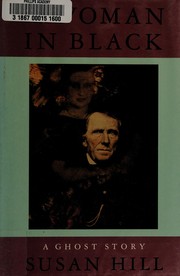
The Woman in Black
Susan Hill · 1983 · Book
Shares a bleak, unforgiving tone.
95% shared signal
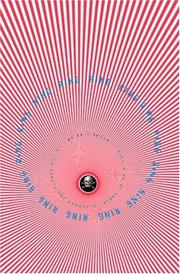
Ring
Koji Suzuki · 1991 · Book
Shares slow-burn dread.
92% shared signal
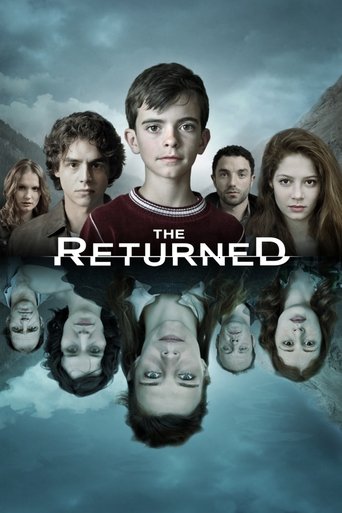
Les Revenants
Canal+ · 2012 · Television
Shares restraint over gore.
92% shared signal
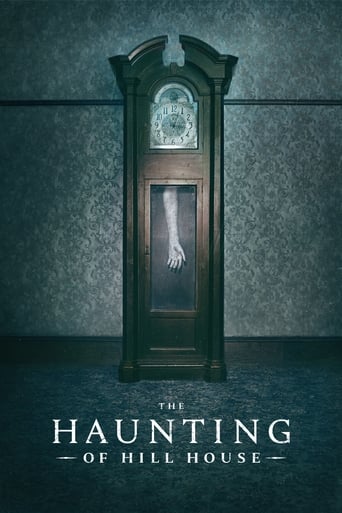
The Haunting of Hill House
Mike Flanagan · 2018 · Television
Shares a threat that is not human.
91% shared signal
The Haunting of Bly Manor
Mike Flanagan · 2020 · Television
Shares slow-burn dread.
90% shared signal
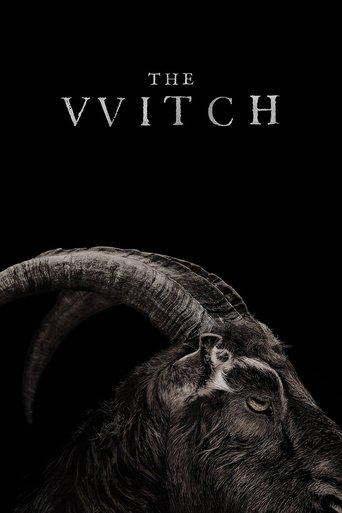
The Witch
Robert Eggers · 2015 · Film
Shares a bleak, unforgiving tone.
88% shared signal
The Others
Alejandro Amenábar · 2001 · Film
Shares restraint over gore.
88% shared signal
Local 58
Kris Straub · 2015 · Web series
Shares a threat that is not human.
88% shared signal
The Thing (OST) in another form
The index links works across media, so an adaptation sits beside its source and a score beside the film it haunts.
More lists like these: Shows like The Haunting of Hill House · Movies like The Witch
Questions about The Thing (OST)
The things people actually ask about this record, answered — including how it ends.
Who composed the score for The Thing?
Ennio Morricone, credited, writing deliberately in John Carpenter's minimal electronic register rather than his own orchestral one. Carpenter asked for that approach, was present for the work and is credited on some cues; the exact division has been debated for four decades.
What is the main theme of The Thing?
A low synthesised pulse at roughly the speed of a resting heartbeat — two beats, a rest, two beats — with a thin high tone over it and no melody at all. It opens the film and returns over the final scene unchanged.
Why does The Thing score not sound like Morricone?
Because Carpenter specifically asked for the opposite of what Morricone was known for: no melody, no voice, almost no orchestra. The unused orchestral cues included on the album sound far more like him.
Is the final scene scored?
Yes, with the same pulse that opened the film. MacReady and Childs sit in the wreckage unable to establish what the other is, and the music supplies no information whatsoever. It is the most perfectly matched closing cue in the genre.
Why is this score so influential?
Because a slow uninflected low pulse is the most economical way to make a space feel occupied, and this is where modern horror learned it. You can hear its descendants across the synth revival, including Dangerous Days.
These are ranked against The Thing (OST), not against you.
Build your own tape →