
Record · 2014
Dangerous Days
Perturbator
Synthwave with teeth. Neon, blood, and a great many arpeggios.
Most extreme on ERA BIAS — modern craft at 088
On VHSCREAM’s six-axis scale, Dangerous Days (2014) is most extreme on the era-bias axis: 88 out of 100, where 0 is analog-era texture and 100 is modern craft. 87% of the 105 horror works we have scored come in lower on that axis. How we score →
Dangerous Days is a 2014 album by Perturbator — the French musician James Kent — and the record that defined darksynth: analogue-modelled synthesisers, hard four-to-the-floor programming, and a cyberpunk dystopia as the frame. We score it 084 on pace — 104 of 105 works score lower, which makes it the fastest thing we hold — and 060 on tone.
Scored and reviewed by VHSCREAM on · how we score
Dangerous Days: the review
Dangerous Days is the only record in this index you could dance to, and its inclusion here is a deliberate argument about what horror music is for.
Kent came out of French black metal and arrived at synthwave with a metal musician's attitude to volume and a metal musician's indifference to subtlety. The result is not the warm, nostalgic, sunset-and-Lamborghini register that most of the genre operates in. Dangerous Days is cold, hard, loud and aggressive: saw-wave leads with no reverb to hide behind, bass that is closer to industrial than to disco, gated snares, and arpeggios that run past the point of pleasure into something closer to pressure.
The frame is a cyberpunk city — the record is presented as a set of transmissions from a dystopia, with sampled dialogue, corporate announcements and a general atmosphere of a place that has already lost. It is not a subtle conceit and Kent is not attempting subtlety. What he is attempting is the specific thing Blade Runner, Terminator and early Carpenter did with synthesisers: making technology sound like a predator.
Why it belongs in a horror index
Because the lineage is direct and because the mechanism is the same. The pulsing synth menace that Carpenter built on Halloween (OST) and Escape from New York is the thing this record is doing at four times the tempo, and Kent's sound has since fed back into horror itself — the modern Carpenter-indebted score, the neon-slasher revival, and a great deal of game and film music that wants a threat with a BPM. Dangerous Days is where that became a formal language rather than a pastiche.
The best tracks
"Humans Are Such Easy Prey" is the record's thesis in a title and is the one most people meet first. "Future Club" is the biggest and the one that broke the album, and it is genuinely enormous. "Sentient" and "Neo Tokyo" are the colder material and the closest Kent gets to dread rather than aggression. Across the record the sequencing alternates between those two modes, which is why an hour of it does not exhaust.
Where it is weaker
It is long and front-loaded, and the back half repeats the first. The sampled dialogue and the dystopian framing are thin and are the element that has dated fastest. And at 060 on tone it is, by a wide margin, the least bleak record in this index — which is a problem if you have come to it from the records either side of it here.
For the score this record is descended from, Halloween (OST) and The Fog (OST); for the modern synth score that applied the same vocabulary to a horror film, It Follows (OST).
The ending of Dangerous Days explained
Total spoilers from here. Everything above this line is spoiler-free.
The short answer: it ends by cooling down rather than by escalating, which is the one structurally interesting thing about the record. Dangerous Days front-loads its hardest and fastest material and sequences the colder, slower, more atmospheric tracks towards the back, so the album's last stretch is closer to the Carpenter-style dread it is descended from than to the club material it opens with. There is no narrative conclusion to the dystopian framing — the city is not saved or destroyed, and the transmissions simply stop. Kent has released the album in several configurations, including an expanded edition with additional tracks and remixes, so the final track depends on which version you have. What every version does is end quieter than it started.
What is darksynth?
The harder, colder branch of synthwave: analogue-modelled synthesisers and 1980s production conventions used for aggression rather than nostalgia, usually at higher tempos, with distortion, industrial bass and metal-adjacent arrangement. Dangerous Days is the record that defined it, and Perturbator, Carpenter Brut and GosT are the three names the subgenre is usually described through. The distinction from mainstream synthwave is mood rather than equipment.
Who is Perturbator?
James Kent, a French musician who came to synthesisers from black metal and released his first Perturbator records in the early 2010s, mostly through the Blood Music label. Dangerous Days is his breakthrough; The Uncanny Valley followed in 2016, and later records including Lustful Sacraments moved towards post-punk and industrial. He also contributed to the Hotline Miami soundtracks, which is where a large part of his audience found him.
Why is a synthwave record in a horror index?
Because its lineage and its method are horror's. The threatening synthesiser pulse is Carpenter's invention, and this record is that device run at dance tempo with modern production. The influence has also run back the other way: contemporary horror scoring, neon-lit slasher revivals and a great deal of game music take their vocabulary from darksynth rather than from the 1978 original.
Is Dangerous Days actually frightening?
No, and the page should say so plainly. We score it 060 on tone — the least bleak of the records we hold by a clear margin — and 084 on pace, the fastest thing in the whole index. It is menacing, propulsive and cold, and it is fundamentally enjoyable in a way nothing else in this medium here is. It belongs in the index as the point at which horror's synthesiser language became music in its own right.
Where should I start with Perturbator?
Here, with "Humans Are Such Easy Prey" and "Future Club". The Uncanny Valley is the better-produced and more coherent record and is the one to go to next. If you want the colder, slower end of what he does, the later material is where it is, and if you want the context, the Hotline Miami soundtracks are where the whole scene converged.
How scary is Dangerous Days, actually?
Scored against the published rubric, here is what the numbers mean.
Pace 084 is the fastest in the index — 104 of 105 works score lower. Most of the record sits at dance tempo and the arpeggios run faster than that.
Tone 060 is the least bleak score we hold in this medium — 102 works score lower. The record is aggressive rather than despairing, and large parts of it are a straightforward pleasure.
Era bias 088 reads modern — 91 works score lower, which is worth stating given the record's 1980s vocabulary: everything on it is modern software and modern mastering imitating analogue, not analogue.
The threat at 070 leans human — 85 works score lower. The record's imagined antagonists are corporations, machines and people, and there is nothing supernatural in its frame.
Viscera 055 is above the median — 67 works score lower. Nothing is described, but the bass and the distortion are physical, and the record is mixed to be felt.
Reality anchor 066 leans towards dream logic — 74 works score lower, almost entirely because of the dystopian framing rather than anything in the music's structure.
On shocks: none. Everything on it is signposted a bar in advance, which is what makes it danceable.
Dangerous Days on six axes of fear
Every work in the index is scored on six continuous axes of fear. This is what Dangerous Days looks like as a vector.
Disagree with a number? Say so on the axis itself. Nobody has confirmed this vector yet, and a score you challenge goes to the top of the queue to be re-scored by a human. Votes do not move the numbers — they decide what gets looked at first. How the scoring works →
Scored against the published rubric. This vector is a draft awaiting review — the method is public so you can argue with it.
Who should skip Dangerous Days
Skip it if you want dread. This is the least frightening record in this medium and it is not trying to unsettle anybody.
Skip it if 1980s pastiche irritates you. The gated snares, the saw leads and the sampled dystopian dialogue are all deliberate period signifiers.
Skip it if an hour at this tempo will tire you. The record is front-loaded and the back half repeats the first.
Content notes: instrumental with sampled dialogue, including references to violence and corporate dystopia. No depicted content.
Listen to it if you want to hear where horror's synthesiser language went after Carpenter, you can take an hour at dance tempo, and you want the one record in this index that is straightforwardly fun.
If Dangerous Days is your kind of fear
The eight works closest to Dangerous Days in the index, ranked by distance across all six axes — not by genre label, and not by what other people watched.
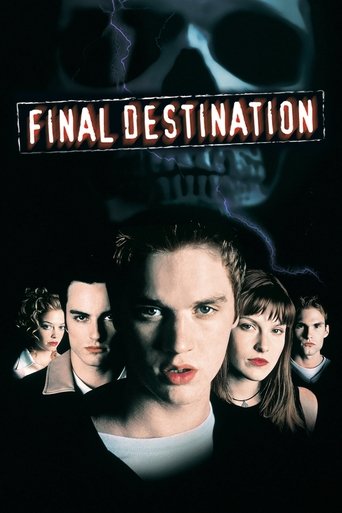
Final Destination
James Wong · 2000 · Film
Shares relentless shock.
70% shared signal
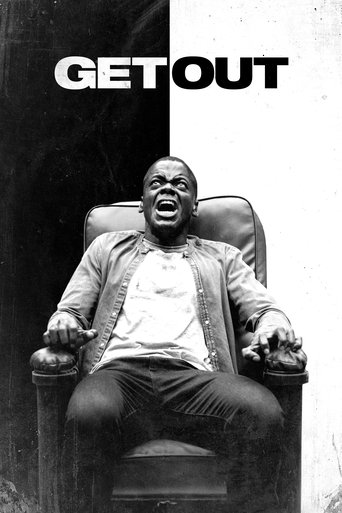
Get Out
Jordan Peele · 2017 · Film
Shares modern craft.
69% shared signal
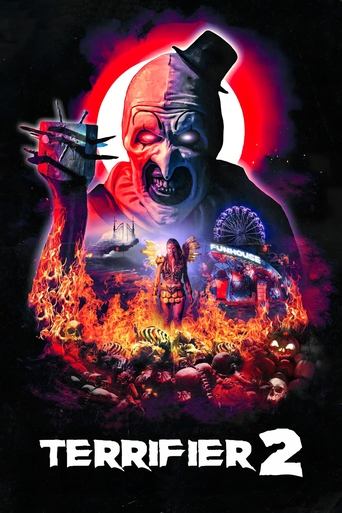
Terrifier 2
Damien Leone · 2022 · Film
Shares human monsters.
66% shared signal
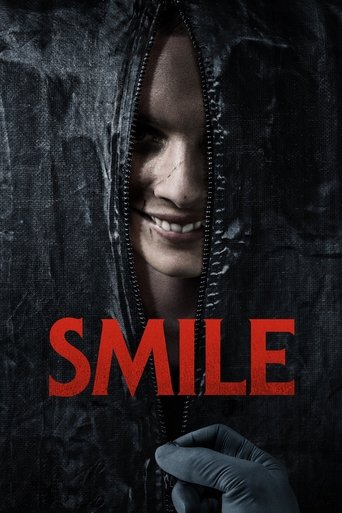
Smile
Parker Finn · 2022 · Film
Shares modern craft.
66% shared signal

The Lighthouse
Robert Eggers · 2019 · Film
66% shared signal

It Follows (OST)
Disasterpeace · 2014 · Record
66% shared signal
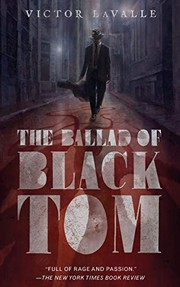
The Ballad of Black Tom
Victor Lavalle · 2016 · Book
66% shared signal
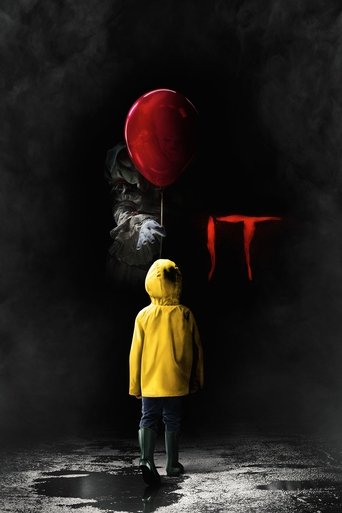
It
Andy Muschietti · 2017 · Film
66% shared signal
Questions about Dangerous Days
The things people actually ask about this record, answered.
How does Dangerous Days end?
By cooling down. The record front-loads its hardest material and sequences the colder, slower tracks towards the back, so it closes nearer to Carpenter-style dread than to the club material it opens with. The dystopian framing is never resolved — the transmissions just stop.
What is darksynth?
The harder, colder branch of synthwave — 1980s synthesiser conventions used for aggression rather than nostalgia, at higher tempos, with distortion and industrial bass. Dangerous Days defined it, and Perturbator, Carpenter Brut and GosT are the three names it is usually described through.
Who is Perturbator?
James Kent, a French musician who came to synthesisers from black metal and released through Blood Music. Dangerous Days is his breakthrough, The Uncanny Valley followed in 2016, and later records moved towards post-punk and industrial. He also contributed to the Hotline Miami soundtracks.
Why is a synthwave album in a horror index?
Because its lineage is Carpenter's. The threatening synthesiser pulse is his invention, and this record runs it at dance tempo with modern production — and the influence has run back into horror, where contemporary scoring often takes its vocabulary from darksynth rather than from 1978.
Is Dangerous Days scary?
No. We score it 060 on tone, the least bleak of the records we hold, and 084 on pace, the fastest thing in the index. It is cold, aggressive and propulsive, and it is also genuinely enjoyable, which nothing else in this medium here is.
Where should I start with Perturbator?
Here, with "Humans Are Such Easy Prey" and "Future Club", then The Uncanny Valley, which is better produced and more coherent. The Hotline Miami soundtracks are the wider context for the scene he came out of.
These are ranked against Dangerous Days, not against you.
Build your own tape →