Film · 1995
The Return of the Texas Chainsaw Massacre
Kim Henkel
Henkel remakes his own film as a parody, with McConaughey on a remote-controlled leg.
44Strong to sit through, out of 100 — mostly how bleak it is
- PaceJolts you often68
- ThreatMostly people82
- GoreShows some of it40
- ToneGrim, with air64
- RealityTilts unreal52
Era bias 28 · Analog-leaning. Texture rather than fear, so it is not part of the grade. All six scores →
Horror movies where the monster is a person →
Part of a series: Texas Chainsaw Massacre movies in order →
On VHSCREAM’s six-axis scale, The Return of the Texas Chainsaw Massacre (1995) is most extreme on the threat axis: 82 out of 100, where 0 is a threat that is not human and 100 is human monsters. 78% of the 320 horror works we have scored come in lower on that axis. How we score →
The Return of the Texas Chainsaw Massacre is a 1995 American slasher film directed by Kim Henkel, who co-wrote the 1974 original. Four teenagers leaving a prom crash on a back road and fall into the hands of a tow-truck driver called Vilmer and his family. We score it 082 on the threat axis and 028 on era bias.
Scored and reviewed by VHSCREAM on · how we score
How scary is The Return of the Texas Chainsaw Massacre, actually?
Scored against the published rubric, here is what the numbers mean.
The threat at 082 is on the human end — 249 works score lower. The killers are a family of people working for a secret society of people. Nothing supernatural happens, though the society gives the violence a would-be spiritual purpose.
Viscera 040 is restrained for the series — 90 works score lower. A sledgehammer, a meat hook and a crushed skull, mostly kept off-frame or brief.
Tone 064 leans gleeful — 291 works score lower. It plays its teenagers and its killers as caricatures, and the humour, uneven as it is, runs through almost every scene.
Pace 068 is on the shock side, with 258 works slower. Chases, ambushes and screaming, with little build-up between them.
Era bias 028 reads analog — 102 works score lower. A low-budget 1993 shoot on Texas back roads, practical make-up, nothing digital.
Reality anchor 052 sits in the middle — 164 works score lower. The farmhouse is ordinary, but a remote-controlled leg, a scarified agent and a centuries-old conspiracy push it well away from the original's documentary feel.
On jump scares: few. It relies on shouting and chasing rather than sudden shocks.
Who should skip The Return of the Texas Chainsaw Massacre
Skip it if you want to be frightened. It is closer to a parody of the first film than a horror film in its own right.
Skip it if a conspiracy subplot will annoy you. The secret society arrives late, explains little and changes the meaning of everything that came before.
Skip it if domestic abuse is a hard limit. The original cut opens on Jenny's abuse by her stepfather, which the 1997 release removed.
Content notes: a man run over repeatedly, a sledgehammer killing, a woman hung on a meat hook, a skull crushed, self-harm with a razor, threats with a gun, and a teenager held captive at a dinner table.
Watch it if you want to see Matthew McConaughey and Renée Zellweger before they were famous, you enjoy franchise curiosities, and you can take a horror sequel as a deliberate joke.
The Return of the Texas Chainsaw Massacre on six axes of fear
Every work in the index is scored on six continuous axes of fear. This is what The Return of the Texas Chainsaw Massacre looks like as a vector — and what each ten-point band looks like across everything else we hold.
Draft score — awaiting human review. About these scores
Disagree with a number? Say so on the axis itself. Nobody has confirmed this vector yet, and a score you challenge goes to the top of the queue to be re-scored by a human. Votes do not move the numbers — they decide what gets looked at first. How the scoring works →
Scored against the published rubric. This vector is a draft awaiting review — the method is public so you can argue with it.
The Return of the Texas Chainsaw Massacre: the review
The Return of the Texas Chainsaw Massacre is a parody of the first film made by the man who co-wrote it, and almost nobody saw it in the form he intended.
Kim Henkel wrote the 1974 film with Tobe Hooper. Nearly twenty years later he wrote, co-produced and directed this one, his debut as a director, on a budget most sources put at about $600,000. He shot it in Bastrop and Pflugerville, Texas, in the late summer of 1993, under the working title The Taxidermist: Texas Chainsaw Massacre 4. He cast two unknowns in the leads. One was Renée Zellweger, his first choice for Jenny. The other was Matthew McConaughey, who reportedly got the part of Vilmer after frightening a casting secretary during an audition in which his weapon was a spoon. Within three years both were famous, and that is the beginning of the film's peculiar history.
A remake that knows it is one
The structure is the 1974 film's, and deliberately so. Four teenagers — Jenny, Heather, Barry and Sean — leave their prom on 22 May 1994, which the film places twenty-one years after the original killings. A crash on a dark road strands them. They split up, find a farmhouse, and are taken one at a time by Leatherface, Vilmer and their relatives, before the survivor is tied to a chair at the family dinner. Critics and scholars have pointed out the shot-for-shot echoes of Hooper's film, and they are not homage so much as quotation: Henkel is re-staging his own story to see how it looks with the volume turned up.
Jenny's half of the night is a run of escapes that each go wrong. She jumps from Vilmer's truck, is caught by Leatherface, flees through a farmhouse full of preserved corpses, goes out of an upstairs window, and reaches Darla for help, only to learn that Darla is one of them and to end up locked in the trunk of her car. It is the original's chase stretched into a loop, and it is the stretch of the film that works best. Zellweger's stunt double, Jody Haselbarth, performed the window jump.
He wrote the teenagers as exaggerated caricatures of American youth, and he wrote the family the same way. Darla, an insurance agent who is Vilmer's girlfriend, was loosely based on the convicted murderer Karla Faye Tucker. W. E. is a relative with a cattle prod and a gun. Leatherface, played by Robert Jacks, cross-dresses, which critics and scholars have noted and which the film presents as part of the joke rather than as something to explain.
McConaughey is the reason to watch
Vilmer Slaughter is a tow-truck driver with a remote-controlled mechanical leg, and McConaughey plays him at a pitch that is genuinely unsettling: a grin, a twitch, a voice that shifts from friendly to murderous in the middle of a sentence. He runs over Sean repeatedly with his truck, shows Jenny the bodies in the truck bed, and at the dinner table he cuts himself with a razor and crushes Heather's skull with his leg. Zellweger, opposite him, is better than the material, playing Jenny as a frightened girl who turns resourceful without ever becoming a hero.
The secret society
Then the film swerves somewhere the 1974 film never went. The family, it turns out, work for a secret society. A man named Rothman, with body scarification and piercings, arrives at the dinner and scolds Vilmer for his methods. Darla talks about a centuries-old group that controls the government and mentions the Kennedy assassination. Vilmer's tow truck is branded "Illuminati". Henkel has said the subplot was a response to modern society's detachment from death: the killing is meant to give the victims a kind of transcendent experience, and the people behind it treat it as a spiritual service.
It is a strange, unfinished idea and the film does not do much with it beyond the dinner scene and the limousine at the end. But it is an idea, which is more than most slasher sequels of the decade bothered with.
Where it falls down
As horror, it barely functions. The film is rarely frightening for more than a moment, the gore is minimal, and the caricature that makes McConaughey compelling makes everyone else hard to care about. The script is incoherent in places — the secret society arrives too late to change anything — and the humour is uneven, which is how most of its critics described it. It has 15 percent positive reviews on Rotten Tomatoes, although Joe Bob Briggs saw it at South by Southwest and called it the best horror film of the 1990s.
And the version most people have seen is not the one Henkel made. It premiered at South by Southwest on 12 March 1995, played a small test release that September, and then sat. Columbia TriStar bought the rights, promised a wide release and delayed it repeatedly. When it finally came out in August 1997, it was retitled Texas Chainsaw Massacre: The Next Generation, about seven minutes shorter, without the opening scene of Jenny's abuse by her stepfather, and redated to 1996. Lawsuits followed, including one against McConaughey and his agency alleging they had pressured the studio to limit the release. Zellweger said the story hurt her feelings and denied having that kind of power. Across both releases it grossed $185,898, the worst result in the franchise.
Watch the original first, because almost every scene here depends on it, and see the franchise in order for where this sits. For a horror film that turns a secret organisation behind the killing into its whole subject, The Cabin in the Woods.
The ending of The Return of the Texas Chainsaw Massacre explained
The ending, in full. Open it when you have seen it.
The short answer: Jenny breaks free at the dinner table, uses a remote to take control of Vilmer's mechanical leg, and runs. An elderly couple in an RV pick her up, but Leatherface and Vilmer force the RV off the road. Jenny keeps running, and a crop-duster swoops low and kills Vilmer when one of its wheels strikes his skull. Leatherface screams in anguish. A limousine collects Jenny; inside is Rothman, who tells her the experience was meant to be spiritual and that Vilmer had to be stopped. He drops her at a hospital, where Sally Hardesty from the 1974 film is wheeled past on a gurney and looks at her. The last shot is Leatherface still flailing his chainsaw on the dirt road.
Who is Rothman in The Return of the Texas Chainsaw Massacre?
Rothman is a figure from the secret society the family works for, a man with body scarification and piercings who appears at the dinner to reprimand Vilmer for his methods. The group stages these ordeals to give victims what the film calls a transcendent experience. At the end he collects Jenny in a limousine and tells her Vilmer had gone too far.
How does Vilmer die?
A crop-duster kills him. During the chase on the dirt road, the plane swoops down and one of its wheels strikes Vilmer's skull. Leatherface cries out in grief while Jenny watches. Rothman later tells her Vilmer had to be stopped, implying the society did not approve of how he worked.
Is Sally Hardesty in The Return of the Texas Chainsaw Massacre?
Briefly. Marilyn Burns, who played Sally in 1974, appears uncredited as a woman on a hospital gurney who meets Jenny's gaze at the end. Two other actors from the original also cameo: Paul A. Partain as a hospital orderly and John Dugan as a police officer.
Who survives The Return of the Texas Chainsaw Massacre?
Jenny is the survivor among the four teenagers. Sean is run over by Vilmer's truck, Barry is killed by Leatherface with a sledgehammer, and Heather, after being hung on a meat hook, is killed at the dinner table when Vilmer crushes her skull. The injured driver from the crash is killed by Vilmer, and Leatherface is left alive in the road.
If The Return of the Texas Chainsaw Massacre is your kind of fear
The eight works closest to The Return of the Texas Chainsaw Massacre in the index on the five axes that describe fear, the same medium first — not by genre label, and not by what other people watched.
Companion
Drew Hancock · 2025 · Film
Shares human monsters.
85% shared signal
Happy Death Day
Christopher Landon · 2017 · Film
Shares relentless shock.
84% shared signal
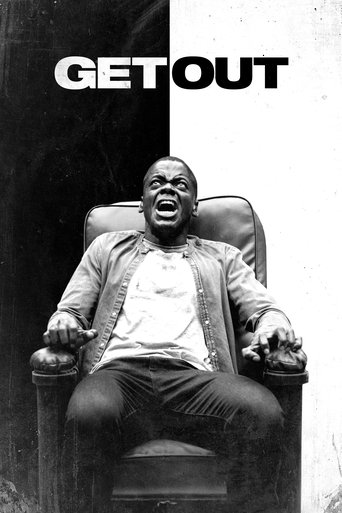
Get Out
Jordan Peele · 2017 · Film
Shares human monsters.
80% shared signal
Halloween: Resurrection
Rick Rosenthal · 2002 · Film
79% shared signal
Scream 3
Wes Craven · 2000 · Film
79% shared signal
Child's Play 2
John Lafia · 1990 · Film
78% shared signal
Child's Play 3
Jack Bender · 1991 · Film
78% shared signal

Dangerous Days
Perturbator · 2014 · Record
Shares relentless shock.
83% shared signal
More lists like these: Movies like Companion · Movies like Get Out
Questions about The Return of the Texas Chainsaw Massacre
The things people actually ask about this film, answered — including how it ends.
What happens at the end of The Return of the Texas Chainsaw Massacre?
Jenny escapes the dinner by seizing control of Vilmer's mechanical leg and runs. A crop-duster's wheel strikes Vilmer's skull and kills him. Rothman, of the secret society, picks Jenny up in a limousine, tells her Vilmer had to be stopped and drops her at a hospital, where Sally Hardesty passes on a gurney.
Is Matthew McConaughey in a Texas Chainsaw Massacre film?
Yes. He plays Vilmer Slaughter, a tow-truck driver with a remote-controlled mechanical leg, in The Return of the Texas Chainsaw Massacre. He reportedly won the part after frightening a casting secretary in an audition using a spoon as a weapon. Renée Zellweger plays the heroine, Jenny.
Why was The Return of the Texas Chainsaw Massacre released so late?
It premiered in 1995, then Columbia TriStar bought the rights and repeatedly delayed the wide release. It finally came out in 1997, re-edited and retitled Texas Chainsaw Massacre: The Next Generation. Lawsuits followed, including one alleging McConaughey's agency pressured the studio to limit it; Zellweger denied having that kind of power.
What is the Illuminati in The Return of the Texas Chainsaw Massacre?
The family works for a secret society, which Darla describes as centuries old and controlling the government. Vilmer's tow truck is branded "Illuminati", and its agent Rothman oversees the killings. Kim Henkel said the idea responded to modern society's detachment from death, with the ordeal meant as a spiritual experience.
Is The Next Generation the same film as The Return of the Texas Chainsaw Massacre?
Yes, in a different cut. Texas Chainsaw Massacre: The Next Generation is the 1997 re-edit, about 87 minutes long. Columbia TriStar removed around seven minutes, including the opening scene of Jenny's abuse by her stepfather, and changed the story's date from 1994 to 1996.
Did The Return of the Texas Chainsaw Massacre make money?
No. Across its 1995 and 1997 runs it grossed $185,898, a box-office bomb and the weakest performer in the franchise as of 2025, against a budget usually given as about $600,000. It has since developed a small cult following, partly because of its two future stars.
These are ranked against The Return of the Texas Chainsaw Massacre, not against you.
Build your own tape →