
Record · 1992
Candyman (OST)
Philip Glass
Organ, piano and choir. A slasher film scored as a mass for the dead.
54Strong to sit through, out of 100 — mostly how bleak it is
- PaceSlow burn26
- ThreatMostly supernatural30
- GoreHolds back24
- ToneBleak16
- RealityDream logic68
Era bias 26 · Analog-leaning. Texture rather than fear, so it is not part of the grade. All six scores →
The bleakest horror albums ever recorded →
On VHSCREAM’s six-axis scale, Candyman (OST) (1992) is most extreme on the tone axis: 16 out of 100, where 0 is a bleak, unforgiving tone and 100 is gleeful black comedy. 32% of the 320 horror works we have scored come in lower on that axis. How we score →
Candyman is Philip Glass's 1992 score for Bernard Rose: organ, piano, strings and a wordless choir, written in his own idiom and almost entirely without regard for the film's slasher mechanics. We score it 016 on tone and 024 on viscera, and it is the most beautiful record on this shelf.
Scored and reviewed by VHSCREAM on · how we score
How scary is Candyman (OST), actually?
Scored against the published rubric, here is what the numbers mean for a listener.
Tone 016 is the signature. 103 works score lower. This is mourning music from the first bar. There is no relief in it, and also no menace — the bleakness is elegiac rather than threatening, which is unusual at this end of our axis.
Viscera 024 is restrained. 267 works score higher. The score ignores the film's violence almost completely. Several murders play against music that is not acknowledging them.
Reality anchor 068 is above the midpoint. 238 works score lower. Glass's repeating cells do not describe a place or an event; they turn over without arriving, and the effect is closer to a dream than to a Chicago tower block.
Threat 030 leans supernatural. 186 works score higher. The score treats Candyman as a historical force rather than as a man with a hook, and nothing in the writing points at a person.
Pace 026 is dread. 249 works are faster. Slow harmonic motion throughout and not a single sting anywhere on the record.
Era bias 026 is analog. 218 works score higher. A real pipe organ, a real choir, a 1992 recording with no electronics in it.
On jump scares: none, and their absence is the most discussed thing about the film.
Who should skip Candyman (OST)
Skip it if Philip Glass is not for you. This is his idiom at full strength: additive repeating cells over forty minutes. If the vocabulary irritates you, nothing here will change that.
Skip it if you want the score to serve the horror. It does not. The murders are scored against rather than with, and viewers divide sharply on whether that is the film's greatest asset.
Skip it if monotony is a problem. The album is short and still repetitive by design.
Content notes: nothing in the recording. The score accompanies a film dealing with lynching, racial violence, a child abduction and the killing of a dog.
Listen to it if you want the most beautiful record on this shelf, you are interested in what happens when a concert composer declines to write horror music for a horror film, and a slasher scored as a requiem sounds like the right mistake.
Candyman (OST) on six axes of fear
Every work in the index is scored on six continuous axes of fear. This is what Candyman (OST) looks like as a vector — and what each ten-point band looks like across everything else we hold.
Where that puts it: joint #7 supernatural
Draft score — awaiting human review. About these scores
Disagree with a number? Say so on the axis itself. Nobody has confirmed this vector yet, and a score you challenge goes to the top of the queue to be re-scored by a human. Votes do not move the numbers — they decide what gets looked at first. How the scoring works →
Scored against the published rubric. This vector is a draft awaiting review — the method is public so you can argue with it.
Candyman (OST): the review
A requiem accidentally attached to a horror film
Glass wrote this believing he was scoring a modestly budgeted art film, and the account he has given since is that he was not pleased with what it turned out to be. The result is one of the great mismatches in the medium and one of the reasons the film has lasted: a story about a hook-handed killer in a Chicago housing project, scored as a mass for the dead.
There is no stalking music. No stings, no clusters, no low drone, nothing that functions as a warning. What there is instead is organ — a pipe organ, recorded large — carrying slow arpeggiated figures in Glass's familiar repeating cells, with a children's or wordless adult choir laid over them and a piano picking out the same material. It sounds like grief, and it sounds like it has already happened.
What that does to the film
It elevates Candyman from a monster into a historical fact. The music does not treat him as a threat to be survived; it treats him as a consequence — of a lynching, of a city, of a story people keep telling. By the time Helen understands what she is dealing with, the score has been telling her for an hour that this is a mourning situation rather than a chase.
That is a reading the screenplay also supports, and the score commits to it harder than the direction does. The famous main title, over aerial shots of Chicago expressways, is the purest statement of it: a city photographed from above, scored like a cathedral.
It is a Glass record
If you know Koyaanisqatsi or the Violin Concerto, you know the vocabulary — additive cells, slow harmonic motion, arpeggios that turn over without arriving. The pleasure of it is the pleasure of all his good work, and the horror context does something to that material that his concert pieces do not: the repetition stops reading as meditation and starts reading as something that cannot be stopped.
Where it strains
It is monotonous, which is a Glass feature and will defeat some listeners across forty minutes. The album is short and includes alternates. And the score genuinely does not help the film's shock sequences — several of the murders play against music that is not interested in them, which some viewers find transcendent and others find inert.
The sequels replaced it with conventional writing, and the difference is instructive.
The ending of Candyman (OST) explained
The ending, in full. Open it when you have seen it.
How it resolves: the final cue is the main theme returned at full strength — organ, choir, strings — over Helen's funeral and the appearance of her own legend. It is written as an apotheosis rather than a resolution: she has become the thing the film has spent two hours explaining, and Glass scores that as an ascension. There is no relief in it and no horror either, which is why it stays with people.
Who composed the Candyman score?
Philip Glass, in 1992, for director Bernard Rose. It is one of a small number of horror films scored by a major concert composer in their own established idiom rather than in a film-music register.
Did Philip Glass like the film?
By his own account, not much. He has said he understood the project as a small art film and was unhappy with the commercial horror picture it became. The score was written before he saw the result.
What instruments are on it?
A large pipe organ, piano, strings and a wordless choir. There is no synthesiser, no percussion of any consequence and nothing that functions as a sting or a stalking cue.
Why does it sound like a requiem?
Because that is effectively what it is. Glass scores Candyman as a consequence rather than a threat — the result of a lynching and of a story a city keeps retelling — and the organ-and-choir setting is the oldest vocabulary available for mourning.
Is the score used in the sequels?
No. Farewell to the Flesh and the later films use conventional horror scoring, and the 2021 film has its own approach. Glass's score belongs to the 1992 film alone, and the comparison is the clearest demonstration of what it was doing.
If Candyman (OST) is your kind of fear
The eight works closest to Candyman (OST) in the index on the five axes that describe fear, the same medium first — not by genre label, and not by what other people watched.

Abyss
Chelsea Wolfe · 2015 · Record
Shares a bleak, unforgiving tone.
91% shared signal
Marble Hornets
Troy Wagner & Joseph Delage · 2009 · Web series
Shares restraint over gore.
96% shared signal
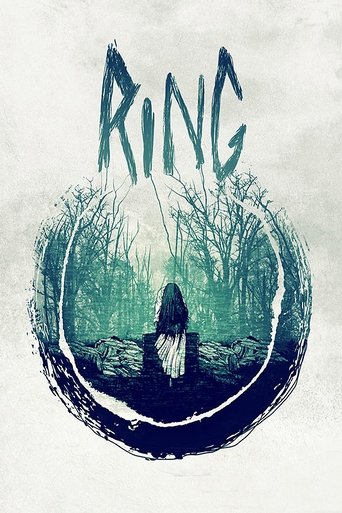
Ringu
Hideo Nakata · 1998 · Film
Shares slow-burn dread.
92% shared signal
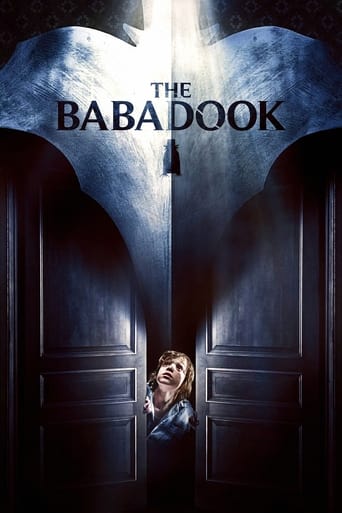
The Babadook
Jennifer Kent · 2014 · Film
Shares a bleak, unforgiving tone.
91% shared signal
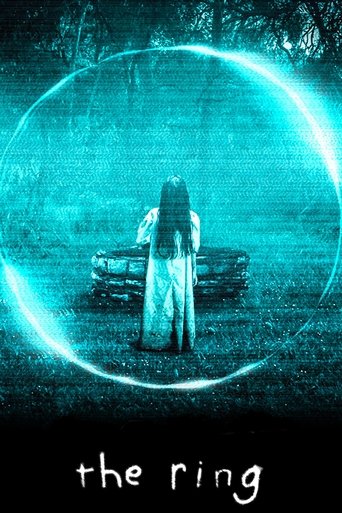
The Ring
Gore Verbinski · 2002 · Film
Shares a threat that is not human.
90% shared signal
Ring
Koji Suzuki · 1991 · Book
Shares slow-burn dread.
89% shared signal
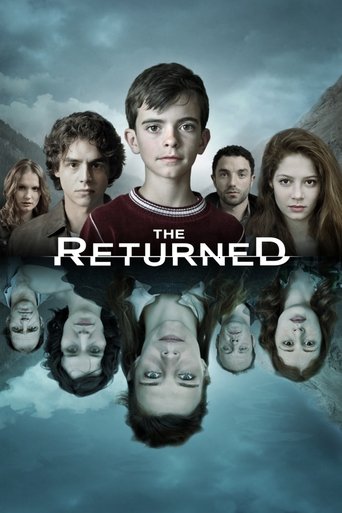
Les Revenants
Canal+ · 2012 · Television
Shares restraint over gore.
89% shared signal
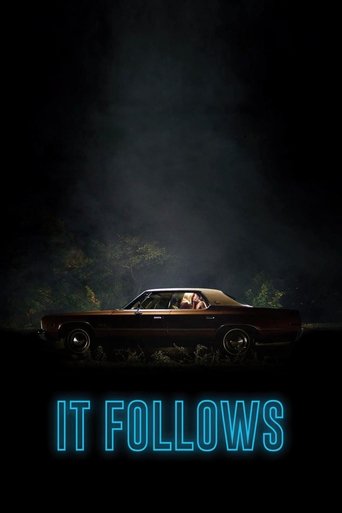
It Follows
David Robert Mitchell · 2014 · Film
88% shared signal
Candyman (OST) in another form
The index links works across media, so an adaptation sits beside its source and a score beside the film it haunts.
More lists like these: Movies like The Babadook · Movies like The Ring · Movies like It Follows
Questions about Candyman (OST)
The things people actually ask about this record, answered — including how it ends.
Who wrote the Candyman score?
Philip Glass, in 1992, for Bernard Rose. It is one of very few horror films scored by a major concert composer working in their own established idiom rather than in a film-music one.
Did Philip Glass dislike Candyman?
By his own account he was unhappy with it. He understood the commission as a small art film and wrote the score before seeing what it became, and he has been candid about his disappointment with the result.
What instruments are in the Candyman score?
A large pipe organ, recorded big, plus piano, strings and a wordless choir. There is no synthesiser anywhere on it, no percussion of any consequence, and nothing that functions as a sting or a stalking cue — which is why several of the film's murders play against music that is not acknowledging them at all.
Why does the Candyman score sound so sad?
Because Glass scores Candyman as a consequence rather than a threat — the product of a lynching and of a story a city keeps retelling. Organ and choir is the oldest vocabulary for mourning, and he uses it straight. We score the tone 016 for that reason.
Is Glass's music in the Candyman sequels?
No. The sequels use conventional horror scoring and the 2021 film has its own approach, which makes the comparison a useful demonstration of what the original score was doing.
What should I listen to after it?
Rosemary's Baby for beauty used against horror with the same nerve, Under the Skin for strings doing the opposite, and the film for what the requiem is written over.
These are ranked against Candyman (OST), not against you.
Build your own tape →