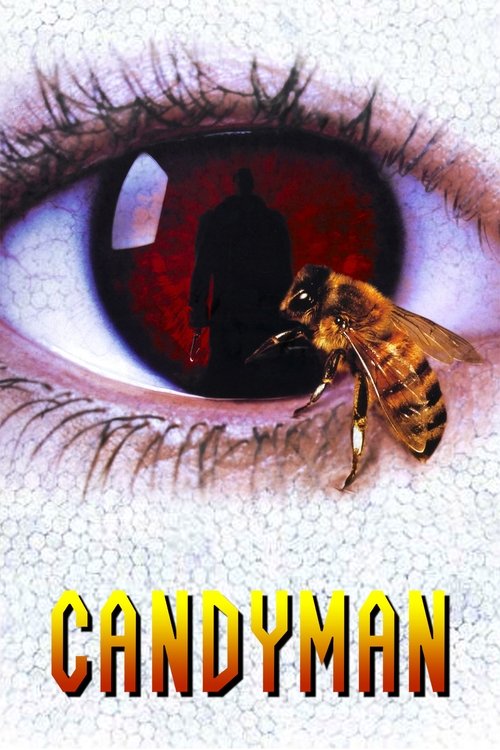
Film · 1992
Candyman
Bernard Rose
Legend as infrastructure. The city built the monster on purpose.
Most extreme on TONE — a bleak, unforgiving tone at 018
On VHSCREAM’s six-axis scale, Candyman (1992) is most extreme on the tone axis: 18 out of 100, where 0 is a bleak, unforgiving tone and 100 is gleeful black comedy. 45% of the 105 horror works we have scored come in lower on that axis. How we score →
Candyman is a 1992 horror film written and directed by Bernard Rose, adapting Clive Barker's short story "The Forbidden" and relocating it from Liverpool to Chicago. A graduate student researching urban legends goes to the Cabrini-Green housing project to find out whether one of them is being used to explain a murder. We score it 060 on viscera — 73 works score lower — and 018 on tone.
Scored and reviewed by VHSCREAM on · how we score
Candyman: the review
Candyman is the best American horror film of the nineties and it is about gentrification, academia and whose stories get believed.
Rose's structure is a trap for its own protagonist. Helen Lyle is writing a thesis on urban legends and she treats Cabrini-Green as fieldwork: she drives in, photographs a derelict flat, tape-records the residents, and tells a woman whose neighbour was murdered through a hole in the bathroom wall that the killer was almost certainly a man rather than a ghost. She is right about the murder and completely wrong about everything else, and the film's cruellest observation is that the thing she is studying needs her — Candyman tells her directly that he exists because he is believed in, and that an academic debunking him is a threat to his existence in a way that a police investigation is not.
Virginia Madsen is remarkable in it, playing curiosity as a kind of trespass, and Tony Todd's Candyman is the most physically commanding monster in American horror: six foot five, unhurried, speaking in a voice pitched for a cathedral, and entirely without malice in his manner. He never shouts. He explains.
Philip Glass's score is doing something unusual
Glass wrote it for pipe organ, piano and choir, believing he was scoring an art film, and the result — stately, liturgical, almost beautiful — refuses to tell you that what you are watching is frightening. It is the single biggest reason the film feels like a tragedy rather than a slasher.
Cabrini-Green is filmed as a place rather than a set
Rose shot in the real buildings with residents on screen, and the film is specific about the material facts: identical floor plans, a wall of plasterboard between a medicine cabinet and the flat next door, no police response, gang control of stairwells, and a block of flats put up for people whose previous neighbourhood was demolished. Helen's own apartment building, as the film points out, is the same architecture converted into condominiums.
Where it is weak
The first act's academic satire is broad. Trevor is a cipher. And the film's handling of Bernadette, who exists largely to be killed, is the clearest case of the genre's worst habit in an otherwise careful film.
For Barker's own prose version and the collection it comes from, Books of Blood; for Barker's other great screen adaptation of the period, Hellraiser; for the modern film that took up its argument about race and American horror, Get Out.
The ending of Candyman explained
Total spoilers from here. Everything above this line is spoiler-free.
The short answer: Helen, having lost her reputation, her husband and her liberty — framed for Bernadette's murder and for abducting Anne-Marie's baby, and confined to a psychiatric ward — is released and finds that Candyman has taken the child to the enormous bonfire the residents have built in the Cabrini-Green courtyard. She goes into the pyre for him. She finds Anthony, fights Candyman inside the fire, and gets the baby out through a gap in the wood as the whole structure collapses. She dies of her burns in front of the residents; Candyman is destroyed with her. Her funeral is attended by the people of Cabrini-Green, who walk past her grave and drop Candyman's hook into it. In the last scene, Trevor — now living with the student he left Helen for — stands at the bathroom mirror and says Helen's name five times. She appears behind him, and kills him.
Who is Candyman?
Daniel Robitaille, the son of an enslaved woman who became wealthy enough to educate him, and who became a successful portrait painter in the late nineteenth century. Commissioned by a Chicago landowner to paint his daughter, he and she fell in love and she became pregnant. Her father hired men who cut off Robitaille's right hand with a rusty blade, smeared him with honeycomb taken from an apiary so that he was stung to death by the bees, and burned his body on a pyre, scattering the ashes over the ground where Cabrini-Green was later built.
How does the Candyman legend work?
Say his name five times into a mirror and he appears behind you with a hook where his right hand was. The film's central idea, which Candyman states himself, is that he is sustained by belief rather than by ritual: the murders are how the story is kept alive, and the story is how he continues to exist. Helen's thesis — that the Cabrini-Green killings have a human culprit — is therefore an attack on him, and that is why he comes for her specifically.
Is Candyman real in the film, or is Helen the killer?
Rose builds the first half so that a rational reading is fully available: Helen has no alibi for Bernadette's death, she is found covered in blood with the baby, and the hospital psychiatrist's account of her is entirely coherent. The film then closes the option. Candyman appears to the psychiatrist and kills him in front of a security camera, and the final scene with Trevor requires him to be real. The ambiguity is a structure rather than a conclusion.
Does Helen become Candyman?
She becomes something like him. The final scene mirrors the film's own rules exactly: a name spoken five times into a mirror, an appearance behind the speaker, a killing. The difference is in who she goes for — Trevor, who betrayed her and let her be committed — and in what the residents did at her funeral. The sequels take her in a particular direction; the 1992 film leaves her as a new legend with one murder to her name and a community that honours her.
What is Cabrini-Green?
A real Chicago public housing development on the Near North Side, built in stages from the 1940s, which by the time the film was made had become a byword for neglect, violence and official abandonment. Rose shot in it with the cooperation of residents, and the film's plot is built on a documented architectural fact: the flats' medicine cabinets backed onto thin partition walls that could be broken through from the next unit. Cabrini-Green was demolished in stages and the last tower came down in 2011.
How scary is Candyman, actually?
Scored against the published rubric, here is what the numbers mean.
Viscera 060 is above the median — 73 works score lower. A disembowelling with a hook, a severed hand in flashback, a dog's head, a bee-covered body, a psychiatrist opened at a desk, and two deaths by fire.
Tone 018 is bleak — 47 works score lower. The protagonist loses her work, her marriage and her freedom, saves a baby, dies in a fire, and becomes the thing she was investigating.
Era bias 026 reads analog — 39 works score lower. 1992 35mm, a pipe-organ score recorded live, real Chicago locations and practical bee work.
Reality anchor 058 leans towards dream logic — 59 works score lower. Helen loses days, wakes in places she did not travel to, and the film declines to show the transitions.
The threat at 038 is on the supernatural side — 53 works score lower, although the film is pointed about the fact that everything done to Daniel Robitaille was done by men.
Pace 040 sits just on the dread side — 56 works are slower. The murders are widely spaced and the film spends most of its time on research.
On jump scares: several, and the mirror-cabinet sequence is the best of them.
Candyman on six axes of fear
Every work in the index is scored on six continuous axes of fear. This is what Candyman looks like as a vector.
Disagree with a number? Say so on the axis itself. Nobody has confirmed this vector yet, and a score you challenge goes to the top of the queue to be re-scored by a human. Votes do not move the numbers — they decide what gets looked at first. How the scoring works →
Scored against the published rubric. This vector is a draft awaiting review — the method is public so you can argue with it.
Who should skip Candyman
Skip it if racial violence is a hard limit. The lynching of Daniel Robitaille is described in full detail twice, including the mutilation and the bees.
Skip it if insects are a phobia. Tony Todd was stung repeatedly during filming and the bee work is extensive, including bees emerging from a mouth.
Skip it if a baby in danger is a hard limit. The last third of the film is an infant held hostage and then carried into a fire.
Content notes: a lynching described and partly shown, including mutilation and death by bee stings; a disembowelling; the killing of a dog shown by its aftermath; an infant abducted and placed in a fire; involuntary psychiatric confinement; two deaths by burning; and extensive on-screen insect work.
Watch it if you want the smartest American horror film of its decade, you can take a monster who is also a victim, and you want to hear what Philip Glass does to a slasher when nobody tells him it is one.
Where to find it
Rent or buy from Amazon Video · Apple TV Store · Google Play Movies +1 ↗Physical copies on eBay ↗Availability from JustWatch via TMDB. We earn nothing from these links.
Nothing loads from YouTube until you press play.
If Candyman is your kind of fear
The eight works closest to Candyman in the index, ranked by distance across all six axes — not by genre label, and not by what other people watched.
Ghost Story
Peter Straub · 1979 · Book
Shares a bleak, unforgiving tone.
86% shared signal
The Shining
Stephen King · 1977 · Book
Shares analog-era texture.
86% shared signal
Alien
Ridley Scott · 1979 · Film
Shares a bleak, unforgiving tone.
85% shared signal
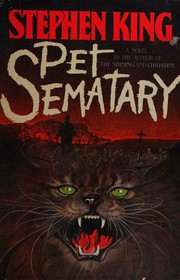
Pet Sematary
Stephen King · 1983 · Book
Shares analog-era texture.
84% shared signal

The Cipher
Kathe Koja · 1991 · Book
81% shared signal
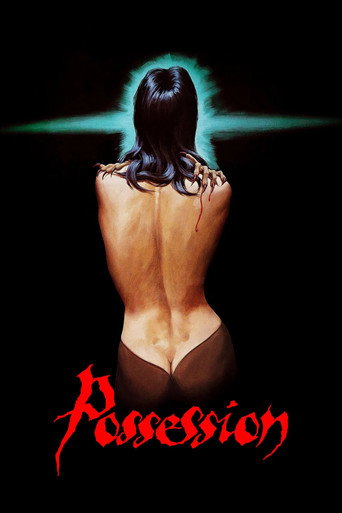
Possession
Andrzej Zulawski · 1981 · Film
81% shared signal
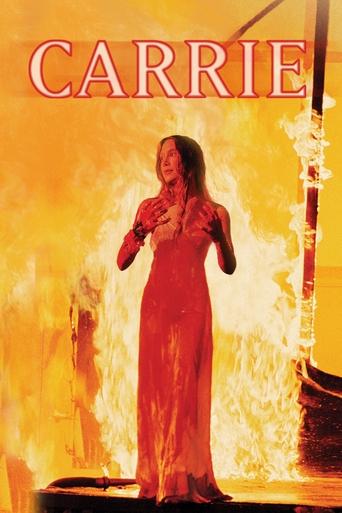
Carrie
Brian De Palma · 1976 · Film
80% shared signal
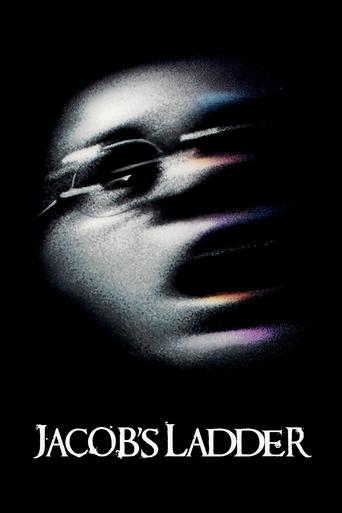
Jacob's Ladder
Adrian Lyne · 1990 · Film
79% shared signal
Questions about Candyman
The things people actually ask about this film, answered.
What happens at the end of Candyman?
Helen goes into the Cabrini-Green bonfire to save Anne-Marie's baby, gets the child out and dies of her burns, destroying Candyman with her. The residents drop his hook into her grave. In the final scene Trevor says her name five times into a mirror and she appears and kills him.
Who is Candyman in the 1992 film?
Daniel Robitaille, a successful nineteenth-century portrait painter and the son of an enslaved woman. After he fell in love with a white landowner's daughter, men hired by her father cut off his hand, covered him in honeycomb so bees stung him to death, and burned him on the ground where Cabrini-Green was later built.
How does the Candyman legend work?
Say his name five times into a mirror and he appears behind you. The film's own explanation is that he exists because he is believed in — the killings keep the story alive and the story keeps him alive — which is why a researcher trying to debunk him is a greater threat than the police.
Does Helen become Candyman at the end?
She becomes a legend of the same kind. The final scene follows the film's own rules precisely: a name said five times into a mirror, an appearance, a killing. She takes only Trevor, and the residents of Cabrini-Green have already buried the hook with her.
Is Candyman based on a Clive Barker story?
Yes — "The Forbidden", from his Books of Blood sequence. Barker's story is set on a Liverpool council estate and has no racial dimension; Bernard Rose moved it to Cabrini-Green and invented Daniel Robitaille's history, which is what the film is now known for.
How gory is Candyman?
Quite. We score it 060 on viscera, above the median for our index. There is a hook disembowelling, a severed hand, a desk killing, extensive bee work including bees from a mouth, and two deaths by fire.
These are ranked against Candyman, not against you.
Build your own tape →