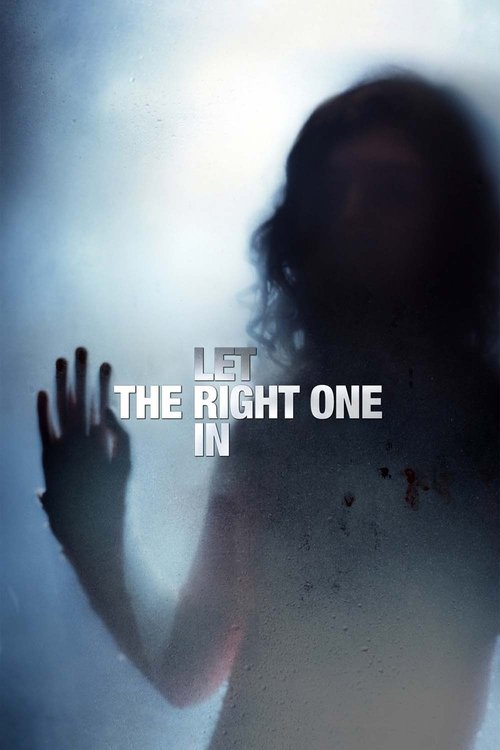
Film · 2008
Let the Right One In
Tomas Alfredson
A vampire film about being twelve and alone in the snow.
Most extreme on TONE — a bleak, unforgiving tone at 012
On VHSCREAM’s six-axis scale, Let the Right One In (2008) is most extreme on the tone axis: 12 out of 100, where 0 is a bleak, unforgiving tone and 100 is gleeful black comedy. 21% of the 105 horror works we have scored come in lower on that axis. How we score →
Let the Right One In is a 2008 Swedish horror film directed by Tomas Alfredson, adapting John Ajvide Lindqvist's novel. A bullied twelve-year-old boy in a Stockholm suburb befriends the child who has moved in next door, who only comes out at night. We score it 012 on tone — 22 works score lower — and 016 on pace, which makes it one of the slowest films we hold.
Scored and reviewed by VHSCREAM on · how we score
Let the Right One In: the review
Let the Right One In is the best vampire film ever made and it is a film about grooming, told from the point of view of the person being groomed, who is happy.
Alfredson shoots Blackeberg in the winter of 1981 as a set of flat, snow-lit, under-populated frames: tower blocks, a climbing frame, a chain-link fence, a swimming pool, a tunnel of trees. The camera almost never moves. There is very little score. Children speak at normal volume about appalling things. The violence, when it comes, is usually in the middle distance or just out of frame, and the film's single most famous shot is a static wide of a swimming pool from under the water.
Inside that, two performances. Kåre Hedebrant's Oskar is a small, pale, frightened boy who collects newspaper clippings about murders, keeps a knife he is too afraid to use, and rehearses revenge alone in the courtyard. Lina Leandersson's Eli is the one who tells him to hit back. The relationship is the warmest thing in the film and the most alarming, because everything Eli gives him is real and everything Eli needs from him is a replacement.
Håkan is the key to the whole film
The middle-aged man living with Eli is not her father. He is her provider: he goes out at night with a canister, a funnel and a plastic container to kill people and bring blood home, and he is failing at it. The film never states what the arrangement is or was, and it only needs one shot of his face when Eli comes home having fed herself to tell you. He is what Oskar is being recruited to become, and he is forty years further along.
The pool is one of the great endings in horror
Oskar is held under the water by an older boy with a knife to the eye, by a count of three. The camera stays under with him. What happens above the surface is heard rather than seen, and then a severed head drifts down into the frame. It is twenty seconds, one take, no score, and it is simultaneously a rescue, a massacre and the moment the film's whole argument closes.
Where it is difficult
It is slow, cold and deliberately affectless, and viewers who need warmth from direction rather than from performance find it inert. The CGI cats are a disaster. And the film softens the novel's hardest material to a single glimpsed image, which some readers consider a loss of nerve and others consider the correct choice.
For the novel's and the genre's founding rules, Dracula; for the same cold-climate child's-eye dread, The Witch; for the same friendship that is a recruitment, Talk to Me.
The ending of Let the Right One In explained
Total spoilers from here. Everything above this line is spoiler-free.
The short answer: after Håkan's death Eli feeds alone, kills Lacke in Oskar's bathroom in front of him, and leaves Blackeberg — telling Oskar she has to. At school the gym teacher takes Oskar's class to the pool. Conny's older brother Jimmy arrives, clears the pool of witnesses, and offers Oskar a deal: he will cut out one eye unless Oskar can hold his breath under water for three minutes. He forces Oskar's head under. The camera stays below the surface with him. There is a sudden commotion above, two legs are dragged out of frame, a severed head sinks past Oskar, and a hand reaches in and pulls him up. Eli has killed all three boys. The final scene is Oskar on a train in daylight, happy, with a large covered trunk beside him, tapping Morse code on the lid — their private code for "kiss" — and something tapping back.
What happens at the end of the pool scene?
Eli kills Jimmy, Conny and Martin in the few seconds Oskar is underwater. The film shows almost none of it: a splash, a body pulled sideways, a head and a severed arm entering the water, and then Eli's hand. Oskar surfaces to a swimming pool with bodies in it and smiles at her. It is the one moment the film allows itself a cue on the soundtrack, and the smile is the horror.
Who is Håkan in Let the Right One In?
The man Eli lives with, who presents as her father and is not. He hunts for her — the film shows him preparing a kit, hanging a boy upside down over a bucket in a wood, and being interrupted by a passing dog walker. When he is caught he pours acid on his own face in his hospital bed so he cannot be identified, and then offers Eli his throat at the window. She takes it and he falls. The film implies, without stating, that he was once in Oskar's position.
Is Eli a girl or a boy?
The film says "I'm not a girl" and shows, in a single brief shot as Eli changes, a scarred and mutilated groin. Lindqvist's novel is explicit: Eli was a boy named Elias, castrated by a nobleman in the eighteenth century at the moment of being turned. The film reduces this to one image and one line, and Eli's gender is deliberately left as something Oskar does not need an answer to.
What are the rules for vampires in this film?
Three, applied strictly. Eli cannot enter a home without being invited — and Oskar's test of this is the film's most upsetting scene, in which Eli walks in anyway and begins to bleed from everywhere until he says it. Sunlight causes immediate combustion, which the film demonstrates in a hospital room with the blinds opened. And infection is transmitted by the bite: Virginia survives an attack, becomes photosensitive, and asks to be killed.
Why does Oskar leave with Eli?
Because the film has spent two hours making it the only available ending and refusing to call it a happy one. Oskar has no father who turns up, a mother who does not see him, and three boys who tried to drown him; Eli is the only person who has ever told him he is worth defending. The final shot — a boy on a train with a trunk, tapping a code — is the recruitment completing. He is twelve. Håkan was probably twelve once too.
How scary is Let the Right One In, actually?
Scored against the published rubric, here is what the numbers mean.
Tone 012 is bleak — 22 works score lower. Everyone who loves anybody in this film loses, and the ending is a child's life being consumed with his full enthusiastic consent.
Pace 016 is extremely slow — only 15 works are slower. The camera is static, the cuts are long, and whole sequences are two children not talking.
Viscera 044 is just under the median — 51 works score lower. A throat opened in a tunnel, a body drained over a bucket, a self-inflicted acid burn, a spontaneous combustion, and a severed head in a swimming pool.
The threat at 028 is on the supernatural side — 33 works score lower. Eli is not human. Every other cruelty in the film — the bullying, the knife, the drowning, Håkan's arrangement — is entirely human.
Era bias 058 is just above the midpoint, which reads oddly for a film set in 1981: the period is immaculate and the filmmaking is 2008 digital-era in its stillness and its grade.
Reality anchor 034 is grounded — 21 works score lower. One suburb, consistent rules, no sequence that cannot be read literally.
On jump scares: almost none. The film startles perhaps twice and both times by sound.
Let the Right One In on six axes of fear
Every work in the index is scored on six continuous axes of fear. This is what Let the Right One In looks like as a vector.
Where that puts it: #6 slow burn · #11 bleakest
Disagree with a number? Say so on the axis itself. Nobody has confirmed this vector yet, and a score you challenge goes to the top of the queue to be re-scored by a human. Votes do not move the numbers — they decide what gets looked at first. How the scoring works →
Scored against the published rubric. This vector is a draft awaiting review — the method is public so you can argue with it.
Who should skip Let the Right One In
Skip it if violence against children is a hard limit. A boy is hung over a bucket and bled, three boys are killed at a swimming pool, and the central child is nearly drowned on screen.
Skip it if the implied grooming will be unbearable. This is what the film is about, it is never stated, and it is inescapable once you have seen Håkan.
Skip it if slow, affectless direction will frustrate you. The camera barely moves for two hours and the film declines to tell you how to feel about anything.
Content notes: the implied grooming of a child by a predatory adult arrangement, a child bled to death over a bucket, three children killed, a near-drowning shown at length, sustained bullying including a knife attack, a self-inflicted acid injury, a death by spontaneous combustion, an assisted suicide, and a brief image of genital mutilation.
Watch it if you want the best vampire film ever made, you can take two hours of stillness and cold, and you want a horror film whose final shot is a happy child and the worst outcome available.
Where to find it
Streaming on Amazon Prime Video · fuboTV · Philo +3 ↗Physical copies on eBay ↗Availability from JustWatch via TMDB. We earn nothing from these links.
Nothing loads from YouTube until you press play.
If Let the Right One In is your kind of fear
The eight works closest to Let the Right One In in the index, ranked by distance across all six axes — not by genre label, and not by what other people watched.
The Witch
Robert Eggers · 2015 · Film
Shares a bleak, unforgiving tone.
85% shared signal
The Terror
AMC · 2018 · Television
Shares slow-burn dread.
82% shared signal
Ring
Koji Suzuki · 1991 · Book
Shares a supernatural threat.
82% shared signal
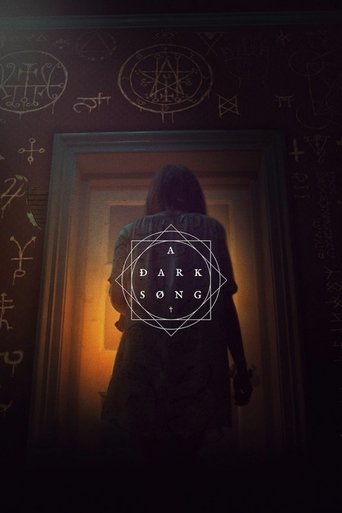
A Dark Song
Liam Gavin · 2016 · Film
Shares a bleak, unforgiving tone.
81% shared signal
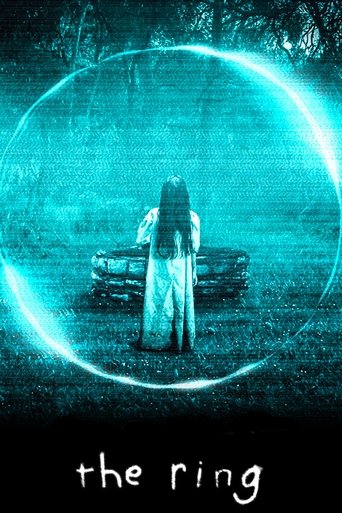
The Ring
Gore Verbinski · 2002 · Film
Shares a supernatural threat.
81% shared signal
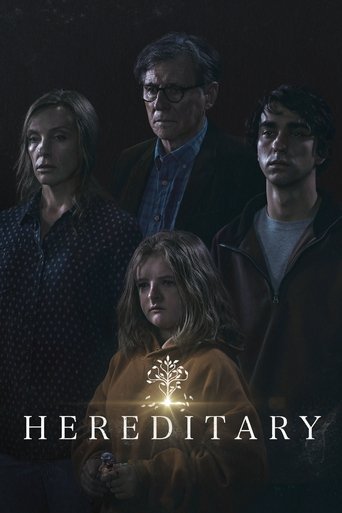
Hereditary
Ari Aster · 2018 · Film
Shares slow-burn dread.
81% shared signal
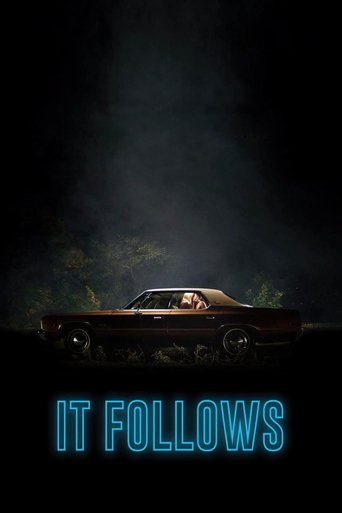
It Follows
David Robert Mitchell · 2014 · Film
81% shared signal
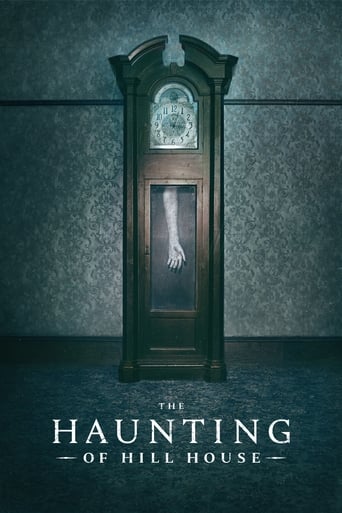
The Haunting of Hill House
Mike Flanagan · 2018 · Television
80% shared signal
Questions about Let the Right One In
The things people actually ask about this film, answered.
What happens at the end of Let the Right One In?
Jimmy forces Oskar's head under the water at the swimming pool. The camera stays below the surface; there is a commotion, and a severed head and arm drift past before Eli's hand pulls him up. She has killed all three boys. The last scene is Oskar on a train with a covered trunk, tapping code to her.
Is Eli a girl or a boy in Let the Right One In?
Eli says "I'm not a girl" and the film shows one brief image of a scarred, mutilated groin. Lindqvist's novel is explicit that Eli was a boy called Elias, castrated when he was turned in the eighteenth century. The film leaves it as something Oskar does not need resolved.
Who is Håkan in Let the Right One In?
The middle-aged man who lives with Eli and kills for her, presenting as her father. He is shown bleeding a boy over a bucket, is caught, burns his own face with acid to avoid identification, and then offers Eli his throat. The film implies he was once in Oskar's position.
What are the vampire rules in Let the Right One In?
Eli cannot enter a home uninvited and bleeds from everywhere if she does; sunlight causes instant combustion; and a bite transmits the condition, which the film demonstrates through Virginia, who becomes photosensitive and asks to be killed.
Is Let the Right One In a love story?
It is filmed as one and structured as a recruitment. Everything Eli gives Oskar — protection, attention, the instruction to hit back — is real, and the ending has a twelve-year-old leaving with a trunk to become what Håkan was. The film refuses to say which reading wins.
How does it differ from the American remake and the novel?
The 2010 remake, Let Me In, is close in plot and warmer in direction, and drops Eli's history almost entirely. Lindqvist's novel is far more explicit: Eli's castration, Håkan's paedophilia and his fate after death are all stated, and there is a substantial subplot the film cuts.
These are ranked against Let the Right One In, not against you.
Build your own tape →