
Book · 2012
Between Two Fires
Christopher Buehlman
Plague-era France, an orphan girl, a broken knight, and actual demons.
Most extreme on THE THREAT — a supernatural threat at 010
The most supernatural horror novels ever written →
On VHSCREAM’s six-axis scale, Between Two Fires (2012) is most extreme on the threat axis: 10 out of 100, where 0 is a supernatural threat and 100 is human monsters. 3% of the 105 horror works we have scored come in lower on that axis. How we score →
Between Two Fires is a 2012 novel by Christopher Buehlman, set in France in 1348 during the first and worst year of the Black Death. A disgraced knight and a girl who says she speaks with angels walk south through a country the plague has emptied. We score it 010 on the threat axis — only 3 works score lower, which puts it at the supernatural floor — and 070 on viscera.
Scored and reviewed by VHSCREAM on · how we score
Between Two Fires: the review
Between Two Fires is a medieval road novel with a theological apocalypse in it, and the thing it does better than almost any horror novel of the last twenty years is make the fourteenth century feel physically inhabited.
Buehlman was a professional stage performer and a Renaissance-fair sword-fighter before he was a novelist, and the specificity shows everywhere: how mail sits on a body, what a village smells like when nobody is left to bury anyone, how much a horse is worth, what a knight who has lost his lands actually does for money. Thomas was wounded at Crécy two years earlier, stripped of his property and title, and is travelling with a band of thieves when the novel opens. He is not a good man at the start and the book does not pretend otherwise — his introduction is killing his own companions in a barn because one of them tries to rape a girl who has come in asking for help burying her father.
That girl is Delphine, and the novel's engine is the slow, grudging, entirely earned shift in Thomas from escort to protector to something closer to a father. A drunken, kindly priest called Matthieu joins them on the road to Paris and gives the book its warmth and most of its jokes.
The horror is that the war in heaven has resumed
Delphine's claim, which the novel treats as true, is that the plague is not the catastrophe but the opening move: the fallen angels have broken out under Lucifer and are loose on the earth, and Heaven is losing. What that produces, chapter by chapter, is a series of genuinely strange set pieces rather than a monster-of-the-week structure — a river choked with the dead, a Paris under occupation by things wearing human authority, a house with something in it that was once a woman, a road where the air is wrong. Buehlman's imagination for this material is the best reason to read the book.
It is extremely violent and the violence has weight
At 070 on viscera this is among the more explicit things we hold, and almost none of it is spectacle. Plague deaths are described clinically and at length. Combat is short, confusing and ruinous. Children die. The book's cruelty is specifically fourteenth-century: the difference between dying of something and being killed by someone is much smaller than a modern reader is used to.
Where it is weaker
The middle third is episodic and a couple of the encounters feel interchangeable. The theology arrives in chunks of dialogue. And the last fifty pages pivot into a full-scale supernatural battle that is tonally a long way from the quiet, filthy road novel of the first three hundred.
For the same journey through a landscape that has stopped working, The Fisherman; for the same ritual patience about belief, A Dark Song and The Witch; for the same unsparing physical cruelty in prose, The Girl Next Door.
The ending of Between Two Fires explained
Total spoilers from here. Everything above this line is spoiler-free.
The short answer: they reach Avignon, where Delphine reveals that the Pope has been replaced — the figure on the throne is a demon, named in the text as Baal-Zebuth. With help from Matthieu's brother Robert they get a meeting, and the confrontation becomes a pitched battle between the hosts of Heaven and Hell inside the papal palace. The true Pope is restored. Thomas and Robert are both killed in the fighting. Delphine is killed by the Holy Spear — and that is the point: her death is the opening, and the archangel Michael and the heavenly host come out of her body to destroy the false pope and his army. Delphine's nature is revealed in that moment, and it is the novel's largest swing: she is both the girl from the farm and God incarnate a second time, and her sacrifice is what finally lets Heaven answer. Thomas's soul is dragged down to Hell by the fleeing demons and tortured there, and Delphine's divine aspect comes down after him in a second harrowing and brings him back into his own body. Afterwards, everyone except Thomas forgets the supernatural events, and the damage to Avignon is explained as an earthquake. Delphine's mortal self wakes up in her dead parents' village with no memory of any of it. Thomas finds her, and the novel's epilogue has the two of them living out their lives in religious orders, with Thomas raising her as his daughter.
What is Delphine in Between Two Fires?
For most of the novel she is a girl of about fifteen from a Norman farming village who sees and hears angels, is believed by nobody except eventually Thomas, and is being directed south. The revelation at Avignon is that this is literally true in the strongest available sense: she is God returned to earth in a second incarnation, simultaneously a real child and the thing speaking through her. The novel plants it — her certainty, her indifference to danger, the fact that she is the only one the demons try to bargain with — and withholds it until her death.
What happens at Avignon?
Avignon was the seat of the papacy in 1348, and the novel's plot has been pointing at it the whole way. Delphine's purpose is to reach the Pope, because the Pope is not the Pope: a demon has taken his place, which is why Heaven's answer never came. Matthieu's brother Robert gets them an audience, the imposture is exposed, and the palace becomes a battlefield. The real Clement is restored, the false pope is destroyed, and almost everybody the reader cares about dies doing it.
Does Thomas die in Between Two Fires?
Yes, and then no. He is killed by the demon wearing the Pope's body and his soul is taken to Hell and tortured by the demons as they flee. Delphine reaches him there — the novel stages it explicitly as a second Harrowing of Hell — and he wakes in his own body not long after he died. He is the only person who remembers what happened, which is the condition the epilogue is built on.
What happens to Père Matthieu?
He is the third member of the party for most of the journey, picked up on the road and signed on for Paris despite his own considerable misgivings, and he is the book's source of ordinary human decency. He does not come through the novel unscathed — Buehlman is not sentimental about anybody — and his brother Robert is one of the dead at Avignon. His function in the book is to be the one who believes Delphine for reasons that are not evidence.
Is the plague supernatural in Between Two Fires?
Partly, and the novel is careful about it. The Black Death is a real historical pandemic and it is described as one: buboes, fever, mass graves, villages where nobody is left. Delphine's position is that it was permitted or encouraged as the opening of a larger war rather than conjured outright, and that the things now walking around in France arrived through the gap the dying made. The book's dread comes from exactly that overlap — you cannot tell, in any given village, whether what killed everyone was a disease or something else.
How scary is Between Two Fires, actually?
Scored against the published rubric, here is what the numbers mean.
The threat at 010 is at the supernatural floor — only 3 works score lower. The antagonists are fallen angels and the stakes are a war in Heaven; the human cruelty in the book, of which there is a great deal, is downstream of it.
Viscera 070 is high — 84 works score lower. Plague deaths described clinically, battlefield wounds, children killed, bodies in a river, and a torture sequence in Hell.
Era bias 066 leans modern — 58 works score lower, which is a statement about the writing: the 1348 research is excellent and the prose, the structure and the pacing are entirely of 2012.
Tone 022 is bleak — 61 works score lower. Almost everyone dies, the country is destroyed, and the book's one act of grace costs the life of a child.
Pace 055 is just on the shock side — 74 works are slower. The journey is episodic and the set pieces come at regular intervals.
Reality anchor 050 is exactly the midpoint. The history is solid and the geography is real, and the things walking around in it obey no rules the reader is given.
On shocks: several. The novel's worst moments are usually a door opening onto something ordinary that is not.
Between Two Fires on six axes of fear
Every work in the index is scored on six continuous axes of fear. This is what Between Two Fires looks like as a vector.
Where that puts it: #1 supernatural · #6 goriest
Disagree with a number? Say so on the axis itself. Nobody has confirmed this vector yet, and a score you challenge goes to the top of the queue to be re-scored by a human. Votes do not move the numbers — they decide what gets looked at first. How the scoring works →
Scored against the published rubric. This vector is a draft awaiting review — the method is public so you can argue with it.
Who should skip Between Two Fires
Skip it if children dying is a hard limit. The plague takes children throughout, Delphine is fifteen, and the ending kills her.
Skip it if attempted sexual violence is a hard limit. The novel's first chapter turns on one and it recurs.
Skip it if an explicitly Christian cosmology will not work for you. This is not ambiguous metaphysics: there is a Heaven, a Hell, an incarnation and a Harrowing, and the last fifty pages require all of them.
Content notes: attempted rape in the opening chapter and later, the deaths of children, plague death described clinically and repeatedly, battlefield mutilation, a protracted torture sequence set in Hell, cannibalism, animal death, and the death of a child protagonist.
Read it if you want the best medieval horror novel in English, you can take three hundred pages of filth and walking before the metaphysics arrives, and you want a book where a bad man is slowly made into a father by a child who turns out to be God.
Where to start with horror books →
Where to find it
Buy from an indie bookshop ↗Out-of-print copies on eBay ↗We earn nothing from these links.
If Between Two Fires is your kind of fear
The eight works closest to Between Two Fires in the index, ranked by distance across all six axes — not by genre label, and not by what other people watched.
Talk to Me
Danny & Michael Philippou · 2022 · Film
Shares a supernatural threat.
84% shared signal
It
Andy Muschietti · 2017 · Film
Shares a supernatural threat.
82% shared signal
Sinister
Scott Derrickson · 2012 · Film
Shares a bleak, unforgiving tone.
81% shared signal
Evil Dead
Fede Alvarez · 2013 · Film
Shares explicit viscera.
79% shared signal
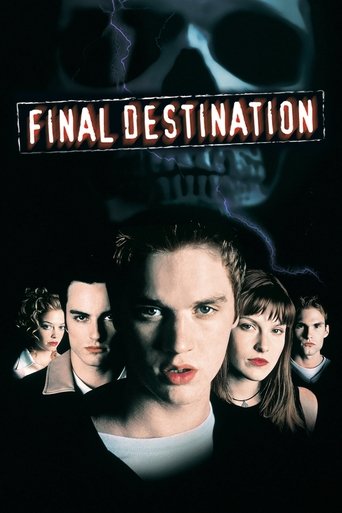
Final Destination
James Wong · 2000 · Film
Shares explicit viscera.
79% shared signal
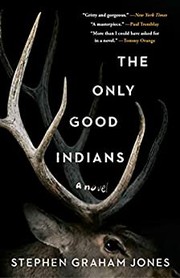
The Only Good Indians
Stephen Graham Jones · 2020 · Book
Shares a bleak, unforgiving tone.
78% shared signal
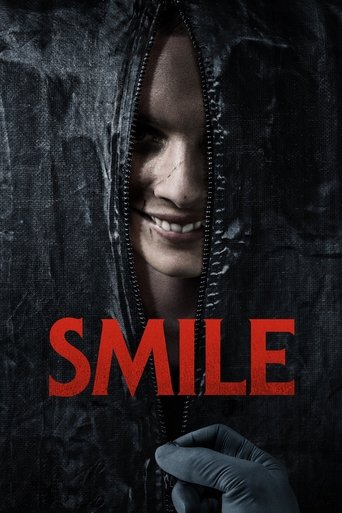
Smile
Parker Finn · 2022 · Film
77% shared signal
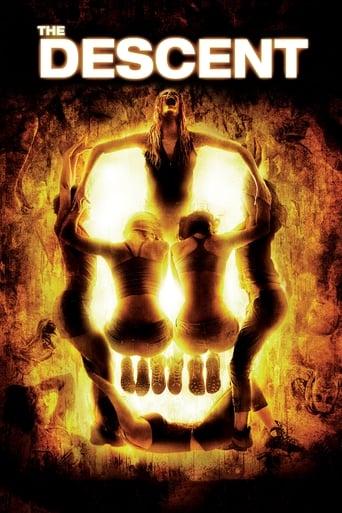
The Descent
Neil Marshall · 2005 · Film
77% shared signal
See the full list of books like Between Two Fires →
Questions about Between Two Fires
The things people actually ask about this book, answered.
What happens at the end of Between Two Fires?
At Avignon they expose the Pope as a demon. In the battle Thomas and Robert are killed, and Delphine is killed by the Holy Spear — which releases the archangel Michael and the heavenly host from her body to destroy the false pope. Thomas is dragged to Hell, and Delphine's divine aspect brings him back.
What is Delphine in Between Two Fires?
A fifteen-year-old Norman farm girl who hears angels, and — as revealed when she dies at Avignon — God incarnate a second time. She is both things simultaneously, and her death is what finally allows Heaven to answer the war the fallen angels started.
Does Thomas die in Between Two Fires?
He is killed by the demon wearing the Pope's body and his soul is taken to Hell and tortured. Delphine comes down after him in what the novel stages as a second Harrowing of Hell, and he wakes in his own body. He is the only person who remembers what happened.
Is the plague supernatural in Between Two Fires?
Partly. The Black Death is described as a real pandemic — buboes, mass graves, emptied villages — and Delphine's account is that it was permitted as the opening move of a larger war, with other things entering through the gap. The novel never fully separates the two.
How violent is Between Two Fires?
Very. We score it 070 on viscera, high for our index. Plague deaths are clinical and frequent, combat is short and ruinous, children die, and there is a sustained torture sequence set in Hell. Almost none of it is staged as spectacle.
Is Between Two Fires a horror novel or a fantasy novel?
Both, in sequence. For three hundred pages it is historical horror — a road, a plague, and things in the dark that are not explained. The final act is an open battle between angels and demons, which is where readers who wanted it to stay ambiguous tend to get off.
These are ranked against Between Two Fires, not against you.
Build your own tape →