Weird fiction: the novels where the rules do not hold
5 works in the index tagged WEIRD, all of them books, each scored on six axes of fear against a published rubric.
Weird fiction is the oldest name for what this site keeps measuring, and it names a method rather than a monster: the story declines to tell you what the rules are. The five novels tagged here sit at a median of 086 on the reality-anchor axis against 050 for everything else we have scored, 36 points further toward dream logic, which is the widest separation any tag we hold opens on that axis. It is a print tag because print got here first and because the form depends on a narrator who can be wrong at length.
5 scored and reviewed · 1895–2020 · the rubric
What weird horror looks like on the axes
The median work tagged weird against the median of the other 315 in the index, on the five axes where the comparison says something. Era bias is left out: in film, television and records it tracks the release year, so a gap there would describe when these were released rather than what they are.
- Pace of fear 018 against 054 for everything we have scored that is not tagged weird, 36 points below — slow-burn dread.
- Reality anchor 086 against 050 for everything we have scored that is not tagged weird, 36 points above — dream logic.
- Viscera 030 against 056 for everything we have scored that is not tagged weird, 26 points below — restraint over gore.
- Threat 030 against 040 for everything we have scored that is not tagged weird, 10 points below — a threat that is not human.
Every weird horror book we have scored
All 5, oldest first, with all six scores. The last column is the signature axis — the one the work is furthest from the middle on.
| Title | Year | Medium | Pace | Threat | Viscera | Era | Tone | Reality | Signature |
|---|---|---|---|---|---|---|---|---|---|
| The King in Yellow | 1895 | Book | 14 | 30 | 20 | 2 | 16 | 88 | Era Bias |
| The Cipher | 1991 | Book | 28 | 40 | 72 | 40 | 10 | 85 | Tone |
| House of Leaves | 2000 | Book | 15 | 30 | 20 | 62 | 16 | 90 | Reality Anchor |
| Annihilation | 2014 | Book | 18 | 20 | 38 | 86 | 12 | 86 | Tone |
| The Hollow Places | 2020 | Book | 30 | 15 | 30 | 88 | 34 | 82 | Era Bias |
All 5 in release order
With the cover, the creator, and the one line that says why it is here.
The King in Yellow
Robert W. Chambers · 1895 · Book
Four stories about a play nobody should finish, and six about painters in Paris.

The Cipher
Kathe Koja · 1991 · Book
A hole in a storage room that eats whatever is fed to it. Grimy, hypnotic.
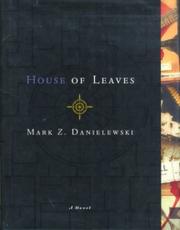
House of Leaves
Mark Z. Danielewski · 2000 · Book
A book about a house bigger inside than out, typeset to disorient you.

Annihilation
Jeff Vandermeer · 2014 · Book
A biologist takes field notes on a coastline that is not behaving like a place.

The Hollow Places
T. Kingfisher · 2020 · Book
A hole in a museum wall, a delta of willows, and a thing that finds you by being thought about.
Questions about weird horror
What is the difference between weird fiction and horror?
Weird fiction is a subset with one extra condition: the cosmology is never confirmed. Plenty of horror withholds an explanation for suspense and then supplies one. These five do not, and the measurement shows it — 086 against 050 on reality anchor. House of Leaves is the extreme case, a book whose own footnotes disagree about whether its subject exists.
Is weird fiction the same as cosmic horror?
Overlapping and not identical, and the distinction is about scale. Cosmic horror needs indifference and size — what cosmic horror is sets that out. Weird fiction only needs the rules to stay unavailable, which a single corridor can manage: The Cipher is a hole in a storage room and nothing in it is cosmic at all.
Where should I start with weird fiction?
The Hollow Places if you want a narrator you would enjoy a drink with, Annihilation if you want the best-written one, and The King in Yellow if you want to see the method being invented — though only the first four stories in it are this at all.
How many weird horror books are in this index?
Five, from 1895 to 2020, all of them books. Every one is scored on all six axes and reviewed in full. Tags here mark what a work is about or built from; the six axes are what we measure, and they are the part you can argue with.
Is weird horror a subgenre?
We would rather call it a tag and point at the measurement. It does hold an axis: the median work tagged weird sits 36 points above the rest of the index on reality anchor, which is a wider gap than most tags here manage. The subgenre guides are the pages where a term has a definition and a history worth writing out.
Tags are a blunt instrument. The axes are not.
Build your tape →