Book · 2020
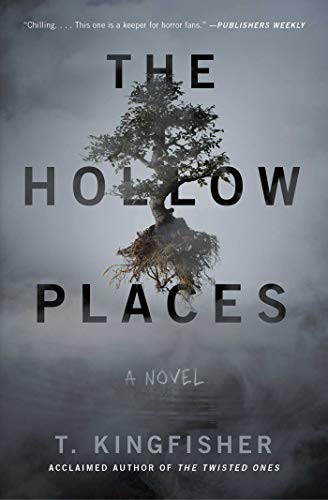
The Hollow Places
T. Kingfisher
A hole in a museum wall, a delta of willows, and a thing that finds you by being thought about.
48Strong to sit through, out of 100 — mostly how bleak it is
- PaceSlow burn30
- ThreatMostly supernatural15
- GoreHolds back30
- ToneBleak34
- RealityDream logic82
Era bias 88 · Thoroughly modern. Texture rather than fear, so it is not part of the grade. All six scores →
On VHSCREAM’s six-axis scale, The Hollow Places (2020) is most extreme on the era-bias axis: 88 out of 100, where 0 is analog-era texture and 100 is modern craft. 83% of the 320 horror works we have scored come in lower on that axis. How we score →
The Hollow Places is a 2020 novel by T. Kingfisher. Kara, newly divorced, moves into her uncle's roadside museum of taxidermy and oddities, finds a hole punched through a corridor wall, and steps through it into a river delta full of willows. We score it 082 on reality anchor and 034 on tone, which makes it the funniest thing in this index that is also genuinely frightening.
Scored and reviewed by VHSCREAM on · how we score
How scary is The Hollow Places, actually?
Scored against the published rubric, here is what the numbers mean for a reader.
Reality anchor 082 is the signature. Only 29 works score higher. The museum is utterly ordinary and the hole in its wall opens onto a geography with no cause. The novel keeps one foot in each and never reconciles them.
Tone 034 is the most interesting number here. 222 works score lower, which means this sits on the bleak side of the axis despite being consistently funny. Both are true: the jokes are real and the cosmology offers nothing.
Threat 015 is near the floor of the supernatural end. Only 38 works score lower. Nothing in the delta has a grievance. It notices you, and noticing is the whole mechanism.
Era bias 088 is modern. 30 works score higher. Contemporary first-person voice, a divorce, a coffee shop, a mobile phone with no signal — and that modernity is what stops it reading as a Blackwood pastiche.
Viscera 030 is restrained. 243 works score higher. There is one body in a bunker and one genuinely horrible description of something wearing a person, and the rest is withheld.
Pace 030 is dread. 232 works are faster. Long exploratory stretches, one sustained set piece of standing completely still, and a fast final fifty pages.
On jump scares: two or three, and the best one is somebody turning a corner in a museum.
Who should skip The Hollow Places
Skip it if comedy in horror irritates you. Kara narrates wryly throughout and the humour does not stop when the horror starts. Readers who want unrelieved dread will find the register wrong.
Skip it if you have read "The Willows" and want something new. This is a deliberate rewrite, acknowledged in the text, and a reader expecting an original cosmology will recognise the shape immediately.
Skip it if taxidermy is a problem. The museum is wall-to-wall preserved animals, described lovingly and often, including a famous and much-discussed stuffed otter.
Content notes: a corpse in enclosed space, a body being worn by something else, drowning, animal remains throughout, panic attacks described from inside, and the aftermath of an emotionally abusive marriage.
Read it if you want modern cosmic horror with a human narrator you would happily have a drink with, you can take a monster that is defeated by thinking about something else, and the idea of a hole in a wall in a roadside museum sounds like enough of a premise. It is.
The Hollow Places on six axes of fear
Every work in the index is scored on six continuous axes of fear. This is what The Hollow Places looks like as a vector — and what each ten-point band looks like across everything else we hold.
Where that puts it: joint #4 supernatural · #5 surreal · joint #9 without gore
Draft score — awaiting human review. About these scores
Disagree with a number? Say so on the axis itself. Nobody has confirmed this vector yet, and a score you challenge goes to the top of the queue to be re-scored by a human. Votes do not move the numbers — they decide what gets looked at first. How the scoring works →
Scored against the published rubric. This vector is a draft awaiting review — the method is public so you can argue with it.
Where to start with horror books →
Where to find it
Buy from an indie bookshop ↗Out-of-print copies on eBay ↗We earn nothing from these links.
The Hollow Places: the review
A direct answer to "The Willows", and an improvement on it
Kingfisher is explicit about the debt: this is Algernon Blackwood's 1907 story, rebuilt by somebody who thought it was almost perfect and could be made worse to experience. Blackwood gave us two men on a Danube island where the willows are paying attention. Kingfisher gives us a corridor in a North Carolina museum, a hole in the drywall, and a bunker-strewn delta where the willows are paying attention and where other people have been before and left notes.
The improvement is the notes. Blackwood's horror is pure atmosphere; Kingfisher's has a chain of evidence — graffiti, a corpse in a bunker, a warning that reads pray they are hungry — and it works because each piece of evidence makes the rules worse rather than clearer.
The best scare in modern horror is a sentence about willows
The mechanic is this: the things in the delta locate you by attention. If you look at them, if you think about them with any intensity, they know where you are. The novel therefore spends long stretches with its narrator standing still, trying to think about anything else, and Kingfisher writes the inside of that effort — the intrusive thought, the panic, the deliberate recitation of unrelated facts — better than anybody has written it.
And then she compounds it. The things can be in your world too. The novel's second half is Kara back in the museum, unable to be sure whether a thing is behind her, in a building full of glass eyes.
It is funny, and the comedy is load-bearing
Kara is wry about her divorce, her uncle's taxidermy, her own cowardice, and Simon, the coffee-shop neighbour who comes with her, is a genuinely great comic creation who never once becomes comic relief. The jokes are a pressure valve and they are also a characterisation: this is how a specific person copes, and when the jokes stop you know exactly how bad it has become.
We score tone 034, which is below the midpoint — bleak side — and that is right. The novel is funny and its cosmology is merciless. Nothing about the delta is survivable on its own terms; Kara gets out through luck, nerve and one appalling decision, and the book does not pretend otherwise.
Where it strains
The middle sags slightly: there is one bunker too many and the exploration becomes repetitive before the stakes sharpen. Uncle Earl is offstage for the whole novel and is more a premise than a person. And the resolution relies on an object introduced late, which is the one place Kingfisher's plotting shows its join.
Against that, it is the clearest modern demonstration that cosmic horror needs no tentacle, no mythos and no antiquarian narrator — just a place that does not want you and a rule you can break by thinking.
The ending of The Hollow Places explained
The ending, in full. Open it when you have seen it.
The short answer: Kara and Simon escape the delta, but something follows them back into the museum. Kara destroys the hole in the wall and, with it, the route — at the cost of the thing that had been wearing a dead man's shape. The museum survives, Kara stays, and the novel's last pages make clear that she is not certain the attention has stopped.
Here is how the novel gets there.
What is through the hole?
A river delta of willows, under a flat white sky, scattered with concrete bunkers from several different eras and civilisations. It is not another planet and not an afterlife. The novel's best guess, offered by graffiti rather than exposition, is that it is a place between places — somewhere things pass through, and somewhere a great many people have arrived by accident and failed to leave.
Why are the willows dangerous?
They are not, exactly. The willows are where the attention lives. Something in the delta hunts by being thought about, so looking at it, fearing it, or holding it in mind tells it where you are. The practical consequence is that the only defence is to stand still and think about something else, and the novel is largely about how hard that is.
What does "pray they are hungry" mean?
It is a warning left by a previous visitor, and the horror of it is the logic. A hungry thing kills you and is done. The alternative — a thing that is not hungry and is instead curious, or bored, or acquisitive — takes longer and does not end.
What happens to Simon?
He survives, which is not guaranteed and is the novel's one real mercy. He is hurt, he is altered by what he has seen, and the friendship between him and Kara is the only relationship in the book that the delta does not spoil.
How is it actually stopped?
Kara closes the route, destroying the section of wall the hole runs through, and in doing so traps what came back on the wrong side of it. The novel refuses to confirm that this worked completely. The final scene has Kara deliberately not looking at something, which is the correct ending for a book whose rule is that looking is what kills you.
If The Hollow Places is your kind of fear
The eight works closest to The Hollow Places in the index on the five axes that describe fear, the same medium first — not by genre label, and not by what other people watched.

Annihilation
Jeff Vandermeer · 2014 · Book
Shares modern craft.
84% shared signal
The Endless
J. Benson & A. Moorhead · 2017 · Film
Shares a threat that is not human.
88% shared signal
The Backrooms
Kane Pixels · 2022 · Web series
Shares dream logic.
86% shared signal
Archive 81
Rebecca Sonnenshine · 2022 · Television
Shares slow-burn dread.
85% shared signal
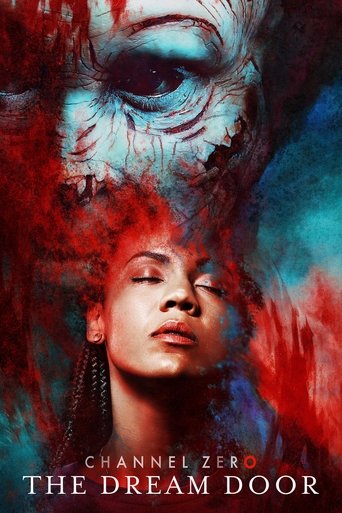
Channel Zero: Candle Cove
Nick Antosca · 2016 · Television
Shares dream logic.
84% shared signal

Candyman (OST)
Philip Glass · 1992 · Record
Shares restraint over gore.
84% shared signal
Twin Peaks: The Return
David Lynch · 2017 · Television
Shares a threat that is not human.
83% shared signal
Ben Drowned
Alexander Hall · 2010 · Web series
Shares restraint over gore.
83% shared signal
Questions about The Hollow Places
The things people actually ask about this book, answered — including how it ends.
How does The Hollow Places end?
Kara and Simon get out of the delta, but something follows them into the museum. Kara destroys the wall the hole runs through, closing the route and trapping what came back on the far side. The novel declines to confirm that it worked, and its final scene has her carefully not looking at something.
What is the world in The Hollow Places?
A willow-covered river delta under a white sky, scattered with concrete bunkers from several different civilisations. It is never explained. The best account the book offers, via graffiti, is that it is a place things pass through and a place people arrive in by accident.
Why can't you look at the monsters in The Hollow Places?
Because attention is how they find you. Thinking about the thing tells it where you are, so the only defence is to stand still and deliberately think about something else — which is the novel's central and most effective set piece.
Is The Hollow Places based on The Willows?
Yes, openly. It is a deliberate response to Algernon Blackwood's 1907 story, which the text itself discusses, moved to a North Carolina roadside museum and given a chain of physical evidence Blackwood's version does not have.
Is The Hollow Places funny or scary?
Both, and it does not trade one for the other. We score it 034 on tone, which is the bleak side of the midpoint, because the narrator's humour sits on top of a cosmology that offers nobody anything. Horror comedy is the guide to that register done with the comedy in front.
What should I read after The Hollow Places?
Annihilation for a place that cannot be reported, The Fisherman for the same scale at a slower burn, and House of Leaves for the other novel about a space inside a house that should not fit.
These are ranked against The Hollow Places, not against you.
Build your own tape →