Web series · 2010
Ben Drowned
Alexander Hall
A secondhand cartridge that knows it is being played, and knows who is playing it.
51Strong to sit through, out of 100 — mostly how bleak it is
- PaceBuilds, then strikes38
- ThreatMostly supernatural16
- GoreShows almost nothing8
- ToneBleak18
- RealityDream logic82
Era bias 34 · Analog-leaning. Texture rather than fear, so it is not part of the grade. All six scores →
On VHSCREAM’s six-axis scale, Ben Drowned (2010) is most extreme on the viscera axis: 8 out of 100, where 0 is restraint over gore and 100 is explicit viscera. 1% of the 320 horror works we have scored come in lower on that axis. How we score →
Ben Drowned is a web series and alternate-reality game published in 2010 by Alexander Hall under the name Jadusable: a written account plus video of a secondhand Majora's Mask cartridge that does not behave like a game. The save file is called BEN. We score it 008 on viscera, near the floor of this index, and 082 on reality anchor. The first arc is one of the best things the form has produced and the sequels are not.
Scored and reviewed by VHSCREAM on · how we score
How scary is Ben Drowned, actually?
Scored against the published rubric, here is what the numbers mean for a viewer.
Reality anchor 082 is the signature. 288 works score lower. A real game behaving impossibly is unreality with a solid frame around it: the console, the cartridge and the room are ordinary, and everything inside the screen has stopped obeying.
Viscera 008 is near the floor of the index. Only 4 works score lower. There is no body in it at all. A drowning animation, some blood in a texture, and nothing else — the lowest score on this shelf and one of the lowest anywhere here.
Threat 016 is the supernatural end. 46 works score lower. Whatever is in the cartridge has no motive you can address, no body and no negotiable interest, and the old man at the garage sale is the nearest the series has to a human agent.
Era bias 034 is analog, which is unusual for this shelf. 207 works score higher. Unlike the tape-simulating series around it, this is genuine period hardware: a 2000 Nintendo 64 game captured on 2010 equipment, with no artefact added. The texture is real rather than performed.
Pace 038 is on the dread side. 210 works are faster. Long stretches of an empty town, punctuated by three or four moments that arrive without warning.
Tone 018 is bleak. 119 works score lower. The narrator loses, the thing wins, and the series' closing gesture is the entity writing in his place.
On jump scares: three or four, and the best of them is a statue that has moved.
Who should skip Ben Drowned
Skip it if you have never played Majora's Mask. A third of the effect is a familiar object behaving incorrectly, and if the object is not familiar the series is a man describing a glitch.
Skip it if 2010 internet prose will irritate you. The account tells you how frightened the narrator is at length. The restraint is all in the images, not the writing.
Skip the sequels. The first arc is complete and refuses to explain itself. Everything after it explains, and the explanation is the thing that stops working.
Content notes: the drowning of a child as a central premise, suicide imagery, drowning imagery throughout, and a sustained framing in which a real person's identity is taken over.
Watch it if you want the work that invented haunted-game horror, four words of text that did more than most films manage, and a statue in a doorway that was not there a minute ago.
Ben Drowned on six axes of fear
Every work in the index is scored on six continuous axes of fear. This is what Ben Drowned looks like as a vector — and what each ten-point band looks like across everything else we hold.
Draft score — awaiting human review. About these scores
Disagree with a number? Say so on the axis itself. Nobody has confirmed this vector yet, and a score you challenge goes to the top of the queue to be re-scored by a human. Votes do not move the numbers — they decide what gets looked at first. How the scoring works →
Scored against the published rubric. This vector is a draft awaiting review — the method is public so you can argue with it.
Ben Drowned: the review
The haunted cartridge, done once and properly
A student buys a used Nintendo 64 cartridge from an old man at a garage sale. There is one save file on it, named BEN. Deleting it does not work. The game is Majora's Mask and it is wrong in ways that get worse: the Song of Healing plays backwards, Clock Town is empty, fire sits on the water, and the Elegy of Emptiness statue — a real object in the real game, and already one of the most unsettling things Nintendo ever shipped — stops standing where it was left and starts following.
What makes it work is that Hall barely invents anything. Almost every element is a real asset from a 2000 Nintendo game, reversed, misplaced or repeated. The horror is a familiar object behaving incorrectly, which is the cheapest effect in the world to describe and the hardest to execute. Hall executes it.
The line, and the restraint around it
"You shouldn't have done that." Four words of text in a game's own font, and the whole genre of haunted-game horror is downstream of them. The series understands that a game has a voice the player has already agreed to obey — the same insight Local 58 has about broadcast — and that turning that voice on the player is the entire trick. It does not need gore and it does not have any.
The companion footage is the other half. Hall had the discipline to keep the video short, badly captured and silent where silence does more, and to let the written account carry the chronology. The famous moments are a statue in a doorway and a drowned Link animation played at the wrong time.
Then the ARG keeps going
The first arc closes properly. What follows — the Moon Children, the cult framing, the layered puzzle material across several years — is where a great many people got off, and they were right to. The mythology explains the cartridge, and a cartridge that has been explained is a cartridge with rules. The project's own best idea is that nothing about BEN is knowable, and the sequels spend their length knowing things.
Where it strains
Beyond the sequels: the prose of the original account is amateur in the way 2010 internet horror generally was, with a narrator who announces how frightened he is rather than letting the reader get there. The video is genuinely hard to see, which is sometimes the effect and sometimes just a capture card. And the series depends on the reader knowing Majora's Mask — if the Elegy statue means nothing to you, roughly a third of the power is gone.
Read the first arc. Watch the footage that goes with it. Stop before the Moon Children.
The ending of Ben Drowned explained
The ending, in full. Open it when you have seen it.
The short answer: the first arc ends with the cartridge winning. Jadusable's account of what the game is doing gets stranger and more fragmentary, the entity moves from the cartridge to his files and his posts, and the final entries are not written by him — they are BEN using his name, closing with the Happy Mask Salesman's real line from the real game: "You've met with a terrible fate, haven't you?" There is no rescue, no explanation and no confrontation. The series then continued for years into a much larger alternate-reality game, which supplies an origin, a cult and a cosmology, and almost everybody agrees it is the weaker material.
Here is how the first arc gets there.
Who is BEN?
A save file, and whatever is using it. The account gradually suggests a boy who drowned, that the cartridge's previous owner knew him, and that the game is where he is now — and the first arc keeps every part of that at the level of suggestion. No origin is confirmed, no rules are established, and nothing in it can be bargained with. The later arcs name and explain him, which is the problem.
What happens to the cartridge?
It stops being the boundary. The early entries are about a game that will not behave; the later ones are about a player whose computer, files and account are no longer reliably his. The progression is the series' real structure: the haunted object is a doorway, not the subject.
What is the Elegy of Emptiness statue?
A real object in Majora's Mask: a blank-faced statue of Link, created in-game by playing a particular song, which Nintendo designed to be left standing on switches. Ben Drowned changes one thing — it moves when you are not looking — and that single alteration is the most effective idea in the series, because the statue was already frightening and entirely official.
What does "You shouldn't have done that" mean?
It is the game addressing the player rather than the character, in the game's own typeface, after an action the player chose. Nothing is threatened and nothing is explained. It is the moment the series stops being about Link and starts being about whoever is holding the controller, and it is the sentence every haunted-game story since has been trying to re-earn.
How does the whole ARG end?
It does not, cleanly. The project ran for years through further arcs, a group called the Moon Children, and a large body of puzzle material, and its mythology never arrives anywhere as frightening as the first arc's refusal to have one. There is no agreed ending because the thing that ended was the restraint.
Is any of it real?
No. It is fiction presented as a found account, which is the form's whole method, and Ben Drowned is one of the works that taught the internet to read horror that way. The cartridge, the garage sale and the old man are all part of the story.
If Ben Drowned is your kind of fear
The eight works closest to Ben Drowned in the index on the five axes that describe fear, the same medium first — not by genre label, and not by what other people watched.
The Backrooms
Kane Pixels · 2022 · Web series
Shares restraint over gore.
93% shared signal
Marble Hornets
Troy Wagner & Joseph Delage · 2009 · Web series
Shares a bleak, unforgiving tone.
85% shared signal
The Endless
J. Benson & A. Moorhead · 2017 · Film
Shares a threat that is not human.
84% shared signal
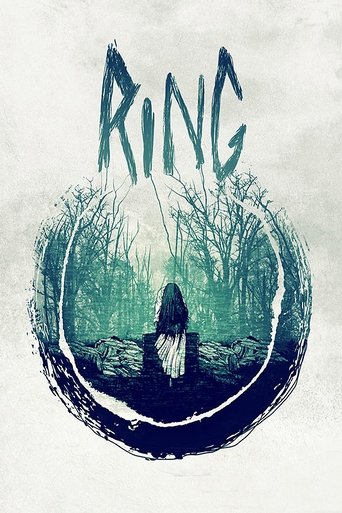
Ringu
Hideo Nakata · 1998 · Film
Shares a threat that is not human.
84% shared signal

Candyman (OST)
Philip Glass · 1992 · Record
Shares dream logic.
83% shared signal

The Hollow Places
T. Kingfisher · 2020 · Book
Shares dream logic.
83% shared signal
The Grudge
Takashi Shimizu · 2004 · Film
Shares a bleak, unforgiving tone.
82% shared signal
House of Leaves
Mark Z. Danielewski · 2000 · Book
Shares restraint over gore.
81% shared signal
More lists like these: Books like House of Leaves
Questions about Ben Drowned
The things people actually ask about this series, answered — including how it ends.
What is Ben Drowned about?
A student buys a secondhand Majora's Mask cartridge with one save file on it, named BEN, and the game begins behaving wrongly — reversed music, an empty Clock Town, a statue that follows him. The entity gradually moves out of the cartridge and into his account and his files.
Who is BEN in Ben Drowned?
A save file and whatever is using it. The first arc suggests a drowned boy and confirms nothing: no origin, no rules, no motive. The later alternate-reality game names and explains him at length, which is the main reason that material is considered weaker.
How does Ben Drowned end?
The cartridge wins. The account fragments, the entity takes over Jadusable's posts, and the final entries are written in his name — closing on the Happy Mask Salesman's real line from the real game, "You've met with a terrible fate, haven't you?" Nobody is rescued and nothing is explained.
What does "You shouldn't have done that" mean?
It is the game speaking to the player rather than to Link, in the game's own typeface, after an action the player chose. It threatens nothing and explains nothing, and it is the moment haunted-game horror became a form.
Is Ben Drowned a real haunted cartridge?
No. It is fiction written as a found account by Alexander Hall, and it is one of the works that taught the internet to read horror presented as a recovered record — the same contract Marble Hornets was making in the same year.
Why does Ben Drowned score low on era bias when the rest of this shelf scores high?
Because it is not imitating old hardware, it is using it. A 2000 console game captured in 2010 has the texture it appears to have, whereas Local 58 is modern digital work wearing simulated tape. We score the texture a work has, not the one it performs.
What should I watch after Ben Drowned?
Petscop for the same premise taken somewhere far more serious, Marble Hornets for the other founding document of 2009–2010, and what analog horror is for the genre this fed into.
These are ranked against Ben Drowned, not against you.
Build your own tape →