Film · 2004
The Grudge
Takashi Shimizu
A Tokyo house where a murder became a curse, and everyone who walks in is next.
62Hard going to sit through, out of 100 — mostly how bleak it is
- PaceBuilds, then strikes56
- ThreatSomething not human8
- GoreHolds back22
- ToneNo relief at all12
- RealityDream logic66
Era bias 66 · Modern. Texture rather than fear, so it is not part of the grade. All six scores →
The most supernatural horror movies ever made →
On VHSCREAM’s six-axis scale, The Grudge (2004) is most extreme on the threat axis: 8 out of 100, where 0 is a threat that is not human and 100 is human monsters. 0% of the 320 horror works we have scored come in lower on that axis. How we score →
The Grudge is a 2004 American-Japanese supernatural horror film directed by Takashi Shimizu, remaking his own Ju-On: The Grudge. An American care worker in Tokyo enters a house where a murdered family's rage has become a curse that follows anyone who crosses its threshold. We score it 008 on the threat axis and 012 on tone.
Scored and reviewed by VHSCREAM on · how we score
How scary is The Grudge, actually?
Scored against the published rubric, here is what the numbers mean.
The threat at 008 is at the supernatural end — 1 work scores lower. Takeo's murders are the origin, but every death in the film's present is done by ghosts.
Viscera 022 is restrained — 40 works score lower. A jawless corpse and the bodies in the attic are glimpsed; almost every death happens off-screen or in a cut.
Tone 012 is bleak — 60 works score lower. The curse cannot be broken, nobody is saved, the fire fails, and the film ends with its lead marked for death.
Pace 056 leans to the shock side — 167 works score lower. The fear comes in sudden appearances, a face or a hand, rather than long build.
Era bias 066 reads modern — 146 works score lower. A 2004 studio sheen and the polished, cool look of the American remake cycle it helped start.
Reality anchor 066 is on the surreal side — 231 works score lower. The story is told out of order, ghosts appear inside ordinary rooms, and the dead pass through ceilings.
On jump scares: it is built on them. Kayako and Toshio appearing where they should not be is the film's main method, and it repeats it many times.
Who should skip The Grudge
Skip it if you want a curse with a way out. There is no rule to follow, no tape to copy, and no ending in which anyone escapes.
Skip it if fragmented timelines frustrate you. The story jumps between episodes and years, and the chronology only becomes clear late.
Skip it if repeated jump scares wear you down. The ghost appearances follow the same pattern many times over.
Content notes: the murder of a woman and a child by her husband, the killing of a cat, a hanging, suicide, a woman with dementia, corpses, and a man dying of fright.
Watch it if you want the American gateway to Japanese ghost horror, a ghost image that has stayed in the culture, and a short, cold film that refuses to let anyone off.
The Grudge on six axes of fear
Every work in the index is scored on six continuous axes of fear. This is what The Grudge looks like as a vector — and what each ten-point band looks like across everything else we hold.
Where that puts it: joint #2 supernatural
Draft score — awaiting human review. About these scores
Disagree with a number? Say so on the axis itself. Nobody has confirmed this vector yet, and a score you challenge goes to the top of the queue to be re-scored by a human. Votes do not move the numbers — they decide what gets looked at first. How the scoring works →
Scored against the published rubric. This vector is a draft awaiting review — the method is public so you can argue with it.
The Grudge: the review
The Grudge is a remake made by the man who made the original, and the most interesting thing about it is how little he changed.
Takashi Shimizu had already made the story in Japan, first direct to video and then as Ju-On: The Grudge, before Sam Raimi's Ghost House Pictures brought him in to direct an English-language version. It was produced by Raimi, Robert Tapert and Takashige Ichise, written by Stephen Susco, shot in Tokyo, and released in October 2004 on a $10 million budget. It was greenlit on the back of The Ring, made $187.3 million worldwide, and helped kickstart the trend for American remakes of Asian horror.
What Shimizu kept is the structure, and the structure is the scary part. The Grudge is told out of order. It is a set of overlapping episodes, each built around a different person who walks into the same house in Tokyo, and the film moves backwards and forwards between them so that you sometimes see a death before you see the reason for it. The effect is of a curse that is not hunting anybody in particular. It is just there, like the house, and it takes whoever comes in.
A curse with no rules to beat
The premise is stated at the start: when someone dies in the grip of intense rage or sorrow, a curse is born, and it stays where they died and spreads to anyone who enters. In 2001, Takeo Saeki found his wife Kayako's diary, full of her obsession with her American professor, Peter Kirk, and in a jealous rage killed her, their son Toshio and the family cat. Kayako's ghost hanged Takeo with her own hair. Peter received a letter from Kayako, went to the house, found the bodies, and killed himself the next day.
So the house is already full when the Williams family moves in. Matt, his wife Jennifer and his mother Emma, who has dementia, are American, isolated by language, and in no position to understand what is happening. By the time Karen Davis, played by Sarah Michelle Gellar, is sent to look after Emma, the curse has already moved through most of them.
That is what makes the film bleaker than its reputation. In Ringu there is a mystery to solve and a deadline to beat. Here there is nothing to solve. Detective Nakagawa tries to burn the house down and is killed before he can. Karen sets the fire herself and escapes, and the house is still standing.
Kayako and Toshio
Takako Fuji's Kayako is the image people remember: a woman crawling down a staircase towards the person at the bottom. Yuya Ozeki's Toshio, pale and silent, is the other. Shimizu stages them as intrusions into ordinary space: a boy sealed inside a wardrobe, a woman coming down through a ceiling. The best scares are about a familiar room containing one thing too many.
The house takes everyone
The supporting deaths are where the film's coldness really shows. Yoko, the care worker who looked after Emma before Karen, goes up to the attic and is dragged into it by Kayako. Her employer Alex, played by Ted Raimi, goes looking for answers and is killed by Yoko's jawless corpse. Matt's sister Susan finds the curse has followed her to her own apartment, and she disappears. Detective Nakagawa, played by Ryo Ishibashi, tells Karen that three of his colleagues died investigating the Saeki killings, and his decision to burn the house down is the one act of resistance in the film. It fails, and Takeo kills him for trying.
None of these people did anything except go inside, and that is the film's argument. There is no sin being punished and no lesson being taught. Shimizu has no interest in fairness, and the American cast's confusion, as outsiders who cannot read the signs or speak the language, makes that indifference feel even larger. Grace Zabriskie's Emma, lost in dementia and the first to sense that something is wrong with the house, is the film's most haunting human presence, precisely because nobody listens to her.
As a remake it is unusually faithful, which cuts both ways. Shimizu keeps the episodic structure, the house and the original actors as the Saeki family, and moves the American characters through them like visitors, which is exactly what they are. Nothing in the film tries to explain the curse away or give the Americans a mystery to solve, and that restraint is to its credit. But some of what was uncanny in the Japanese version becomes routine when it is staged for a wide studio release, and the film's few attempts at explanation, mostly delivered by Nakagawa, flatten the strangeness rather than deepen it.
Where it falls down
The American characters are weaker than the house. Gellar is likeable but Karen is mostly a pair of eyes, and Jason Behr's Doug exists to go to the house at the wrong moment. The fragmented structure that makes the curse feel random also makes the film hard to care about, because nobody is on screen long enough for their death to land as more than a set-piece. And the scares are repetitive: once you have seen Kayako appear twice, you know how the third time will go. Critics were split, and three American sequels followed.
For the Japanese curse film that started the cycle, Ringu; for its American remake, made by a different director and with a stronger investigative spine, The Ring. Sam Raimi's own return to curse horror, Drag Me to Hell, is the comic counterweight.
The ending of The Grudge explained
The ending, in full. Open it when you have seen it.
The short answer: nobody beats the curse. Doug goes to the Saeki house looking for Karen, is paralysed there, and dies of shock when Kayako reaches him. Detective Nakagawa had already tried to burn the house and been killed by Takeo's ghost; Karen sets light to the spilled gasoline and escapes. In hospital she learns the house survived the fire. When she goes to see Doug's body, she realises Kayako is still coming for her. The film ends with the curse intact and Karen marked by it.
What is the curse in The Grudge?
The film states it outright: when someone dies in the grip of intense rage or sorrow, a curse is born where they died, and anyone who enters that place is marked by it and can carry it on. The Saeki house became cursed when Takeo murdered his wife and son there in a jealous rage, and the curse grows with every victim.
Who is Kayako in The Grudge?
Kayako Saeki, played by Takako Fuji, was a Tokyo housewife who became obsessed with her college professor, Peter Kirk, and wrote about him in her diary. Her husband Takeo read it, assumed she was having an affair, and killed her, their son Toshio and the family cat. Her ghost hanged Takeo with her hair and haunts the house as the most dangerous of the three.
What happens to Karen at the end of The Grudge?
Karen survives the night but not the curse. She escapes the burning house, and in hospital is told the house did not burn down. When she visits Doug's body she sees that Kayako is still after her. The sequel, The Grudge 2, picks up from there with Gellar back in a brief role.
Why did Peter Kirk kill himself?
Peter, played by Bill Pullman, was the professor Kayako had been obsessed with. After receiving a letter from her, he went to the house, found the bodies and Toshio's ghost, and killed himself the next day. He is the curse's first victim outside the family.
If The Grudge is your kind of fear
The eight works closest to The Grudge in the index on the five axes that describe fear, the same medium first — not by genre label, and not by what other people watched.
Paranormal Activity: The Ghost Dimension
Gregory Plotkin · 2015 · Film
Shares a threat that is not human.
93% shared signal
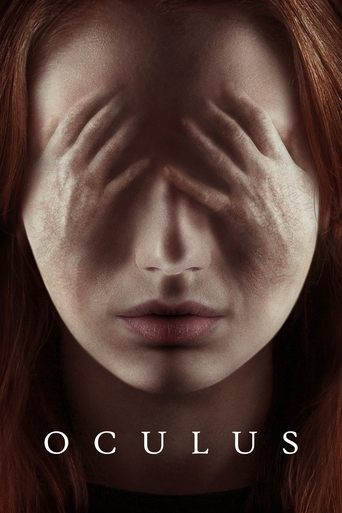
Oculus
Mike Flanagan · 2013 · Film
Shares a bleak, unforgiving tone.
87% shared signal
Insidious: Chapter 2
James Wan · 2013 · Film
Shares restraint over gore.
87% shared signal
1408
Mikael Hafstrom · 2007 · Film
Shares a threat that is not human.
86% shared signal
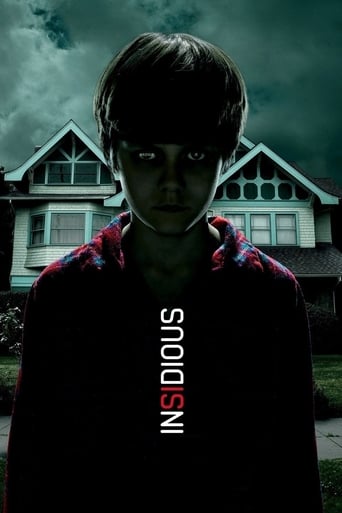
Insidious
James Wan · 2010 · Film
Shares restraint over gore.
86% shared signal
Insidious: The Red Door
Patrick Wilson · 2023 · Film
85% shared signal
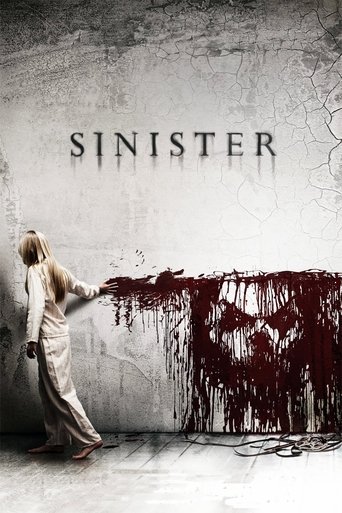
Sinister
Scott Derrickson · 2012 · Film
Shares a bleak, unforgiving tone.
85% shared signal
Bird Box
Josh Malerman · 2014 · Book
89% shared signal
More lists like these: Movies like Insidious · Movies like Sinister
Questions about The Grudge
The things people actually ask about this film, answered — including how it ends.
What happens at the end of The Grudge?
Doug goes to the Saeki house to find Karen and dies of shock when Kayako reaches him. Detective Nakagawa has already been killed by Takeo's ghost trying to burn the house. Karen sets the fire and escapes, but learns in hospital the house survived, and realises at Doug's body that Kayako is still after her.
Is The Grudge a remake?
Yes. It is the English-language remake of Ju-On: The Grudge (2002), and it was directed by Takashi Shimizu, who also made the Japanese original. It was produced by Sam Raimi's Ghost House Pictures and shot in Tokyo, with Takako Fuji, Yuya Ozeki and Takashi Matsuyama playing the Saeki family from the original films.
Why is The Grudge house cursed?
Because Takeo Saeki murdered his wife Kayako and their son Toshio there in a jealous rage after reading her diary. The film's rule is that a death in rage or sorrow creates a curse that stays in that place and spreads to anyone who enters, and Kayako's ghost then killed Takeo too.
Does Karen die in The Grudge?
Not in this film. She escapes the fire and survives the night, but the ending makes clear Kayako is still after her and the curse is not broken. The Grudge 2, released in 2006, continues her story with Sarah Michelle Gellar returning in a brief role.
Is The Grudge scary?
It depends what frightens you. We score it 056 on pace, leaning towards shock, and 022 on viscera, which means the fear comes from sudden ghost appearances rather than gore. Kayako's staircase crawl and sudden appearances are effective the first few times and predictable later.
How many Grudge movies are there?
In the American series, four: The Grudge (2004), The Grudge 2 (2006), the direct-to-video The Grudge 3 (2009), and a 2019 film also titled The Grudge, directed by Nicolas Pesce, in which Kayako and Toshio appear briefly. There are also the Japanese Ju-On films.
These are ranked against The Grudge, not against you.
Build your own tape →