
Record · 2001
Khanate
Khanate
Doom slowed until the form stops working, with a man stating intentions over the gaps.
70Hard going to sit through, out of 100 — mostly how bleak it is
- PacePure slow burn4
- ThreatHuman and not60
- GoreExplicit72
- ToneNo relief at all4
- RealityDream logic80
Era bias 40 · Neither era. Texture rather than fear, so it is not part of the grade. All six scores →
The slowest-burning horror albums ever recorded →
On VHSCREAM’s six-axis scale, Khanate (2001) is most extreme on the pace-of-fear axis: 4 out of 100, where 0 is slow-burn dread and 100 is relentless shock. 1% of the 320 horror works we have scored come in lower on that axis. How we score →
Khanate is the 2001 debut by Khanate: Stephen O'Malley on guitar, James Plotkin on bass, Tim Wyskida on drums and Alan Dubin on voice. It is doom metal slowed to the point where the form stops functioning, with a vocalist screaming about harm in the first person. We score it 004 on tone, two points off the floor of this index, and 072 on viscera.
Scored and reviewed by VHSCREAM on · how we score
How scary is Khanate, actually?
Scored against the published rubric, here is what the numbers mean for a listener.
Tone 004 is near the floor of this index. Only 3 works score lower. There is no relief, no beauty, no release and no resolution anywhere on the record. On the record shelf only Threnody for the Victims of Hiroshima scores lower, and that is a concert work about an atrocity rather than a record somebody made to put on.
Viscera 072 is scored for content rather than for sound. 222 works score lower. There is no gore in a record, obviously; what there is, is a first-person account of injury delivered at length, and that is what the number measures.
Pace 004 is almost the floor. Only 2 works are slower. A chord, a gap, a chord. There is no tempo you could count.
Threat 060 is above the midpoint, toward the human end. 208 works score lower. Nothing supernatural is invoked anywhere. The voice on this record is a person.
Reality anchor 080 is high. 280 works score lower. The sound is enormous, unlocated and unmusical, and the gaps make the whole thing feel like a space rather than a performance.
Era bias 040 sits below the midpoint. 199 works score higher. A 2001 recording with analog weight and no digital gloss, deliberately rough.
On jump scares: none, and the silences function as the opposite — you brace instead.
Who should skip Khanate
Skip it if first-person lyrics about violence are a limit. This is not implied or mythologised. Dubin states intentions in detail and that is the record's hardest feature by a long way.
Skip it if you want heaviness. This is not a wall of guitars. It is mostly silence, and listeners who come to doom for weight consistently find it thin and frustrating.
Skip it if a shrieked vocal is unbearable. Dubin has no low register and no conventional musicality, by design, and nothing on the record gives you a break from him.
Content notes: sustained first-person descriptions of violence and sexual violence, and a vocal performance designed to be distressing.
Listen to it if you want one of the bleakest records in this index, you are interested in slowness used as cruelty rather than grandeur, and you understand that this is a recommendation of the same kind as the one for Off Season — technically remarkable and not an evening.
Khanate on six axes of fear
Every work in the index is scored on six continuous axes of fear. This is what Khanate looks like as a vector — and what each ten-point band looks like across everything else we hold.
Where that puts it: joint #2 bleakest · joint #2 slow burn · joint #8 surreal
Draft score — awaiting human review. About these scores
Disagree with a number? Say so on the axis itself. Nobody has confirmed this vector yet, and a score you challenge goes to the top of the queue to be re-scored by a human. Votes do not move the numbers — they decide what gets looked at first. How the scoring works →
Scored against the published rubric. This vector is a draft awaiting review — the method is public so you can argue with it.
Khanate: the review
Not heavy. Empty.
The mistake people make with Khanate is expecting weight. Doom metal is normally a wall — guitars thick enough to lean on. This is the opposite: enormous gaps, a single chord allowed to decay to nothing before the next arrives, drums that sometimes wait fifteen seconds between hits, and in the spaces, nothing at all. The record is mostly silence with damage at the edges.
What fills that silence is Dubin, and he is the reason this is in a horror index rather than a metal one. His voice is a high, strangled shriek with no low register and no musicality, delivering lyrics that are almost entirely in the first person and almost entirely about what the speaker intends to do to somebody. He does not sound like a monster. He sounds like a man in a room with you who has been thinking about this for a long time.
The tempo is the content
Slowness in doom is usually grandeur — the sense of something vast moving. Here it is the pace of a procedure. There is no groove and no riff you could nod to, and the effect of the gaps is that the listener does the work: you are left waiting for the next event, which is exactly the position the lyrics put you in. Nothing on the record is accidental about this.
"Pieces of Quiet" is the clearest statement — an eight-minute piece in which almost nothing happens, repeatedly, and the almost is unbearable. O'Malley's guitar tone is the one from Sunn O))) and used for a different purpose entirely: not drone as ritual, drone as a held breath.
Where it strains
It is monotonous, deliberately, and the first album is the band's most conventional — the later records (Things Viral, Capture & Release, Clean Hands Go Foul) go further and are more extreme and in places better. Dubin's vocal is an acquired taste that many people never acquire, and the lyrics' first-person violence is a genuine barrier rather than an edgy affectation to be shrugged off.
And as a listening experience it is punishing in a way that is hard to recommend to anybody not specifically looking for it. We score it 072 on viscera for content rather than for sound, which is unusual on this shelf and is the honest reading.
Why it is here
Because this index scores records on the same six axes as films, and when you do that honestly, this lands at the far end of three of them. Everywhere at the End of Time is sadder. Threnody is more violent as sound. Nothing here is more frightening in the plain sense of making a listener want to leave the room.
The ending of Khanate explained
The ending, in full. Open it when you have seen it.
How it resolves: on "No Joy", the longest piece, which spends its final minutes decaying — the guitar held and allowed to die, the drums stopping, Dubin gone — and then simply ends in room noise. There is no climax anywhere on the record and no resolution at the close. The last thing you hear is the absence of the thing that was in the room.
Who were Khanate?
A four-piece formed in New York in 2000: Stephen O'Malley of Sunn O))) and Burning Witch on guitar, James Plotkin of Old and Scorn on bass, Tim Wyskida of Blind Idiot God on drums, and Alan Dubin, also from O'Malley's earlier band OLD, on voice. They released four albums and disbanded, with a brief return in 2022.
Why is it so slow?
Because the gaps are the content. Conventional doom uses slowness for grandeur; Khanate use it to leave the listener waiting, which is the position the lyrics describe. A chord is allowed to decay completely before the next one, and the drums sometimes leave a dozen seconds between hits.
What are the lyrics about?
Harm, almost always in the first person, described with a specificity that is the record's hardest feature. Dubin is not playing a monster or a myth — the voice is a person stating intentions, which is why the record reads as horror rather than as metal.
Is this their best album?
Probably not. Things Viral (2003) and Capture & Release (2005) go further, and many listeners rate them higher. The debut is the most approachable, which on this shelf is a relative term.
Is it related to Sunn O)))?
By personnel. O'Malley plays in both, and his guitar tone is recognisable across them, but the purposes diverge completely: Black One is drone as ritual and this is drone as a held breath with a man shouting over it.
If Khanate is your kind of fear
The eight works closest to Khanate in the index on the five axes that describe fear, the same medium first — not by genre label, and not by what other people watched.

Black One
Sunn O))) · 2005 · Record
Shares slow-burn dread.
78% shared signal
Men
Alex Garland · 2022 · Film
Shares a bleak, unforgiving tone.
85% shared signal

The Cipher
Kathe Koja · 1991 · Book
Shares dream logic.
81% shared signal
The Killing of a Sacred Deer
Yorgos Lanthimos · 2017 · Film
Shares a bleak, unforgiving tone.
81% shared signal
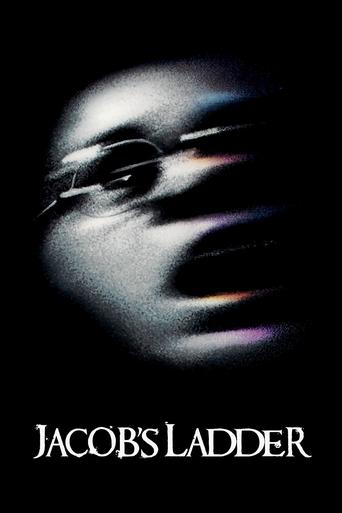
Jacob's Ladder
Adrian Lyne · 1990 · Film
Shares dream logic.
79% shared signal
The Wailing
Na Hong-Jin · 2016 · Film
Shares explicit viscera.
79% shared signal
Longlegs
Osgood Perkins · 2024 · Film
79% shared signal
Under the Skin
Jonathan Glazer · 2013 · Film
Shares slow-burn dread.
78% shared signal
More lists like these: Movies like Jacob's Ladder
Questions about Khanate
The things people actually ask about this record, answered — including how it ends.
Who were Khanate?
A New York four-piece formed in 2000 — Stephen O'Malley of Sunn O))) on guitar, James Plotkin on bass, Tim Wyskida on drums and Alan Dubin on voice. They released four albums, disbanded, and briefly returned in 2022.
Why is Khanate so slow?
Because the gaps are the point. Where conventional doom uses slowness for grandeur, Khanate use it to leave the listener waiting — a chord decays completely before the next arrives, and the drums can leave a dozen seconds between hits.
What are the lyrics about?
Harm, almost always in the first person and described with real specificity. The voice is not a monster or a myth; it is a person stating intentions, which is why this reads as horror rather than as metal.
Is Khanate related to Sunn O)))?
Through Stephen O'Malley, who plays in both, and the guitar tone is recognisable across them. The purposes differ entirely: Black One is drone as ritual and this is drone as a held breath with someone shouting over it.
Which Khanate album should I start with?
This one, which is the most approachable of the four — a relative judgement. Things Viral and Capture & Release go considerably further and many listeners rate them higher.
How does it compare with the rest of your record shelf?
It is the bleakest thing on it. We score it 004 on tone, tying the floor of the whole index, and 004 on pace. Everywhere at the End of Time is sadder and Threnody is more violent as pure sound, but nothing here is more likely to make you leave the room.
These are ranked against Khanate, not against you.
Build your own tape →