Record · 1998
Time Machines
Coil
Four long drones engineered to dismantle your sense of time.
Most extreme on PACE OF FEAR — slow-burn dread at 002
On VHSCREAM’s six-axis scale, Time Machines (1998) is most extreme on the pace-of-fear axis: 2 out of 100, where 0 is slow-burn dread and 100 is relentless shock. 0% of the 105 horror works we have scored come in lower on that axis. How we score →
Time Machines is a 1998 album by Coil, released under the project name Time Machines: four long sustained drones, each titled with a chemical formula, presented as tones intended to distort the listener's sense of time. We score it 098 on reality anchor — 103 of 105 works score lower — and 002 on pace, with 103 of 105 works faster.
Scored and reviewed by VHSCREAM on · how we score
Time Machines: the review
Time Machines is the most extreme record in this index and it is also the one that asks the least of you, which is a strange thing for a record to be.
Coil — John Balance and Peter Christopherson — made it as a deliberate instrument rather than as music. Four tracks, each around fifteen to twenty minutes, each a single sustained drone with almost no event in it. The titles are chemical names: a β-carboline, a substituted amphetamine, 5-MeO-DMT, and the phosphate ester that is psilocybin. The stated intention, printed on the release, is that these are "four tones to facilitate travel through time", and the record was issued with no conventional artwork — a plain embossed sleeve, no track information presented as music, no indication that it is an album at all.
What is actually on it is microtonal beating. Each drone is built from close-together frequencies that interfere with each other, so the sound appears to pulse, breathe and move without anything changing, and the effect of sitting with that for a quarter of an hour at a time is genuinely disorienting. It does not produce fear. It produces the specific sensation of having lost track of how long you have been doing something, which is a different and rarer thing for a record to do.
It is the most literal piece of functional music in the index
Everything else we hold is representing something. Time Machines is attempting an effect on the listener's nervous system, and whether you believe it works is largely a question of whether you sit still for it. The honest assessment is that at volume, in the dark, with no other input, all four tracks produce measurable time distortion in most listeners — not because of anything mystical, but because a featureless seventeen-minute drone removes every cue a person uses to estimate duration.
Coil's position in the genre
Coil were never a horror act and they are among the most important groups in this index's hinterland: Christopherson came from Throbbing Gristle, Balance from Psychic TV, and across twenty-odd years they made records about ritual, death, illness and sexuality that most horror music is a watered-down version of. Time Machines is their most reductive record and their most influential one — the modern drone and dark-ambient scene is more indebted to this than to anything else from the period.
Where it is impossible to recommend
It is seventy minutes of four sustained tones. There is no melody, no rhythm, no development, no variation and no event. Played as background it is a hum; played properly it demands your entire attention for an hour and gives you nothing back that can be described. It is the least listenable thing we have scored and that is not a criticism of it.
For the same architectural emptiness made from recordings, Heresy; for the same stillness used against memory, Everywhere at the End of Time; for the same abandonment of pitch for mass, Black One.
The ending of Time Machines explained
Total spoilers from here. Everything above this line is spoiler-free.
The short answer: the fourth drone stops. There is no structural ending to Time Machines because there is no structure to resolve — four tones, in sequence, each one beginning, sustaining and ceasing, with no relationship between them and no return of earlier material. The final track is the psilocybin tone, and it ends the way the other three do, by being switched off. What the record does instead of an ending is leave you without a clock: the most frequently reported experience of finishing it is not knowing how long it has been, which is the designed effect and is the only sense in which it has a conclusion at all. Later reissues, including the Time Machines vinyl and the expanded editions, do not change this.
What are the four tracks on Time Machines?
Four drones, each named for a psychoactive compound: a β-carboline associated with ayahuasca, a substituted amphetamine, 5-MeO-DMT, and the phosphate ester of psilocybin. Each runs roughly fifteen to twenty minutes. The naming is not decoration — the record presents each tone as corresponding to the compound, and the sleeve's claim is that they are tools rather than pieces.
Does Time Machines actually distort time?
In a mundane sense, yes, and you do not need to accept the sleeve's framing to get the effect. A featureless sustained tone with no rhythmic or melodic events removes every cue a listener uses to estimate elapsed duration, so time estimation degrades badly — most people finishing a seventeen-minute track will guess anywhere from five minutes to forty. Coil's framing is esoteric; the mechanism is ordinary and it works.
Who were Coil?
John Balance and Peter Christopherson, working from the mid-1980s until Balance's death in 2004. Christopherson had been in Throbbing Gristle; both had passed through Psychic TV. Across Scatology, Horse Rotorvator, Love's Secret Domain, the Musick to Play in the Dark records and this one, they made the most serious body of work in British industrial and esoteric music, and almost no horror music exists downstream of them that admits it.
How should I listen to Time Machines?
In one sitting, loud, in the dark, with nothing else happening and no clock in the room. Any other approach turns it into a hum. It is seventy minutes and there is no way to sample it meaningfully — a two-minute excerpt of a seventeen-minute drone contains none of the effect, because the effect is entirely a function of duration.
Is Time Machines frightening?
No, and it is the only record in this index for which that is the right answer. We score it 098 on reality anchor, the ceiling, because nothing in it is orientable — but its effect is disorientation rather than dread. It belongs here because it is the furthest point in the direction the rest of this medium's records travel.
How scary is Time Machines, actually?
Scored against the published rubric, here is what the numbers mean.
Reality anchor 098 is the ceiling of our scale — 103 of 105 works score lower. There is no pitch centre, no metre, no event and no duration cue anywhere on the record.
Pace 002 is the floor — 103 works are faster. Four sustained tones across seventy minutes, with no rhythmic content of any kind.
Tone 008 is bleak — 11 works score lower, although "bleak" sits awkwardly here: the record is not sad, it is absent.
Viscera 010 is near the floor — only 6 works score lower. There is nothing bodily in it at all.
Era bias 044 is just under the midpoint. 1998, analogue and early digital synthesis, released with no artwork on a small press.
The threat at 025 is on the supernatural side — 24 works score lower. There is no agency, no presence and nothing approaching.
On shocks: none. There is not one transient on the entire record.
Time Machines on six axes of fear
Every work in the index is scored on six continuous axes of fear. This is what Time Machines looks like as a vector.
Where that puts it: #1 slow burn · #1 surreal · #4 supernatural · #7 bleakest
Disagree with a number? Say so on the axis itself. Nobody has confirmed this vector yet, and a score you challenge goes to the top of the queue to be re-scored by a human. Votes do not move the numbers — they decide what gets looked at first. How the scoring works →
Scored against the published rubric. This vector is a draft awaiting review — the method is public so you can argue with it.
Who should skip Time Machines
Skip it unless you intend to sit with it. Seventy minutes of four tones, with no variation and nothing to follow. As background listening it is a hum and nothing else.
Skip it if you want frightening. This record produces disorientation rather than fear and it is not trying to unsettle you.
Skip it if the framing will irritate you. The sleeve presents the tracks as functional instruments named after psychoactive compounds, and that is not a joke the record is making.
Content notes: instrumental, with no lyrics or depicted content. The track titles are the chemical names of psychoactive compounds and the release presents the tones as associated with them.
Listen to it if you want the most extreme record in this index, you have an hour and no clock, and you are curious what happens to your sense of time when a piece of music refuses to give you any.
If Time Machines is your kind of fear
The eight works closest to Time Machines in the index, ranked by distance across all six axes — not by genre label, and not by what other people watched.

Selected Ambient Works Volume II
Aphex Twin · 1994 · Record
Shares slow-burn dread.
92% shared signal

Heresy
Lustmord · 1990 · Record
Shares a bleak, unforgiving tone.
91% shared signal

House of Leaves
Mark Z. Danielewski · 2000 · Book
Shares dream logic.
86% shared signal
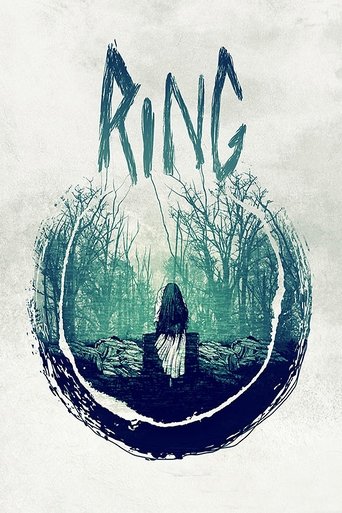
Ringu
Hideo Nakata · 1998 · Film
Shares restraint over gore.
76% shared signal
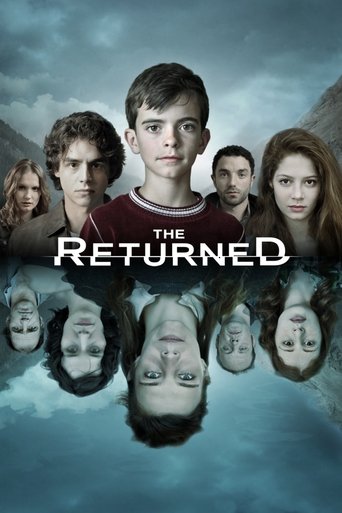
Les Revenants
Canal+ · 2012 · Television
Shares a supernatural threat.
74% shared signal
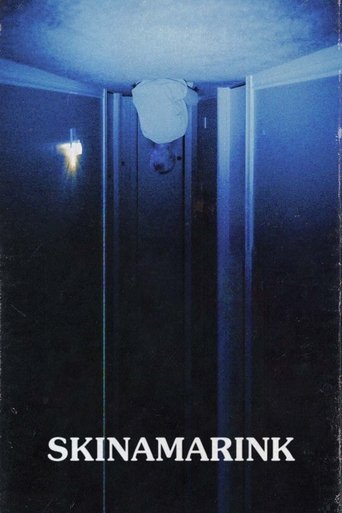
Skinamarink
Kyle Edward Ball · 2022 · Film
Shares slow-burn dread.
72% shared signal

Black One
Sunn O))) · 2005 · Record
Shares dream logic.
71% shared signal

Under the Skin (OST)
Mica Levi · 2013 · Record
Shares a bleak, unforgiving tone.
71% shared signal
Questions about Time Machines
The things people actually ask about this record, answered.
How does Time Machines end?
The fourth drone is switched off. There is no structure to resolve — four unrelated tones, each beginning, sustaining and ceasing. What the record leaves you with instead of an ending is no sense of how long it has been, which is the designed effect.
What are the tracks on Time Machines called?
Each is named for a psychoactive compound: a β-carboline, a substituted amphetamine, 5-MeO-DMT, and the phosphate ester of psilocybin. Each runs roughly fifteen to twenty minutes, and the release presents them as tones corresponding to those compounds.
Does Time Machines really distort your sense of time?
In an ordinary sense, yes. A featureless sustained tone removes every cue a listener uses to judge elapsed time, so estimates degrade badly — people finishing a seventeen-minute track often guess five minutes or forty. The sleeve's framing is esoteric; the mechanism is not.
Who were Coil?
John Balance and Peter Christopherson, active from the mid-1980s until Balance's death in 2004. Christopherson came from Throbbing Gristle and both from Psychic TV. Their catalogue — Horse Rotorvator, Love's Secret Domain, Musick to Play in the Dark — underlies a great deal of modern dark music.
How should I listen to Time Machines?
In one sitting, loud, in the dark, with no clock. There is no useful way to sample it: a short excerpt of a seventeen-minute drone contains none of the effect, because the effect is made entirely of duration.
Is Time Machines scary?
No, and it is the one record here where that is the honest answer. We score it 098 on reality anchor — the ceiling of the scale — because nothing in it can be oriented against, but what it produces is disorientation rather than dread.
These are ranked against Time Machines, not against you.
Build your own tape →