
Book · 1936
At the Mountains of Madness
H. P. Lovecraft
A geology report that becomes a scream. The one where we are the by-product.
55Strong to sit through, out of 100 — mostly how bleak it is
- PacePure slow burn10
- ThreatSomething not human10
- GoreHolds back28
- ToneNo relief at all10
- RealityDream logic76
Era bias 6 · Analog to the bone. Texture rather than fear, so it is not part of the grade. All six scores →
On VHSCREAM’s six-axis scale, At the Mountains of Madness (1936) is most extreme on the era-bias axis: 6 out of 100, where 0 is analog-era texture and 100 is modern craft. 3% of the 320 horror works we have scored come in lower on that axis. How we score →
At the Mountains of Madness is a 1936 novella by H. P. Lovecraft, written in 1931 and serialised in Astounding Stories. A Miskatonic University expedition drills into Antarctic rock, finds fossils that should not exist, and then finds the city they came from. We score it 010 on threat and 010 on pace — among the most supernatural and most patient things in this index.
Scored and reviewed by VHSCREAM on · how we score
How scary is At the Mountains of Madness, actually?
Scored against the published rubric, here is what the numbers mean for a reader.
Threat 010 is near the floor of the supernatural end. Only 8 works score lower. Nothing in this novella wants to hurt anybody. The Elder Things act in self-defence and then go home; the shoggoth is an escaped tool. Nothing is malevolent and that is the point.
Pace 010 is among the most patient things we hold. Only 9 works are slower. Half the novella is survey data and the other half is architectural description. The dread is cumulative to an extent that will defeat some readers entirely.
Era bias 006 is near the floor. 303 works score higher. 1930s expedition technology, 1930s prose, 1930s assumptions, and no modernising gloss anywhere.
Viscera 028 is restrained but specific. 258 works score higher. There is one carefully clinical account of dissected bodies, human and canine, and it is far more upsetting than anything louder would have been.
Tone 010 is bleak. 40 works score lower. Nobody is rescued, nothing is defeated, one man is destroyed, and the conclusion is that we are an accident in somebody else's record.
Reality anchor 076 is high for something this documentary. 271 works score lower. The method is scientific throughout and the content is a city built by star-spawn under the Antarctic ice.
On jump scares: one, structurally. The thing in the tunnel. Everything else accumulates.
Who should skip At the Mountains of Madness
Skip it if you need a plot. This is a survey, a walk and an escape. Readers who want incident will find the middle hundred pages close to unreadable.
Skip it if Lovecraft's prose defeats you. The adjectives are relentless and this is not the novella to start with if that has already put you off him.
Skip it if you would rather not read period racism. Lovecraft's hierarchies of degeneration are load-bearing here, not incidental, and show up in how the servant species is conceived.
Content notes: clinical description of dissected human and animal bodies, animal deaths, a character's permanent psychiatric collapse, and the racial and eugenic assumptions of its author throughout.
Read it if you want the novella where cosmic horror becomes an argument rather than an atmosphere, deep time thrills rather than bores you, and you can take a hundred pages of masonry before anything chases anyone.
At the Mountains of Madness on six axes of fear
Every work in the index is scored on six continuous axes of fear. This is what At the Mountains of Madness looks like as a vector — and what each ten-point band looks like across everything else we hold.
Where that puts it: joint #2 slow burn · joint #2 supernatural · joint #7 bleakest · #8 without gore · #8 surreal
Draft score — awaiting human review. About these scores
Disagree with a number? Say so on the axis itself. Nobody has confirmed this vector yet, and a score you challenge goes to the top of the queue to be re-scored by a human. Votes do not move the numbers — they decide what gets looked at first. How the scoring works →
Scored against the published rubric. This vector is a draft awaiting review — the method is public so you can argue with it.
Where to start with horror books →
Where to find it
Buy from an indie bookshop ↗Out-of-print copies on eBay ↗We earn nothing from these links.
At the Mountains of Madness: the review
A geology report that becomes a scream
The structure is the achievement and it is the thing most readers are not warned about. For something close to half its length this novella is a logbook: tonnages, drill cores, radio dispatches, wind speeds, the names of dogs. Lovecraft is not padding. He is establishing that the narrator, William Dyer, is a professional whose instinct under pressure is to measure things, so that when the measuring fails you know exactly how bad it has become.
The pivot is Lake's camp. A second party drills further north, reports fossils of something with a radial body plan and no place in the record, dissects one, radios the details — and then the weather closes and the radio stops. Dyer flies up and finds what is left, and the novella's whole middle section is him reading a scene of destruction correctly and refusing, for as long as he can, to say so.
The city is the best thing Lovecraft wrote
Beyond the mountains is a stone city the size of a country, abandoned, carved throughout with its own history. Dyer and the graduate student Danforth walk it for forty pages reading murals, and in doing so reconstruct several hundred million years: the Elder Things arrive from space, build, breed labour, are rebelled against, decline, and are finally reduced to what the two men are now stepping over.
This is the passage where cosmic horror stops being a mood and becomes an argument. The revelation is not that something monstrous exists. It is that the Elder Things were scientists and builders with a civic life and an art history, that they made terrestrial life as a by-product, and that humanity is somewhere in their records as a footnote. The horror is demotion.
And then Lovecraft does the thing almost nobody else manages: Dyer comes to pity them. "Radiates, vegetables, monstrosities, star-spawn — whatever they had been, they were men." That line is the hinge of the novella and the reason it outlasts the rest of the mythos.
The shoggoths, and what is still down there
What killed Lake's party was not an Elder Thing. The novella is careful about this and most summaries are not. The Elder Things the expedition revived were curious, methodical and doing roughly what Lake had done to one of them. What comes up the tunnel behind Dyer and Danforth at the end is the servant species that destroyed the city's makers — protoplasmic, imitative, and still working.
Danforth sees something past the farther mountains that Dyer does not, and never recovers. Lovecraft gives us only his noises. It is the single most effective withholding in his work.
Where it strains
The prose is at its most adjectival. Everything is eldritch, cyclopean, abnormal, blasphemous, and the words do less work each time. The mural exposition is twice as long as it needs to be and a reader who does not find deep time thrilling will find it inert. And Lovecraft's racial politics are present in the text's assumptions about hierarchy and degeneration, not as an incidental slur but as part of how the novella thinks about the servant species, which is worth knowing before you start rather than discovering.
Even so: this is the one to read. The Fisherman and Annihilation are better written and both are answering this.
The ending of At the Mountains of Madness explained
The ending, in full. Open it when you have seen it.
The short answer: Dyer and Danforth escape the city, pursued up a tunnel by a shoggoth. Flying out, Danforth looks back at a further mountain range and sees something he will not describe; he is institutionalised. Dyer publishes the account for one reason only — to stop the next expedition going, because the Antarctic interior is not empty.
Here is how the novella gets there.
What are the Elder Things?
A spacefaring species that reached Earth before terrestrial life and built cities here. Radially symmetrical, barrel-bodied, winged, with five-pointed heads. The murals establish them as makers, historians and scientists, and establish that they engineered other life on this planet for food and labour — including, at some remove, us.
What are the shoggoths?
The labour. Protoplasmic, shape-changing, bred for work and controlled by hypnotic suggestion, and across the city's history they grew intelligent and rebelled repeatedly. The final rebellions are what ended the civilisation. One is still alive in the tunnels, and it is what the expedition disturbs.
What killed Lake's party?
The Elder Things that Lake had dug out and thawed. They woke, they defended themselves, and then — this is the detail that makes the novella what it is — they dissected one of the men and a dog, took specimens, and set out for home. The dispatches Dyer finds read as atrocity; the murals let him recognise them as fieldwork.
What does Danforth see at the end?
Lovecraft will not say. Flying out, Danforth looks toward a range beyond the one they crossed and begins screaming, and the novella's last lines list the fragments he says afterwards — a colour, a shape, a few syllables — and nothing else. He spends the rest of his life in care. It is the purest statement in the book of the position that knowledge is the thing that destroys you.
Why does Dyer publish?
To prevent the Starkweather-Moore expedition. The whole narrative is framed as a warning offered reluctantly by a man who knows he will not be believed and who has decided that being thought a liar is preferable to the alternative. The last words are an instruction to stay out.
If At the Mountains of Madness is your kind of fear
The eight works closest to At the Mountains of Madness in the index on the five axes that describe fear, the same medium first — not by genre label, and not by what other people watched.

Annihilation
Jeff Vandermeer · 2014 · Book
Shares a bleak, unforgiving tone.
89% shared signal
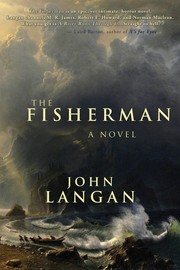
The Fisherman
John Langan · 2016 · Book
Shares slow-burn dread.
88% shared signal
The King in Yellow
Robert W. Chambers · 1895 · Book
Shares analog-era texture.
85% shared signal
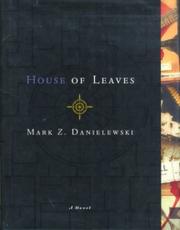
House of Leaves
Mark Z. Danielewski · 2000 · Book
Shares dream logic.
84% shared signal
Local 58
Kris Straub · 2015 · Web series
Shares a threat that is not human.
91% shared signal

Heresy
Lustmord · 1990 · Record
Shares restraint over gore.
89% shared signal
Gemini Home Entertainment
Remy Abode · 2019 · Web series
Shares a threat that is not human.
88% shared signal
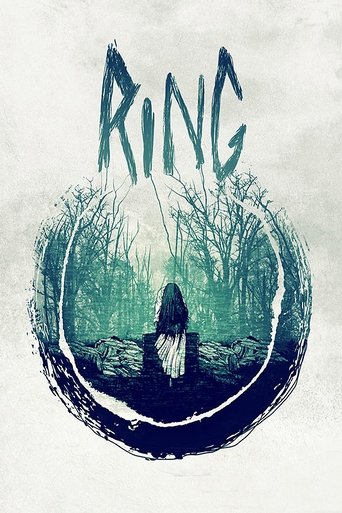
Ringu
Hideo Nakata · 1998 · Film
Shares a bleak, unforgiving tone.
87% shared signal
More lists like these: Books like House of Leaves
Questions about At the Mountains of Madness
The things people actually ask about this book, answered — including how it ends.
How does At the Mountains of Madness end?
Dyer and Danforth escape the buried city with a shoggoth behind them, and flying out Danforth looks toward a farther mountain range, sees something he never describes, and is institutionalised. Dyer publishes his account solely to stop the next expedition from going.
What are the Elder Things in At the Mountains of Madness?
A spacefaring species that colonised Earth before terrestrial life, built cities here, and engineered other organisms for food and labour — including, at a long remove, humanity. The novella presents them as scientists and builders rather than monsters, and its narrator ends up pitying them.
What are shoggoths?
Protoplasmic shape-changing creatures the Elder Things bred as labour and controlled hypnotically. They became intelligent, rebelled repeatedly, and brought down the civilisation that made them. One is still alive beneath the city.
What killed Lake's camp?
The Elder Things that Lake had excavated and thawed. They defended themselves, took specimens from the men and dogs as Lake had taken specimens from them, and left. Dyer only understands the scene after reading the city's murals.
Is At the Mountains of Madness scary?
Not in the startling sense. We score it 010 on pace, which puts it among the most patient works in this index, and 010 on threat. The fear is positional — the discovery that the species is a by-product — and it arrives slowly. What cosmic horror is explains why indifference frightens more than malice.
What should I read after At the Mountains of Madness?
The Fisherman for the same scale handled by a better prose writer, Annihilation for the version where the indifferent thing is biology rather than architecture, and The King in Yellow for the book Lovecraft was building on.
These are ranked against At the Mountains of Madness, not against you.
Build your own tape →