Film · 2020
The Dark and the Wicked
Two siblings come home to watch their father die and find the house has other plans.
75Hard going to sit through, out of 100 — mostly how bleak it is
- PaceSlow burn26
- ThreatSomething not human14
- GoreExplicit72
- ToneNo relief at all4
- RealityTilts unreal40
Era bias 89 · Thoroughly modern. Texture rather than fear, so it is not part of the grade. All six scores →
The bleakest horror movies ever made →
On VHSCREAM’s six-axis scale, The Dark and the Wicked (2020) is most extreme on the tone axis: 4 out of 100, where 0 is a bleak, unforgiving tone and 100 is gleeful black comedy. 1% of the 320 horror works we have scored come in lower on that axis. How we score →
The Dark and the Wicked is a 2020 American film directed by Bryan Bertino, in which two adult siblings return to the family goat farm as their father dies and are dismantled one at a time by something already in the house. We score it 004 on tone — only 3 works in an index of 320 score lower and 4 tie it — and 014 on the threat axis.
Scored and reviewed by VHSCREAM on · how we score
How scary is The Dark and the Wicked, actually?
Scored against the published rubric, here is what the numbers mean.
Tone 004 sits near the bleak floor of the index — only 3 works score lower and 4 tie it. There is no survivor, no reprieve and no final image offering anything.
Threat 014 is deep in the inhuman half, with 28 works lower. The thing is never embodied, never bargained with and never named.
Viscera 072 is well into the explicit half — 88 works go further. The hand at the counter, the barn, Michael's throat; all of it on screen.
Pace 026 is firmly dread — 64 works are slower. The film is a week of chores punctuated by images.
Reality anchor 040 leans grounded, with 205 works more surreal. The farm, the hospice routine and the dying are all documentary-plain, and the intrusions are brief.
On jump scares: four, all earned in wide shots. Bertino's method is to let you find the thing yourself rather than cut to it.
Who should skip The Dark and the Wicked
Skip it if you need an explanation. There is none, by design, and the film will not even confirm what kind of thing it is refusing to explain.
Skip it if a parent's decline is too near. The hospice detail is precise and relentless — the bed, the feeding, the breathing, the nurse.
Skip it if self-harm on screen is too near. Three deaths in this film are by the character's own hand.
Watch it for Marin Ireland, for one of the best uses of a held wide shot on this shelf, and for a film that commits entirely to having nowhere to go. If you want the same farmhouse dread with a mechanism you can follow, A Dark Song is the companion; The Babadook is the better match for grief and an entity sharing one house.
The Dark and the Wicked on six axes of fear
Every work in the index is scored on six continuous axes of fear. This is what The Dark and the Wicked looks like as a vector — and what each ten-point band looks like across everything else we hold.
Where that puts it: #2 bleakest
Draft score — awaiting human review. About these scores
Disagree with a number? Say so on the axis itself. Nobody has confirmed this vector yet, and a score you challenge goes to the top of the queue to be re-scored by a human. Votes do not move the numbers — they decide what gets looked at first. How the scoring works →
Scored against the published rubric. This vector is a draft awaiting review — the method is public so you can argue with it.
The Dark and the Wicked: the review
A film with no mechanism, no lore, no rules and no survivors, which is either one of the purest things on this shelf or one of the most frustrating, depending on what you came for.
Louise drives out to the farm in rural Texas because her father is dying. Her brother Michael arrives the next day. Their mother, Virginia, has been alone out here with a bedridden man and a herd of goats, and she is not well: she wants her children gone, she is writing in a notebook, and she speaks about the house as though it were a third party to the conversation.
On the first night she stands at the kitchen counter and takes a knife to her own hand. Later she walks out to the barn and hangs herself.
What follows is ninety minutes of a family being disassembled by something that never explains itself. The father speaks in his wife's voice. Virginia appears at the foot of beds and in doorways. A visitor arrives with the right clothes and the wrong sentences. The goats die. Louise reads the notebook and finds a woman documenting a siege.
Bertino's method has not changed and does not need to
The Strangers worked by putting something in the frame behind a character and then declining to cut to it. Bertino does the same thing here with the supernatural, which is a harder trick, because an entity you refuse to explain tends to evaporate.
It does not evaporate, and the reason is discipline about where the camera is. The film is almost entirely interiors at night, lit by one lamp or by nothing, and Bertino's instinct is always to hold the wide shot a beat past comfortable rather than push in. When the thing is present it is present in the corner of a composition you have already been looking at for eight seconds, which is a far worse place to find it than a cut.
Marin Ireland is extraordinary. Louise is the one who stays, and Ireland plays staying as a physical condition — a woman getting visibly thinner and slower across a week while continuing to do the chores, because the goats still need feeding.
Where it frustrates
There is no why. The film offers no origin, no bargain, no rule anybody has broken, and nothing anybody could have done. For a certain kind of viewer that is the whole appeal; for another it means the last act is a sequence of bad things happening in an order that could have been different.
The visitor scenes are the one place the film reaches for a convention it otherwise refuses, and they are the weakest material in it.
The ending of The Dark and the Wicked explained
The ending, in full. Open it when you have seen it.
What happens at the end of The Dark and the Wicked?
Michael goes first. He is given a vision of his wife and daughters dead in the house, and he cuts his own throat in response to it. The vision was a lie — his family are alive and arrive in time to find him bleeding out on the floor.
Louise is left with her father and the goats. She falls asleep and wakes at dusk to find him dead. In the minutes after, the thing stops working indirectly: it comes for her in the house she grew up in, and the film ends with no rescue, no reprieve and no explanation.
Nobody in this family survives. The father dies of what was killing him, the mother by rope, the son by his own hand on false evidence, and the daughter last, because she was the one who would not leave.
What is in the house in The Dark and the Wicked?
The film will not say, and it goes further than most films that will not say: it does not even settle whether the thing is one entity, a place, or a condition.
What it does establish is method. The thing does not touch anybody. It produces the one image a particular person cannot survive seeing — a mother's face, a wife and children on a floor — and lets them do the rest. Every death in the film is self-inflicted or natural. That is the closest the film comes to lore, and it is a description of behaviour rather than a mechanism.
Why is there no exorcism in The Dark and the Wicked?
Because the film's subject is the absence of recourse, and an exorcism is recourse.
The visitor in the collar is the only moment the film lets a character reach for the standard apparatus, and the apparatus is not there. There is no priest to call, no ritual to perform, no history to research, and the notebook Virginia leaves is not a grimoire — it is a record of a woman losing, kept by somebody who already knew she would.
A Dark Song is the inverse film: hundreds of pages of procedure, followed exactly, at enormous cost. This one has no procedure at all.
Is The Dark and the Wicked about grief?
It is, and it is unusually rigorous about refusing to be only that. Every event in the film has a grief reading available: a dying father, a mother cracking under months of solitary care, two adult children who stayed away and came back too late, a house full of things nobody wants to sort through.
The film lets all of that stand and then puts something in the room as well. The point is not that the demon is a metaphor for grief. It is that from inside the house there is no way to tell the difference, and no benefit to knowing. Hereditary ends by naming the thing in the attic; this one declines, and the declining is the argument.
If The Dark and the Wicked is your kind of fear
The eight works closest to The Dark and the Wicked in the index on the five axes that describe fear, the same medium first — not by genre label, and not by what other people watched.
Nosferatu
Robert Eggers · 2024 · Film
Shares a bleak, unforgiving tone.
91% shared signal
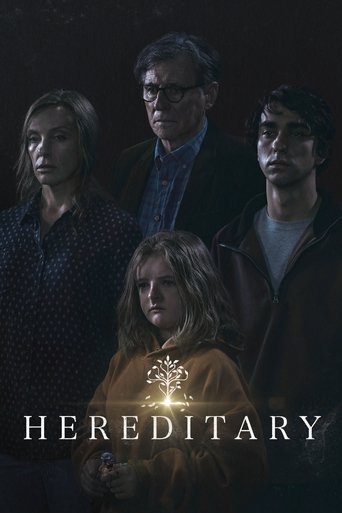
Hereditary
Ari Aster · 2018 · Film
Shares a threat that is not human.
87% shared signal
The Autopsy of Jane Doe
André Øvredal · 2016 · Film
Shares explicit viscera.
86% shared signal
The Blackcoat's Daughter
Oz Perkins · 2015 · Film
Shares slow-burn dread.
86% shared signal
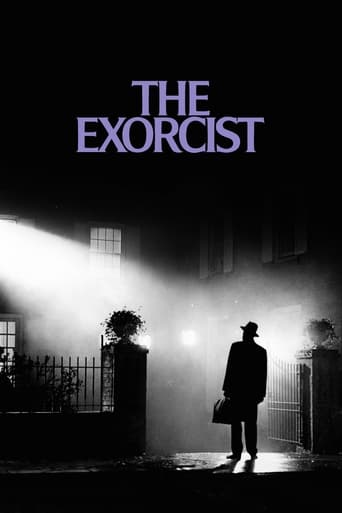
The Exorcist
William Friedkin · 1973 · Film
Shares a bleak, unforgiving tone.
86% shared signal
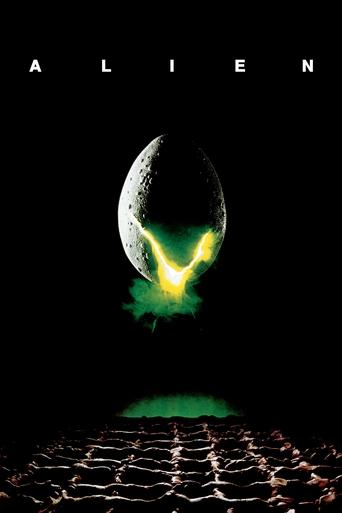
Alien
Ridley Scott · 1979 · Film
Shares a threat that is not human.
84% shared signal
Pet Sematary
Stephen King · 1983 · Book
Shares slow-burn dread.
90% shared signal
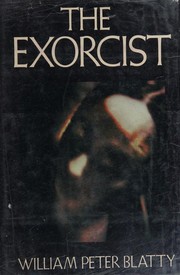
The Exorcist
William Peter Blatty · 1971 · Book
88% shared signal
More lists like these: Movies like Hereditary · Movies like The Exorcist · Movies like Alien
Questions about The Dark and the Wicked
The things people actually ask about this film, answered — including how it ends.
What happens at the end of The Dark and the Wicked?
Michael is shown a false vision of his wife and daughters dead and cuts his own throat; his living family find him. Louise wakes at dusk to find her father dead, and the thing in the house comes for her directly. Nobody in the family survives.
What is the entity in The Dark and the Wicked?
The film never names it and never settles whether it is one entity, a place or a condition. What it establishes is method: it never touches anyone, it shows each person the image they cannot survive, and it lets them do the rest themselves.
Why does Michael kill himself in The Dark and the Wicked?
He is given a vision of his wife and daughters dead in the farmhouse and cuts his own throat in response. The vision is a fabrication — his family are alive and arrive moments later to find him dying on the floor.
Is The Dark and the Wicked a metaphor for grief?
Every event has a grief reading available, and the film lets all of them stand while also putting something real in the room. Its argument is that from inside the house there is no way to tell the two apart and no advantage in knowing.
Why is there no priest or exorcism in The Dark and the Wicked?
Because the subject is the absence of recourse. The one visitor in a collar leads nowhere, there is no ritual, no history and no bargain, and the mother's notebook is a record of losing rather than a set of instructions.
How bleak is The Dark and the Wicked?
We score it 004 on tone, near the bleak floor of the index, with only a handful of works at or below it. Four family members die, three by their own hand or their own body, and the film offers no reprieve in its closing minutes.
These are ranked against The Dark and the Wicked, not against you.
Build your own tape →