Film · 2021
Halloween Kills
The same night, a whole town arming itself, and Michael at full strength.
80Punishing to sit through, out of 100 — mostly how bleak it is
- PaceJolts you often72
- ThreatHuman and not64
- GoreUnflinching86
- ToneBleak20
- RealityGrounded26
Era bias 86 · Thoroughly modern. Texture rather than fear, so it is not part of the grade. All six scores →
The goriest horror movies ever made →
Part of a series: Halloween movies in order →
On VHSCREAM’s six-axis scale, Halloween Kills (2021) is most extreme on the viscera axis: 86 out of 100, where 0 is restraint over gore and 100 is explicit viscera. 88% of the 320 horror works we have scored come in lower on that axis. How we score →
Halloween Kills is a 2021 American slasher film directed by David Gordon Green, who co-wrote it with Danny McBride and Scott Teems. Picking up the same night as the 2018 film, it follows Michael Myers out of Laurie Strode's burning house and back into a Haddonfield that decides to hunt him. We score it 086 on viscera and 086 on era bias.
Scored and reviewed by VHSCREAM on · how we score
How scary is Halloween Kills, actually?
Scored against the published rubric, here is what the numbers mean.
The threat at 064 is on the human side — 217 works score lower. Michael is still a man, but he survives fire, a pitchfork and a beating by an entire mob, and keeps coming.
Viscera 086 is very explicit — 283 works score lower. Firefighters killed with their own equipment, a pitchfork in the back, a mob slaughtered at length; the violence is long, close and frequent.
Tone 020 is bleak — 136 works score lower. The heroes of 1978 die, the town turns into a lynch mob that kills an innocent man, and the ending kills Karen just as she seems to have won.
Pace 072 is on the shock side, with 280 works slower. Constant cutting between strands and a kill every few minutes.
Era bias 086 reads modern — 240 works score lower. Clean digital photography, emergency phone alerts and 2018 smartphones, framed by deliberately period flashbacks.
Reality anchor 026 is grounded — 55 works score lower. Nothing explicitly supernatural, though Michael's endurance and Karen's vision push at the edges.
On jump scares: several, though the film relies more on drawn-out violence than on the shock cut.
Who should skip Halloween Kills
Skip it if you came for Laurie Strode. She is confined to a hospital bed for almost all of it.
Skip it if a film that lectures you is a dealbreaker. The mob material is stated and restated in speeches.
Skip it if extended graphic violence is a hard limit. The kills are long, close and frequent, and the finale is a massacre.
Content notes: firefighters killed with their own equipment, a pitchfork stabbing, stabbings with improvised weapons, a mob chase through a hospital, a man jumping to his death, a mother stabbed to death, and a long massacre.
Watch it if you want the 2018 trilogy at its most savage, you like seeing the 1978 survivors again, and you want the bridge to Halloween Ends.
Halloween Kills on six axes of fear
Every work in the index is scored on six continuous axes of fear. This is what Halloween Kills looks like as a vector — and what each ten-point band looks like across everything else we hold.
Draft score — awaiting human review. About these scores
Disagree with a number? Say so on the axis itself. Nobody has confirmed this vector yet, and a score you challenge goes to the top of the queue to be re-scored by a human. Votes do not move the numbers — they decide what gets looked at first. How the scoring works →
Scored against the published rubric. This vector is a draft awaiting review — the method is public so you can argue with it.
Halloween Kills: the review
Halloween Kills is a savage middle chapter with something real to say, and it says it badly.
It starts where the 2018 film stopped, on the same Halloween night. Laurie, Karen and Allyson are on their way to hospital, the house is burning, and the firefighters who arrive to put it out find Michael in the basement. He kills all of them with their own equipment. That sequence is the first of many, and it sets the tone: this is a film about Michael at full strength, and a town that no longer believes the police can stop him.
It was always meant to be a middle. McBride has said he and Green originally wanted to pitch two films to be shot back to back, then held off to see how the 2018 film landed; once it did, Scott Teems came in to co-write, the team mapped out enough material for a trilogy, and Universal announced Kills and Ends together in July 2019. Shooting took place in Wilmington, North Carolina, that autumn, and much of the score — Carpenter again, with his son Cody Carpenter and Daniel Davies — was finished before the pandemic pushed the release back a year. The score won over even some of the film's harshest critics; National Review's reviewer called it terrific while finding the rest grueling.
The survivors' reunion
The best idea in the script is to bring back the people who survived 1978 as adults. Anthony Michael Hall plays Tommy Doyle, the boy Laurie babysat, now a grown man who marks the fortieth anniversary of Michael's capture in a bar. With him are Lindsey Wallace, played again by Kyle Richards, who was a child in the original; Marion Chambers, played again by Nancy Stephens; and Lonnie Elam, another child of that night. Charles Cyphers returns as former Sheriff Brackett, whose daughter Annie died that night. A flashback to the end of the 1978 night shows a rookie Frank Hawkins accidentally shooting his own partner and then stopping Loomis from executing Michael, who had surrendered — the moment Hawkins has regretted for forty years.
Paul Rudd, who played Tommy in The Curse of Michael Myers, was approached but was busy. Hall gives the role a big, wounded bluster that suits what the film does with him. When an emergency alert tells Haddonfield that Michael is loose, Tommy forms a mob.
Evil and the mob
The mob is the film's subject, and its weakness. Haddonfield's residents arm themselves and take to the streets, Allyson among them, wanting revenge for her father. Karen hides from Laurie the news that Michael is alive so her mother can recover from surgery. And then the mob makes the obvious mistake. Lance Tivoli, a patient who escaped from the same crashed transfer bus as Michael, turns up at the hospital, is mistaken for him, and is chased through the corridors by a crowd that will not listen to Karen when she realises their mistake, until he throws himself from a window to his death.
It is a genuinely nasty sequence, about a community whose fear has made it into the thing it fears, and it is the film's real horror. The problem is that the script then underlines the point over and over, in speech after speech, without letting the audience reach it alone.
Critics were divided on exactly this: USA Today found the film gruesomely brutal as it should be but weighed down by its social commentary, and Variety called it a mess of topical pablum.
Judy Greer's Karen is the film's quiet success. She spends the night keeping a secret from her mother, trying to stop a crowd from killing the wrong man, and finally doing what Laurie spent forty years training for — taking the mask, taunting Michael and leading him into a trap. It is the closest the film comes to a character arc, which is what makes its ending land.
Where it falls down
The structure. Laurie, the reason the 2018 film worked, spends almost the whole film in a hospital bed, and Jamie Lee Curtis has very little to do. The plot runs on parallel strands that do not meet — the mob, the bar survivors, Allyson and her ex-boyfriend Cameron, the couple now living in the old Myers house, Laurie's neighbours — and most of them exist to supply Michael with victims. The kills are inventive and gruelling, and they are what the film does with most confidence, and by the end the carnage has stopped meaning anything.
The ending is the film's boldest choice. When the mob finally corners Michael and beats him down, he gets up and kills every one of them, including Tommy and Brackett, on a set built as a rotating stage around the camera. Then Karen, who had seemed the film's safest character, follows a vision of the boy Michael into Judith Myers's old bedroom and is killed. It is bleak, and it is the one moment the film's argument and its violence point in the same direction.
Halloween Kills was due in October 2020, was delayed a year by the pandemic, premiered at Venice, and opened in cinemas and on Peacock on the same day. It grossed $133.4 million on a $20 million budget, about half what the 2018 film made, and it holds 38 per cent on Rotten Tomatoes.
The 2018 trilogy's timeline is set out in Halloween movies in order. For the original night these characters survived, Halloween (1978); for a slasher that also asks what the audience's appetite for blood says about it, Terrifier 2.
The ending of Halloween Kills explained
The ending, in full. Open it when you have seen it.
The short answer: Karen stabs Michael in the back with a pitchfork, takes his mask and leads him into Tommy Doyle's mob, which beats and stabs him until he falls. Believing him dead, they lower their guard. Michael rises and massacres the whole mob, including Tommy and former Sheriff Brackett. Back at the Myers house, Karen sees a vision of young Michael in Judith Myers's old bedroom and goes upstairs to investigate. Michael appears behind her and stabs her to death, while Laurie, in her hospital room, stares out of the window.
Does Karen die at the end of Halloween Kills?
Yes. After leading Michael into the mob and apparently winning, Karen goes back into the Myers house, follows a vision of the boy Michael into his sister Judith's room, and is stabbed to death. Laurie does not know yet. An extended-cut ending has Laurie call Karen and Michael answer, but it was cut because it did not fit the next film.
Who dies in Halloween Kills?
A great many people. Michael kills the firefighters at Laurie's house, the neighbour Phil, Marion Chambers, two bar patrons, the couple living in his old home, Lonnie Elam and his son Cameron, and the whole of Tommy's mob, including Tommy and Leigh Brackett, before he kills Karen. Lance Tivoli, mistaken for Michael, jumps to his death to escape the mob.
Who is Lance Tivoli in Halloween Kills?
A patient who escaped from Smith's Grove when Michael's transfer bus crashed in the 2018 film. He reaches the hospital on the same night and is mistaken for Michael. Tommy's mob chases him through the building; Karen realises he is not Michael and tries to help, but he jumps from a window to his death.
Does Laurie fight Michael in Halloween Kills?
No. Laurie spends the film in Haddonfield Memorial recovering from emergency surgery after the stab wound from the 2018 film. Karen keeps Michael's survival from her at first, and Tommy later tells her. Their final confrontation is saved for Halloween Ends.
If Halloween Kills is your kind of fear
The eight works closest to Halloween Kills in the index on the five axes that describe fear, the same medium first — not by genre label, and not by what other people watched.
Barbarian
Zach Cregger · 2022 · Film
Shares explicit viscera.
89% shared signal
28 Weeks Later
Juan Carlos Fresnadillo · 2007 · Film
Shares a bleak, unforgiving tone.
89% shared signal
28 Years Later
Danny Boyle · 2025 · Film
Shares a bleak, unforgiving tone.
88% shared signal
Day of the Dead
George A. Romero · 1985 · Film
Shares grounded realism.
87% shared signal
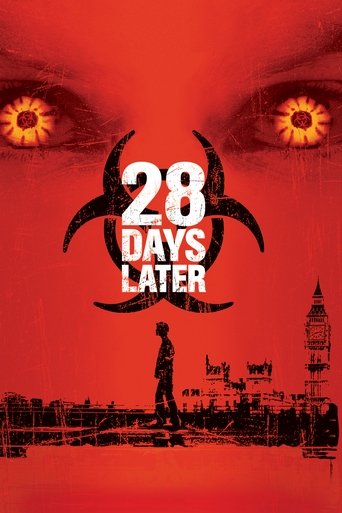
28 Days Later
Danny Boyle · 2002 · Film
Shares relentless shock.
86% shared signal
Terrifier
Damien Leone · 2016 · Film
Shares explicit viscera.
85% shared signal
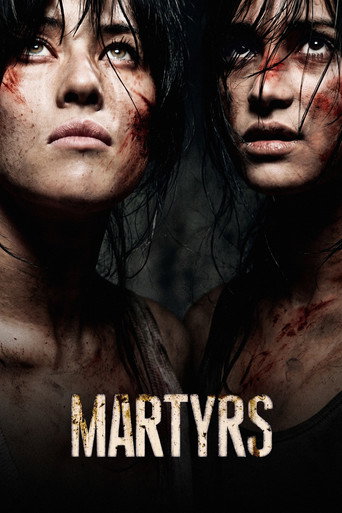
Martyrs
Pascal Laugier · 2008 · Film
Shares grounded realism.
85% shared signal
Saw VI
Kevin Greutert · 2009 · Film
Shares relentless shock.
84% shared signal
More lists like these: Movies like 28 Years Later · Movies like 28 Days Later · Movies like Martyrs
Questions about Halloween Kills
The things people actually ask about this film, answered — including how it ends.
What happens at the end of Halloween Kills?
Michael survives a beating by Tommy Doyle's mob and kills all of them, including Tommy and former Sheriff Brackett. Karen, having taken his mask and drawn him into the trap, goes back into the Myers house after a vision of young Michael and is stabbed to death in Judith's old bedroom, while Laurie stares out of her hospital window.
Does Michael die in Halloween Kills?
No. The mob stabs and beats him until he falls and they believe he is dead, but he gets up and kills every one of them. He then kills Karen. Michael's final confrontation with Laurie is in the next film, Halloween Ends.
Who plays Tommy Doyle in Halloween Kills?
Anthony Michael Hall. Tommy is the boy Laurie Strode babysat in the 1978 film, now an adult who leads Haddonfield's mob against Michael. Paul Rudd, who played Tommy in The Curse of Michael Myers, was approached but was committed to Ghostbusters: Afterlife.
Why was Halloween Kills delayed?
Because of the COVID-19 pandemic. It was set for October 16, 2020, and was moved to October 15, 2021. It premiered at the 78th Venice International Film Festival on September 8, 2021, and was released in cinemas and on Peacock's paid tiers at the same time.
Where was Halloween Kills filmed?
In Wilmington, North Carolina, from September 16 to November 3, 2019. Kyle Richards, who plays Lindsey Wallace, broke her nose filming a fight with Michael and kept it to herself so she would not be replaced by a stunt double.
Was Halloween Kills a box office success?
Yes. It grossed about $133.4 million worldwide on a $20 million budget, with a $49.4 million opening weekend in North America, at the time the best opening for an R-rated film during the pandemic. Reviews were mixed, and it holds 38 per cent on Rotten Tomatoes.
These are ranked against Halloween Kills, not against you.
Build your own tape →