Film · 2010
A Nightmare on Elm Street (2010)
Samuel Bayer
No jokes this time. A groundskeeper, a preschool, and children who cannot remember why.
76Hard going to sit through, out of 100 — mostly how bleak it is
- PaceJolts you often68
- ThreatMostly supernatural34
- GoreShows some of it62
- ToneNo relief at all12
- RealityDream logic72
Era bias 74 · Modern. Texture rather than fear, so it is not part of the grade. All six scores →
The bleakest horror movies ever made →
Part of a series: Nightmare on Elm Street movies in order →
On VHSCREAM’s six-axis scale, A Nightmare on Elm Street (2010) is most extreme on the tone axis: 12 out of 100, where 0 is a bleak, unforgiving tone and 100 is gleeful black comedy. 19% of the 320 horror works we have scored come in lower on that axis. How we score →
A Nightmare on Elm Street is a 2010 American slasher film directed by Samuel Bayer. Teenagers in Springwood are being killed in their dreams by a burned man, and the survivors discover they all attended the same preschool, where he once worked as the groundskeeper. We score it 012 on tone and 074 on era bias.
Scored and reviewed by VHSCREAM on · how we score
How scary is A Nightmare on Elm Street, actually?
Scored against the published rubric, here is what the numbers mean.
The threat at 034 is on the supernatural side — 137 works score lower. Krueger was a man, and the crime behind the film is entirely human, but what kills the teenagers is a dead man reaching into dreams.
Viscera 062 is on the explicit side — 178 works score lower. A self-inflicted throat cut, a brutal murder, a death in a jail cell and a mother dragged through a mirror.
Tone 012 is bleak — 60 works score lower. No jokes from Freddy, a backstory of child abuse, and an ending that kills the heroine's mother.
Pace 068 is on the shock side, with 258 works slower. Sudden micro-naps and loud stings arrive at a steady rhythm.
Era bias 074 reads modern — 176 works score lower. Desaturated digital grading, CGI added to Haley's make-up, and 2010 editing.
Reality anchor 072 is surreal — 256 works score lower. Dreams intrude on waking life through microsleeps, though the rules are kept tidier than in the originals.
On jump scares: many. The micro-nap device is used mainly to deliver them, and they become the film's rhythm.
Who should skip A Nightmare on Elm Street
Skip it if child abuse is a hard limit. The film's mystery is built around a groundskeeper who abused preschool children, and it is revealed through photographs and flashbacks.
Skip it if you love the original. It keeps the 1984 film's names and premise and loses most of its imagination.
Skip it if jump scares wear you out. The micro-nap device delivers them at a steady pace throughout.
Content notes: child sexual abuse, implied and discussed, a self-inflicted throat cut, a teenager murdered in her sleep, a death in a jail cell, a man burned alive in flashback, and a parent killed.
Watch it if you want Jackie Earle Haley's darker Freddy, you prefer your Elm Street without jokes, or you are completing the franchise.
A Nightmare on Elm Street on six axes of fear
Every work in the index is scored on six continuous axes of fear. This is what A Nightmare on Elm Street looks like as a vector — and what each ten-point band looks like across everything else we hold.
Draft score — awaiting human review. About these scores
Disagree with a number? Say so on the axis itself. Nobody has confirmed this vector yet, and a score you challenge goes to the top of the queue to be re-scored by a human. Votes do not move the numbers — they decide what gets looked at first. How the scoring works →
Scored against the published rubric. This vector is a draft awaiting review — the method is public so you can argue with it.
A Nightmare on Elm Street: the review
The 2010 A Nightmare on Elm Street is a remake that understood exactly one thing about the original, its darkness, and decided that nothing besides it was worth keeping.
Platinum Dunes, Michael Bay's company, said from the start that this would follow the approach of its Friday the 13th remake: no one-liners, a darker tone, Freddy as a predator rather than a host. Wes Craven was not consulted and said he was displeased. Robert Englund, who had played Freddy in the earlier films, supported the idea of a remake and later disliked the result. Samuel Bayer made his feature debut with it on a $35 million budget, shooting from May to July 2009, mostly in Illinois.
Jackie Earle Haley is the right idea
Casting Haley was the best decision anyone made. He had impressed in Little Children and in a screen test for Watchmen, and he plays Krueger as something small, patient and cruel. The make-up he wore was a serious undertaking: prosthetics glued from his head down his back, about three hours and twenty minutes in the chair each day once the crew had the routine down, six hours at the start, and a cloudy contact lens that made it hard for him to see. Digital work was added to the parts of his face that look open, by artists who had worked on The Dark Knight. The result looks more like a real burn victim and less like a character, which is what the producers wanted and also part of why it does not work.
The script also restores something Craven had removed. Freddy here was the groundskeeper at a preschool, accused of molesting the children, and Nancy was his favourite. Krueger's characterisation as a child molester followed Craven's original intent, which he had changed to child killer in 1984. The film's mystery is built around it: none of the teenagers can remember knowing each other as children, and the reason is what happened to them at that school.
The micro-nap is a good idea, used badly
Eric Heisserer, one of the two credited writers, developed the "micro-nap" concept to stop the dream sequences from feeling repetitive. As Nancy and her friend Quentin force themselves to stay awake, sleep deprivation starts causing microsleeps: the world flickers into Freddy's for a few seconds and then back. In principle it is the scariest idea in the film, because it removes the safety of being awake. In practice it is used for jump scares, the same sting repeated with different backgrounds, and it becomes the film's rhythm rather than its horror.
The plot around it is efficient and joyless. Dean Russell falls asleep in the diner where Nancy works and, in front of her and Kris, cuts his own throat. Kris finds a childhood photograph of herself with Dean that she cannot explain, starts dreaming of the burned man, and is murdered when she finally sleeps beside her ex-boyfriend Jesse. Jesse is arrested for it and killed in his cell. By then the film has a clear pattern, a death every reel, and its one real variation is a good detail it adds to the dream rules: Nancy, attacked on the way to the preschool, pulls a scrap of Krueger's sweater out of the dream with her, a detail the ending builds on. Quentin, meanwhile, steals adrenaline from a hospital to keep them both awake, and the film is at its most tense in those exhausted, chemically propped-up hours, where you are never quite sure which of the two worlds you are in.
Where it falls down
Everywhere the original was inventive, this film is literal. It keeps the names and the premise and replaces Craven's dream logic with a gloomy look and loud editing. Rooney Mara's Nancy is withdrawn rather than resourceful for most of the running time, and the film only lets her take charge in the last act. The teenagers are, as Englund put it, unsympathetic, and the film makes little effort to make you care before it kills them.
It also sits awkwardly with its own subject. A film whose villain abused small children and whose teenagers are discovering it should be devastating, and this one treats the revelation as a plot beat on the way to the next jump. Heisserer himself criticised the finished film publicly in 2019, and said that dialogue from page 87 of his script had been moved into an early scene by a crew member.
Critics were harsh: 14% on Rotten Tomatoes, a C+ CinemaScore, one star from Roger Ebert and one and a half from Peter Travers. Audiences turned out anyway. It opened to about $32.9 million, first for the weekend, in the widest release the series had had, and grossed about $117.7 million worldwide, more than any other film in the franchise. It still won the People's Choice Award for best horror film.
Producers kept it in 2D after Warner Bros. suggested 3D, on the grounds that a 3D version would not be the best version of the film. That kind of restraint is welcome; there is not enough of it elsewhere. Jeff Cutter's photography and Steve Jablonsky's score are competent and anonymous, which is a fair summary of the whole production.
For the film this one remakes, and everything it does better, A Nightmare on Elm Street; for the whole series in order, the Nightmare on Elm Street movies in order. For a remake of the same era that did find its own reason to exist, Evil Dead.
The ending of A Nightmare on Elm Street explained
The ending, in full. Open it when you have seen it.
The short answer: Nancy and Quentin learn that Freddy Krueger was the groundskeeper at their preschool, that he abused the children there, and that their parents, led by Quentin's father Alan, burned him alive. Every other child from the school has since been killed. At the preschool they find proof of his crimes, including crude photographs. Nancy decides to pull Krueger out of the dream and kill him. Both fall asleep; Nancy's cries wake Quentin, who uses stolen adrenaline to wake her, and she drags Krueger into reality. She slits his throat and sets the room on fire with his body inside, and the police cannot find his remains. Nancy and her mother Gwen go home, where Krueger appears in a mirror's reflection, kills Gwen and pulls her body through the mirror while Nancy screams.
What happens at the end of A Nightmare on Elm Street (2010)?
Nancy pulls Freddy Krueger out of her dream into the real world, slits his throat and sets the room on fire with him inside. The police find no remains. When Nancy and her mother return home, Krueger appears in a mirror, kills Gwen and drags her body through the glass while Nancy screams.
Who is Freddy Krueger in the 2010 remake?
Fred Krueger was the groundskeeper at the preschool that Nancy, Quentin and their friends attended. He was accused of molesting the children, and Nancy was his favourite. When he escaped arrest, the parents, led by Quentin's father Alan, hunted him down and burned him alive. He returns in their children's dreams for revenge.
Why can't the kids remember each other?
Because they were all at the same preschool, where Krueger abused them, and they have forgotten that part of their childhood. Kris finds a photograph of herself with Dean as children but cannot remember knowing him before high school. Nancy's mother, Gwen, eventually tells Nancy who Krueger was, and Quentin's flashback shows what the parents did to him.
What are micro-naps in A Nightmare on Elm Street?
Brief microsleeps caused by sleep deprivation. Nancy and Quentin stay awake to avoid Krueger, but as they grow exhausted they slip into seconds-long dreams without realising it, and Krueger can attack them there. Writer Eric Heisserer developed the idea to keep the dream sequences from feeling repetitive.
Is the 2010 Nightmare on Elm Street a sequel?
No. It is a remake of Wes Craven's 1984 film, the ninth film in the franchise, with Jackie Earle Haley replacing Robert Englund as Freddy. It reuses the original's names and premise but rewrites Krueger's backstory, and no sequel followed; plans for another remake stalled in development.
If A Nightmare on Elm Street is your kind of fear
The eight works closest to A Nightmare on Elm Street in the index on the five axes that describe fear, the same medium first — not by genre label, and not by what other people watched.
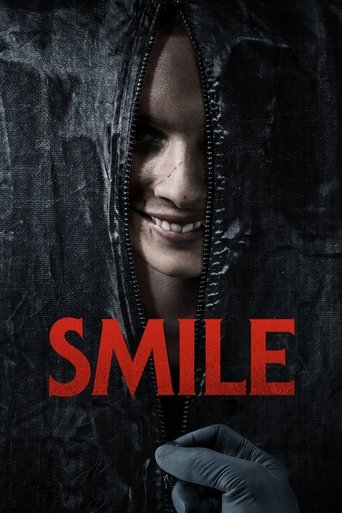
Smile
Parker Finn · 2022 · Film
Shares a bleak, unforgiving tone.
89% shared signal
Halloween: The Curse of Michael Myers
Joe Chappelle · 1995 · Film
Shares a bleak, unforgiving tone.
87% shared signal
A Nightmare on Elm Street
Wes Craven · 1984 · Film
Shares dream logic.
86% shared signal
Late Night with the Devil
C. & C. Cairnes · 2024 · Film
85% shared signal
Alien: Covenant
Ridley Scott · 2017 · Film
84% shared signal
A Nightmare on Elm Street 2: Freddy's Revenge
Jack Sholder · 1985 · Film
Shares dream logic.
84% shared signal
Hellraiser
David Bruckner · 2022 · Film
84% shared signal
The Mandela Catalogue
Alex Kister · 2021 · Web series
89% shared signal
A Nightmare on Elm Street in another form
The index links works across media, so an adaptation sits beside its source and a score beside the film it haunts.
More lists like these: Movies like Smile
Questions about A Nightmare on Elm Street
The things people actually ask about this film, answered — including how it ends.
What happens at the end of A Nightmare on Elm Street (2010)?
Nancy pulls Freddy Krueger out of a dream into reality, slits his throat and sets the room on fire with him in it. The police cannot find his remains. When Nancy and her mother Gwen return home, Krueger appears in a mirror, kills Gwen and pulls her body through it as Nancy screams.
Who plays Freddy in the 2010 Nightmare on Elm Street?
Jackie Earle Haley, cast after his performance in Little Children. His prosthetic make-up took about three hours and twenty minutes a day once the routine was established, and he wore a cloudy contact lens that made it hard to see. Rooney Mara plays Nancy Holbrook and Kyle Gallner plays Quentin Smith.
What did Freddy do in the 2010 remake?
He was the groundskeeper at a preschool and was accused of molesting the children there; the teenagers find crude photographs at the school as proof. The parents burned him alive after he escaped. The film's child-molester backstory follows Wes Craven's original intent, which he had changed to child killer in 1984.
Why does Dean cut his own throat?
Dean falls asleep at a diner and is attacked by Krueger in a dream. In reality, his friends Kris and Nancy watch him cut his own throat. It is the film's first death, and it establishes that what happens in the dream is carried out in the waking world.
How much did the 2010 Nightmare on Elm Street make?
About $117.7 million worldwide on a $35 million budget, opening to about $32.9 million and first place for the weekend. It was the widest release of any Nightmare on Elm Street film at the time and the franchise's biggest worldwide grosser, although critics gave it just 14% on Rotten Tomatoes.
Is the 2010 Nightmare on Elm Street scary?
It is grim rather than frightening. We score it 012 on tone, near the bleak end, and 068 on pace. Freddy has no jokes and the backstory is disturbing, but most of the scares are jump scares delivered through the micro-nap device rather than sustained dread.
These are ranked against A Nightmare on Elm Street, not against you.
Build your own tape →