
Record · 1960
Psycho (OST)
Bernard Herrmann
Strings and nothing else, because strings can be made to sound like a nervous system.
62Hard going to sit through, out of 100 — mostly how bleak it is
- PaceBuilds, then strikes62
- ThreatPeople, entirely88
- GoreHolds back30
- ToneBleak18
- RealityGrounded20
Era bias 4 · Analog to the bone. Texture rather than fear, so it is not part of the grade. All six scores →
On VHSCREAM’s six-axis scale, Psycho (OST) (1960) is most extreme on the threat axis: 88 out of 100, where 0 is a threat that is not human and 100 is human monsters. 82% of the 320 horror works we have scored come in lower on that axis. How we score →
Psycho is Bernard Herrmann's 1960 score for Alfred Hitchcock, written for string orchestra and nothing else — no brass, no woodwind, no percussion, no piano. Herrmann called it a black-and-white score for a black-and-white film. We score it 088 on the threat axis, the human end, and 004 on era bias, which is as analog as this index goes.
Scored and reviewed by VHSCREAM on · how we score
How scary is Psycho (OST), actually?
Scored against the published rubric, here is what the numbers mean for a listener.
Threat 088 is the signature, and for a piece of music that needs explaining. Only 47 works score higher. We score what the work is about, and this is about a man with a knife. There is nothing supernatural anywhere in the score's vocabulary — no choir, no bells, no low drone, none of the furniture that signals the uncanny.
Era bias 004 is as analog as this index gets. Only 6 works score lower. Mono, 1960, a string section in a room, tape. Nothing here has been or could be modernised.
Viscera 030 is restrained, which surprises people. 243 works score higher. The famous cue is violent in gesture rather than explicit in content; most of the score is tense rather than wounding.
Pace 062 is on the shock side. 206 works are slower, which is unusual for a score in this index — most of them are dread. Herrmann's Prelude is a forward-driving ostinato, and the cues arrive in short, hard bursts.
Tone 018 is bleak. 119 works score lower. There is no relief written into it anywhere: no romantic theme, no resolution, no major cadence at the end.
Reality anchor 020 is grounded. 283 works score higher. Nothing in the score is dreamlike. It is a nervous system, not a nightmare.
On jump scares: one, and it is the most famous in any medium.
Who should skip Psycho (OST)
Skip it if you want melody. There are no themes and no tunes. A listener who comes to film scores for singable material will find fifty minutes of texture.
Skip it if short cues irritate you. The album is assembled from film cues of thirty seconds to three minutes, several of them variations on the same figure.
Skip it if you have not seen the film. Unlike several records in this index, this one does not stand alone as a listening experience. It is an engine built for a specific machine.
Content notes: the score accompanies a stabbing, and the cue for it is the most violent gesture in twentieth-century film music. Nothing in the recording itself is graphic.
Listen to it if you want the most disciplined score in this index, you are interested in what one timbre can be made to do, and the idea of a composer overruling Hitchcock and being right appeals.
Psycho (OST) on six axes of fear
Every work in the index is scored on six continuous axes of fear. This is what Psycho (OST) looks like as a vector — and what each ten-point band looks like across everything else we hold.
Draft score — awaiting human review. About these scores
Disagree with a number? Say so on the axis itself. Nobody has confirmed this vector yet, and a score you challenge goes to the top of the queue to be re-scored by a human. Votes do not move the numbers — they decide what gets looked at first. How the scoring works →
Scored against the published rubric. This vector is a draft awaiting review — the method is public so you can argue with it.
Psycho (OST): the review
The restriction is the whole idea
Herrmann removed every instrument that could warm a chord. What is left is a string orchestra of around thirty-five players, and the consequence is that the entire film sounds like one nervous system. Strings can be made to sound like breathing, like a pulse, like a scream and like a knife, and across fifty minutes of music Herrmann uses all four without ever introducing a timbre that would let the listener out.
The Prelude is the best opening cue in the genre and it is doing something unusual: it is not frightening. It is agitated. Driving, repeated, forward-leaning, in the rhythm of a person who has decided to do something and is trying not to think about it. The film opens on a stolen payroll and a woman driving, and the music is about her, not about the house.
"The Murder"
The shower cue is forty-odd seconds of high strings in violent downward glissandi, and it is the most recognisable piece of film music ever written that nobody would describe as a tune. Herrmann's own account is that he wrote it against instruction: Hitchcock had asked for no music in that scene, Herrmann wrote it anyway, played it for him, and Hitchcock reversed himself and doubled his salary. Whether every detail of that story survives scrutiny, the scene without music exists and is a fraction as effective.
What is less remarked on is what happens afterwards. The cue stops. For a long stretch the film has no music at all while Norman cleans the bathroom, and the silence is Herrmann's as much as the shrieking is.
No themes, no people
There is no Marion theme and no Norman theme. This is a textural score in a decade when scores were still built on character motifs, and the absence means the music never tells you whose side to be on. The cue that plays for the car being pushed into the swamp is the same kind of music as the cue for the drive, and the film is therefore not able to reassure you that the horror has a correct location.
Where it is thin
There is not much of it, and the album experience is choppy — short cues, repeated material, and a release history of competing re-recordings in which Herrmann's own 1975 version is slower and grander than the film's. The nautical problem of all score albums applies: several cues exist to cover a cut and do nothing standing alone.
But as an object: fifty minutes of one colour, deployed with total discipline, from the composer who had already written Vertigo and would go on to Taxi Driver. Nothing in this index is more economical.
The ending of Psycho (OST) explained
The ending, in full. Open it when you have seen it.
How it resolves: the last cue follows Norman in the cell, and Herrmann writes it as a held, unresolved string texture rather than a conclusion — the same material as the Prelude, slowed to a stop. The film's final image is a car being pulled from the swamp; the music simply ceases rather than closing.
Why did Herrmann use only strings?
He has given two reasons and both are true. The film was shot in black and white on a reduced budget with Hitchcock's television crew, and a string-only orchestra matched that visually and financially. And strings can imitate the human body — breath, heartbeat, scream — better than any other section, which is what a film about a mind coming apart needs.
Did Hitchcock want music in the shower scene?
No. He had specified no music for that sequence. Herrmann wrote the cue regardless, played it for him, and Hitchcock changed his mind on hearing it. The story is Herrmann's own and is the single most repeated anecdote in film-music history; the scene exists without it in Hitchcock's original intention and is far weaker.
Are the violins meant to sound like birds?
Herrmann never said so and the suggestion is a later reading, prompted by the film's taxidermy and by Norman's line about eating like a bird. The cue is more usefully heard as stabbing: a repeated downward gesture with no resolution and no melody.
Is the album the film's recording?
Not always. The original 1960 tracks have been reissued repeatedly, and Herrmann re-recorded the score himself in 1975 with the National Philharmonic at slower tempos and fuller sound. The 1975 version is the better-sounding record; the 1960 version is the one that frightens.
If Psycho (OST) is your kind of fear
The eight works closest to Psycho (OST) in the index on the five axes that describe fear, the same medium first — not by genre label, and not by what other people watched.
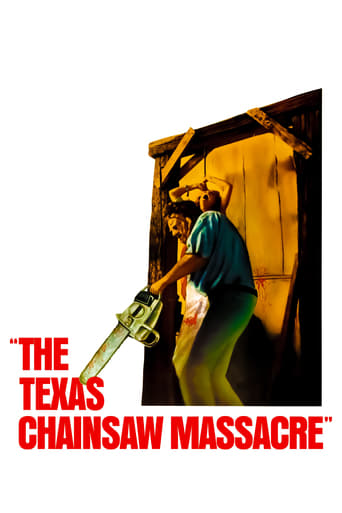
The Texas Chain Saw Massacre
Tobe Hooper · 1974 · Film
Shares human monsters.
92% shared signal
The Black Phone
Scott Derrickson · 2021 · Film
Shares a bleak, unforgiving tone.
87% shared signal
Halloween 4: The Return of Michael Myers
Dwight H. Little · 1988 · Film
Shares grounded realism.
84% shared signal
Hush
Mike Flanagan · 2016 · Film
Shares human monsters.
84% shared signal
The Strangers
Bryan Bertino · 2008 · Film
Shares a bleak, unforgiving tone.
84% shared signal
Halloween H20: 20 Years Later
Steve Miner · 1998 · Film
Shares grounded realism.
84% shared signal
The Hills Have Eyes
Wes Craven · 1977 · Film
83% shared signal
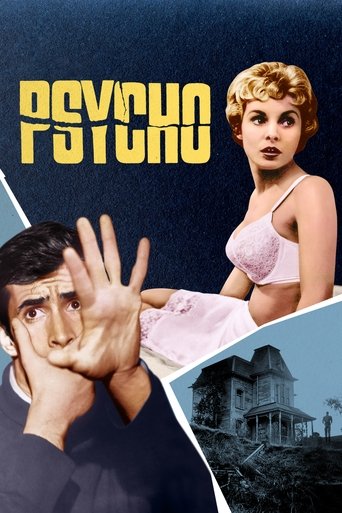
Psycho
Alfred Hitchcock · 1960 · Film
Shares restraint over gore.
83% shared signal
Psycho (OST) in another form
The index links works across media, so an adaptation sits beside its source and a score beside the film it haunts.
More lists like these: Movies like Psycho
Questions about Psycho (OST)
The things people actually ask about this record, answered — including how it ends.
Why does the Psycho score only use strings?
Herrmann wanted a sound to match a black-and-white film shot cheaply with a television crew, and he wanted instruments that could imitate the human body — breath, pulse, scream. A string orchestra of about thirty-five players does both. No brass, woodwind, percussion or piano appears anywhere in it.
Did Hitchcock not want music in the shower scene?
He had specified none. Herrmann wrote the cue anyway, played it to him, and Hitchcock reversed the decision and doubled his fee. The sequence survives in a form without music and is a fraction as effective.
Are the shower scene violins supposed to be bird cries?
Herrmann never claimed it, and the reading comes later from the film's taxidermy and Norman's own line about birds. The cue is better understood as a repeated stabbing gesture with no melody and no resolution.
Which recording of the Psycho score should I buy?
The 1960 film tracks if you want the version that frightens, and Herrmann's own 1975 re-recording with the National Philharmonic if you want the better-sounding record. The 1975 version is slower and fuller and less upsetting.
Is the Psycho score scary on its own?
Agitated rather than scary. We score it 062 on pace, which makes it one of the faster things in this index, and 018 on tone. Without the film it reads as nervous energy; the film itself is where the music becomes a knife.
What else should I listen to after it?
Threnody for the Victims of Hiroshima for what a string orchestra does with no film at all, The Shining for strings used against a hotel, and horror movie soundtracks for every score in this index with its numbers.
These are ranked against Psycho (OST), not against you.
Build your own tape →