Film · 1989
Halloween 5: The Revenge of Michael Myers
Dominique Othenin-Girard
A mute girl with a psychic line to her uncle, and a man in black nobody explains.
64Hard going to sit through, out of 100 — mostly how bleak it is
- PaceBuilds, then strikes52
- ThreatHuman and not52
- GoreShows some of it44
- ToneBleak20
- RealityTilts unreal40
Era bias 18 · Analog-leaning. Texture rather than fear, so it is not part of the grade. All six scores →
The bleakest horror movies ever made →
Part of a series: Halloween movies in order →
On VHSCREAM’s six-axis scale, Halloween 5: The Revenge of Michael Myers (1989) is most extreme on the tone axis: 20 out of 100, where 0 is a bleak, unforgiving tone and 100 is gleeful black comedy. 42% of the 320 horror works we have scored come in lower on that axis. How we score →
Halloween 5: The Revenge of Michael Myers is a 1989 American slasher film directed by Dominique Othenin-Girard, who co-wrote it. A year after the mine shaft, Michael returns to Haddonfield for his niece Jamie Lloyd, now mute and telepathically linked to him. We score it 018 on era bias and 020 on tone.
Scored and reviewed by VHSCREAM on · how we score
How scary is Halloween 5: The Revenge of Michael Myers, actually?
Scored against the published rubric, here is what the numbers mean.
The threat at 052 sits in the middle — 187 works score lower. Michael is still a man with a knife, but the film adds telepathy, a runic symbol and a mysterious figure guiding events, and leaves them hanging.
Viscera 044 is moderate — 103 works score lower. A pitchfork, a scythe, a stabbing in a laundry chute that the MPAA first rated X; quick cuts rather than lingering effects.
Tone 020 is bleak — 136 works score lower. Rachel and Tina both die, Loomis collapses, and the film ends with a child sobbing in a police station full of corpses. The comic deputies are a lapse rather than relief.
Pace 052 is in the middle, with 151 works slower. Long stretches of clinic and party, then the extended chase through the Myers house.
Era bias 018 reads analog — 68 works score lower. 1989 film stock, practical effects, a gothic house and a synthesizer score from Alan Howarth.
Reality anchor 040 leans grounded — 97 works score lower. The world is ordinary, but telepathy and an unexplained cult figure pull it off the ground.
On jump scares: several, in the late-eighties style, mostly Michael lunging into frame or Jamie's convulsions arriving without warning.
Who should skip Halloween 5: The Revenge of Michael Myers
Skip it if you liked the ending of Halloween 4. This film reverses it almost immediately.
Skip it if loose threads drive you mad. The Man in Black and the Thorn symbol are introduced and never explained here.
Skip it if you hate comic relief in a slasher. The two deputies guarding Tina are bumbling comedy, and the film keeps cutting back to them.
Content notes: a child in sustained danger and having seizures, a child stabbed, a pitchfork impalement, a scythe attack, a woman stabbed in the chest, a dog killed, police officers shot dead, and a woman stabbed as she falls into a bath.
Watch it if you want to see where the Thorn mythology began, you like Danielle Harris, and the idea of Michael hesitating under the mask interests you more than it bothers you.
Halloween 5: The Revenge of Michael Myers on six axes of fear
Every work in the index is scored on six continuous axes of fear. This is what Halloween 5: The Revenge of Michael Myers looks like as a vector — and what each ten-point band looks like across everything else we hold.
Draft score — awaiting human review. About these scores
Disagree with a number? Say so on the axis itself. Nobody has confirmed this vector yet, and a score you challenge goes to the top of the queue to be re-scored by a human. Votes do not move the numbers — they decide what gets looked at first. How the scoring works →
Scored against the published rubric. This vector is a draft awaiting review — the method is public so you can argue with it.
Halloween 5: The Revenge of Michael Myers: the review
Halloween 5 is the sequel that tried to give Michael Myers feelings, and it is more interesting for the attempt than it is good.
It was made in a hurry. Halloween 4 had done well, and Moustapha Akkad wanted a fifth film in cinemas by October 1989, a year later. Alan B. McElroy and Dwight H. Little both declined to come back. A first script, written in three days, had an evil Jamie Lloyd picking up where the last film's ending left off, and Akkad rejected it because he wanted Michael as the sole antagonist. Debra Hill met Dominique Othenin-Girard at Sundance and recommended him; by the article's account, his first act as director was to throw the existing draft into a bin in front of Akkad. Shooting began in Salt Lake City on May 1, 1989, with the screenplay still unfinished. It shows.
A Michael who hesitates
Othenin-Girard's idea was to make Michael more human — vulnerable, conflicted — on the theory that a monster who feels pain or regret and kills anyway is more frightening than one who feels nothing. The film's key scene is built on it. In the attic of the old Myers house, Jamie calls Michael "Uncle", and he stops. He takes off his mask for her, and a tear runs down his face. Then she reaches out to touch him and he flies into a rage.
It is a strange, risky moment, and it is the one people remember. Whether it works depends on how much you want to know about the man under the mask. The original's power was that there was nothing to know; this film, and the two sequels built on its loose threads, are about finding out, and the answer the series eventually reached was worse than silence.
The other big change is Jamie. The previous film ended with her apparently taking on Michael's evil; this one reverses that within minutes. She is in a children's clinic, mute from trauma after attacking her foster mother, and she now has a psychic link to her uncle that sends her into convulsions whenever he is about to kill someone she loves. Danielle Harris is still very good, and some critics who disliked everything else said so. But a mute child having seizures is a passive centre for a film, and Loomis ends up using her as bait. Donald Pleasence is less lucky than Harris. Loomis is now a man whose obsession has outrun his judgement — he is prepared to dangle a mute, traumatised little girl in front of the killer to end it — and the Washington Post's critic called it a flat two-note performance. The script gives Pleasence one note to play, and he plays it loudly.
The look of it
The new mask, designed by Greg Nicotero, is weathered and discoloured and a real improvement on the pale face of the last film. Othenin-Girard's eye is gothic rather than suburban: the Myers house is now a large, mansion-like place chosen for its wide hallways, attic and laundry chute, and the chute sequence was built from dozens of separate set pieces so the camera could travel down it with Jamie. It is a properly claustrophobic stretch, and the MPAA initially gave the film an X rating partly over Jamie being stabbed in the leg inside it. Some reviewers who hated the film praised its visuals, and they had a point.
What was cut tells you as much as what survived. The film originally opened with a young hermit, credited as "Dr. Death", taking in the injured Michael in a shack full of runes and occult objects — the first groundwork for a cult that controls him. That was reshot with an older actor and the occult material removed, and the footage was thought lost for years before resurfacing on a 2021 disc. A finale in which Michael massacres a SWAT team at the Haddonfield hospital was also excised. The result is a film whose mythology has been sanded off in the edit, leaving the Man in Black and a runic symbol on screen with no story left to hold them up.
Where it falls down
Nearly everywhere else. Rachel Carruthers, the heart of the last film, is killed early — Ellie Cornell asked for a less gruesome death than the one in the script, scissors down the throat, and was given a stab in the chest instead — and her replacement as Jamie's protector, Tina, is written loud and grating. The two bumbling deputies assigned to protect her are played for laughs the film has not earned. The Tower Farm party is filler, there to supply victims for a pitchfork and a scythe. Variety complained that the series had become practically indistinguishable from the Friday the 13th films, and on the evidence of these scenes that was fair: a barn, a couple having sex, a farm tool, and a cut.
And then there is the Man in Black, a figure in black who appears around town with no explanation and, in the last scene, shoots up a police station. Othenin-Girard has said he created the character without knowing who he was. Audiences were confused, the film was the lowest grosser in the franchise, at $11.6 million against a $5.5 million budget, and the next film spent years in development trying to explain him.
How this fits the original timeline — and why H20 later ignores it — is set out in Halloween movies in order. For the film this series keeps trying to get back to, Halloween (1978); for another franchise that let its masked killer drift into the supernatural, A Nightmare on Elm Street.
The ending of Halloween 5: The Revenge of Michael Myers explained
The ending, in full. Open it when you have seen it.
The short answer: Loomis uses Jamie as bait in the Myers house, shoots Michael with a tranquilliser gun and beats him unconscious with a wooden plank, then suffers a stroke and collapses on top of him. Sheriff Meeker's officers take Michael into custody and lock him in a cell at the Haddonfield police station, pending transfer to a maximum-security facility. Jamie insists he will never die. As she is about to be taken back to the clinic, the Man in Black, who has been watching all day, attacks the station. Jamie walks in to find Meeker and his men shot dead and Michael's cell broken open and empty, and she sobs as she realises he will come for her again.
Who is the Man in Black in Halloween 5: The Revenge of Michael Myers?
This film never says. He appears around Haddonfield through the day, is accompanied by the Thorn symbol, which appears here without explanation, and frees Michael in the final scene. Halloween: The Curse of Michael Myers later reveals him as Dr. Terence Wynn, head of Smith's Grove, leading a cult that controls Michael. Don Shanks played both him and Michael in this film.
Why does Michael cry in Halloween 5: The Revenge of Michael Myers?
Because the director wanted him to. Othenin-Girard intended Michael to seem more human, even vulnerable, and gave him a tear when Jamie calls him "Uncle" and he removes his mask. His argument was that evil which knows pain or regret and keeps killing is more frightening. The moment ends when Jamie touches his face and he turns on her again.
What happens to Loomis at the end of Halloween 5: The Revenge of Michael Myers?
He beats Michael unconscious and then has a stroke, collapsing on top of him. The film does not show whether he lives. Halloween: The Curse of Michael Myers brings him back, retired, six years later.
How is Jamie linked to Michael in Halloween 5: The Revenge of Michael Myers?
Telepathically. Jamie, mute after the trauma of the previous film, can sense when Michael is about to harm someone close to her and goes into convulsions. Loomis wants to use the link to find and stop him. The idea was added by Othenin-Girard and his co-writer when they rewrote the script.
If Halloween 5: The Revenge of Michael Myers is your kind of fear
The eight works closest to Halloween 5: The Revenge of Michael Myers in the index on the five axes that describe fear, the same medium first — not by genre label, and not by what other people watched.
Child's Play
Tom Holland · 1988 · Film
89% shared signal
Curse of Chucky
Don Mancini · 2013 · Film
Shares a bleak, unforgiving tone.
88% shared signal
Halloween 4: The Return of Michael Myers
Dwight H. Little · 1988 · Film
Shares a bleak, unforgiving tone.
88% shared signal
Halloween II
Rick Rosenthal · 1981 · Film
86% shared signal
Paranormal Activity: Next of Kin
William Eubank · 2021 · Film
85% shared signal
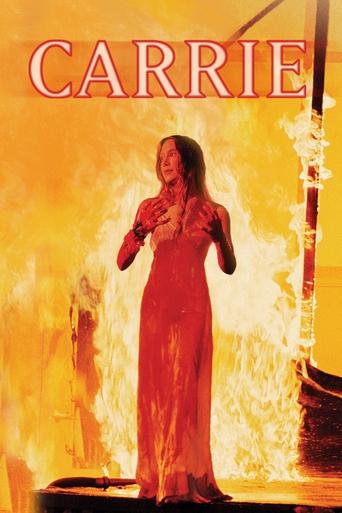
Carrie
Brian De Palma · 1976 · Film
85% shared signal

It Follows (OST)
Disasterpeace · 2014 · Record
88% shared signal
The Walten Files
Martin Walls · 2020 · Web series
87% shared signal
More lists like these: Movies like Carrie
Questions about Halloween 5: The Revenge of Michael Myers
The things people actually ask about this film, answered — including how it ends.
What happens at the end of Halloween 5: The Revenge of Michael Myers?
Loomis subdues Michael with a tranquilliser and a plank, then has a stroke. Michael is locked in a cell at the police station. A mysterious Man in Black attacks the station, killing Sheriff Meeker and his officers, and frees Michael. Jamie finds the empty cell and sobs, knowing he will come after her again.
Is Jamie evil in Halloween 5?
No. Halloween 4 ended with Jamie apparently attacking her foster mother, but this film keeps Michael as the killer. Jamie is mute and in a children's clinic, and instead of inheriting his evil she has a telepathic link to him. An earlier script with an evil Jamie was rejected by Moustapha Akkad.
Does Rachel die in Halloween 5?
Yes, early in the film. Michael stabs her, and her body is later found in the attic of the Myers house. Ellie Cornell was disappointed to be killed off and asked for her death, written as scissors forced down her throat, to be made less gruesome; it became a stab to the chest.
Who plays Michael Myers in Halloween 5?
Don Shanks, who also played the Man in Black. George P. Wilbur, Michael in Halloween 4, did not want to return to the role but worked as a stunt player on the film. The new, weathered mask was designed by Greg Nicotero.
Was Halloween 5 a box office success?
No. It grossed $11.6 million in North America against a $5.5 million budget, the lowest-grossing film in the franchise, and opened second behind Look Who's Talking. Reviews were generally negative, though some critics praised its gothic visuals and Danielle Harris's performance.
Does Halloween 5 connect to Halloween H20?
No. H20 ignores Halloween 4, 5 and The Curse of Michael Myers, so Jamie Lloyd does not exist in its timeline. The Man in Black and Thorn thread started here is resolved only in The Curse of Michael Myers in 1995.
These are ranked against Halloween 5: The Revenge of Michael Myers, not against you.
Build your own tape →