Film · 2022
Nope
Not a ship and not visiting. An animal, and looking at it is the thing that kills you.
54Strong to sit through, out of 100 — mostly how bleak it is
- PaceBuilds, then strikes44
- ThreatMostly supernatural20
- GoreShows some of it52
- ToneGrim, with air40
- RealityTilts unreal48
Era bias 78 · Modern. Texture rather than fear, so it is not part of the grade. All six scores →
The most supernatural horror movies ever made →
On VHSCREAM’s six-axis scale, Nope (2022) is most extreme on the threat axis: 20 out of 100, where 0 is a threat that is not human and 100 is human monsters. 20% of the 320 horror works we have scored come in lower on that axis. How we score →
Nope is a 2022 horror film written and directed by Jordan Peele. A brother and sister running a Hollywood horse ranch realise the thing in the cloud above their land is not a craft but an animal, and decide to film it. We score it 020 on the threat axis and 078 on era bias. The rule is that it eats whatever looks at it, and the film holds to that rule in every scene.
Scored and reviewed by VHSCREAM on · how we score
How scary is Nope, actually?
Scored against the published rubric, here is what the numbers mean for a viewer.
The threat at 020 is well into the supernatural end, and that needs explaining for a film with no ghost in it. 245 works score higher. This axis measures whether the danger can be reasoned with, and Jean Jacket cannot: no motive, no negotiation, no human agent. It sits beside Jaws and Alien rather than beside anything about people.
Era bias 078 is modern and lower than 2022 would suggest. 121 works score higher. The film was captured on large-format film stock with a great deal of practical work and night exteriors shot for real, which is a texture closer to the seventies than to its contemporaries. We score the image a work actually has rather than its release date.
Viscera 052 is middling and almost all of it is implied. 173 works score higher. The Gordy aftermath is glimpsed, the Star Lasso feeding is sound and silhouette, and the house gets rained on by blood rather than showing you a body.
Reality anchor 048 sits just under the midpoint. A ranch, a theme park, an electronics shop and a sky, all solid — with one impossible animal in it and no explanation offered for where it came from.
Pace 044 is on the dread side. 188 works are faster. Long stretches of two people watching a cloud, a very slow build to the first feeding, and perhaps five sudden events in two hours.
Tone 040 is bleak with real warmth in it. 67 works score higher. A great many people die horribly and the two leads survive, like each other, and win — which is more consolation than most things in this index offer.
On jump scares: few. The film's method is a shape that is already in frame and has not moved yet.
Who should skip Nope
Skip it if you want the tight Peele. This is his loosest film: a saggy middle, several arguments running at once, and a subplot about a camera operator that exists to deliver a theme.
Skip it if the Gordy sequence sounds unbearable. It involves a primate killing a television cast with a child present, it is the best thing in the film, and it is genuinely distressing. There is no version of watching Nope that skips it.
Skip it if animal death is a limit. Horses are taken repeatedly, on purpose, by both the creature and a man selling tickets.
Content notes: an extended animal attack on a television set with a child present, animal deaths including horses, a mass death staged as a feeding with audible screaming, a parent's death by falling debris, and injury to a child actor.
Watch it if you want the best monster design of the decade, a horror film that treats its creature as zoology, and ten minutes on a sitcom set that nobody who has seen them has forgotten.
Nope on six axes of fear
Every work in the index is scored on six continuous axes of fear. This is what Nope looks like as a vector — and what each ten-point band looks like across everything else we hold.
Draft score — awaiting human review. About these scores
Disagree with a number? Say so on the axis itself. Nobody has confirmed this vector yet, and a score you challenge goes to the top of the queue to be re-scored by a human. Votes do not move the numbers — they decide what gets looked at first. How the scoring works →
Scored against the published rubric. This vector is a draft awaiting review — the method is public so you can argue with it.
Nope: the review
An animal, not a visitor
The best decision in Nope is made early and held to the end: the saucer is a creature. It is territorial, it has a feeding ground, it does not want anything, and it cannot be communicated with any more than a shark can. Once the film commits to that, every scene reorganises around animal behaviour — OJ works out how to be around it the way he works out how to be around a horse, by not making eye contact and not startling it, and the climax is a hunt rather than a battle.
Its physiology is the other triumph. The thing eats and then it digests, and the house gets rained on by what it cannot use: keys, coins, bicycle parts, blood. Peele's monster has an inside. Very few creature features bother, and it is why the sequence of the Star Lasso audience being taken plays as a feeding rather than a massacre, which is considerably worse.
Gordy's Home
The flashback that everybody argues about is the film's actual subject. A chimpanzee on a 1998 sitcom set, a popped balloon, and a child actor under a table watching a shoe stand impossibly on its end while the animal kills the cast around him. It is the most frightening sequence Peele has filmed and it is not connected to the plot by causation. It is connected by thesis: the horror of an animal that was never a performer, and of an industry that will keep filming it, and of a survivor who concludes that the trick is to be the one the animal spares.
Jupe gets that lesson exactly wrong, which is what kills him and his audience. He thinks he was chosen; he was overlooked. And the film is quietly savage about the fact that the only person traumatised enough to build a theme park around his own near-death is also the only person who learned nothing from it.
Kaluuya, Palmer and the look of it
Daniel Kaluuya plays OJ almost entirely in the lower half of his face — a man who is better with animals than people and does not have a sentence to spare — and Keke Palmer plays Emerald as the opposite in every respect, which makes the two of them an unusually good double act. Hoyte van Hoytema shoots the ranch on large-format film at dusk and in the dark, and the film is genuinely beautiful in a way that works against the dread and then with it: the sky is where the horror lives, and the sky keeps looking like a landscape painting.
Where it strains
The middle sags. Antlers Holst arrives as a thesis in a jacket and most of the Fry's electronics material is the film buying time. The TMZ rider is a joke with a bad landing. And Nope has four or five different arguments about spectacle, extraction and looking, and spends enough time gesturing at each of them that none lands with the force of the Gordy sequence.
It is the loosest of Peele's three films and it contains his best ten minutes and his best monster. Those are not in competition.
The ending of Nope explained
The ending, in full. Open it when you have seen it.
The short answer: OJ and Emerald set up to photograph Jean Jacket with an analog hand-cranked camera in a well. OJ draws it out by letting it see him on horseback; Holst drives into it to get the shot and is eaten. Emerald lures it to Jupiter's Claim, gets the picture, and kills it by feeding it the giant inflatable Kid Sheriff balloon, which it cannot digest and which bursts inside it. OJ, who was last seen riding away, is still alive — the final shot has him standing in the park, visible from where Em is sitting.
Here is how the film gets there.
What is Jean Jacket?
A large, flat, aerial predator that lives in the cloud above Agua Dulce and has claimed the Haywood ranch as feeding territory. It is not a ship and there are no occupants. Em names it after a horse. It behaves like an animal throughout: it takes prey that looks at it, it defends a range, it hides in cloud, and it can be moved around by anything that resembles a challenge.
What are its rules?
Two, and the film plays fair with both. If you look at it, it takes you. And it cannot process inorganic material, so anything it swallows that is not meat comes back down — which is what killed OJ's father in the first scene, with a nickel, and what eventually kills the creature when it swallows a man-shaped balloon.
What is the Gordy's Home scene for?
It is the film's thesis rather than its plot. A chimp on a sitcom set is set off by a balloon and kills the cast; the child Jupe survives by being under a table, out of the animal's eyeline, and interprets his survival as having been spared rather than missed. The sequence argues that an animal is not a performer, that a camera will keep rolling anyway, and that the people who survive a spectacle tend to draw exactly the wrong conclusion from it. Everything Jupe does afterwards follows from that error.
Why does the Star Lasso Experience go wrong?
Because Jupe has been feeding the creature horses to make it appear on cue, and has concluded he has a working relationship with it. He sells tickets. When it arrives it takes the entire audience, Jupe included, and the film stages it as a single long swallow with the sound of people inside — the most effective thing in the back half, and almost entirely off-screen.
Does OJ survive?
Yes. The film is deliberately coy for a minute — he is last seen riding Lucky into the creature's path as bait, and the dust and the balloon take over — and then the final shot picks him out standing on the Jupiter's Claim road, looking back at his sister. Peele shoots it as an answer rather than an ambiguity.
What is the title about?
Refusal. "Nope" is what the film's survivors say to spectacle: it is the reaction of somebody who sees a thing worth filming and declines to go closer. Em and OJ spend the film trying to get a photograph of it anyway, which is the tension — the characters who refuse to look are the ones who live, and the plot requires them to look on purpose.
If Nope is your kind of fear
The eight works closest to Nope in the index on the five axes that describe fear, the same medium first — not by genre label, and not by what other people watched.
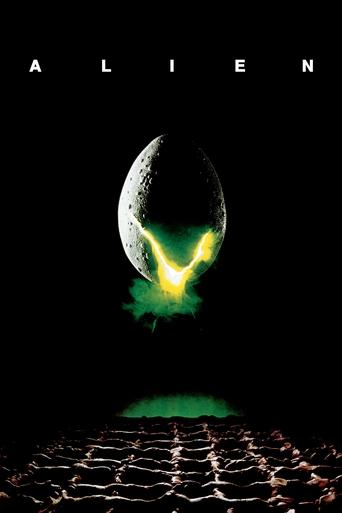
Alien
Ridley Scott · 1979 · Film
Shares a threat that is not human.
87% shared signal
Friday the 13th Part VII: The New Blood
John Carl Buechler · 1988 · Film
Shares a threat that is not human.
87% shared signal
The Ritual
David Bruckner · 2017 · Film
86% shared signal
Friday the 13th Part VIII: Jason Takes Manhattan
Rob Hedden · 1989 · Film
86% shared signal
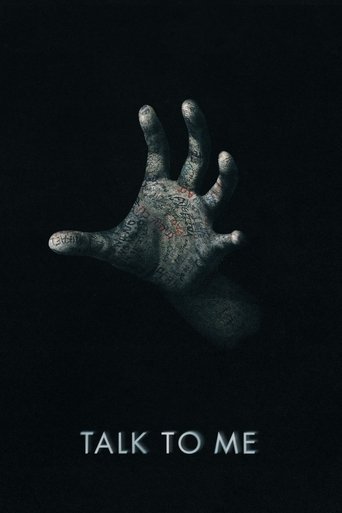
Talk to Me
Danny & Michael Philippou · 2022 · Film
86% shared signal
M3gan
Gerard Johnstone · 2023 · Film
85% shared signal
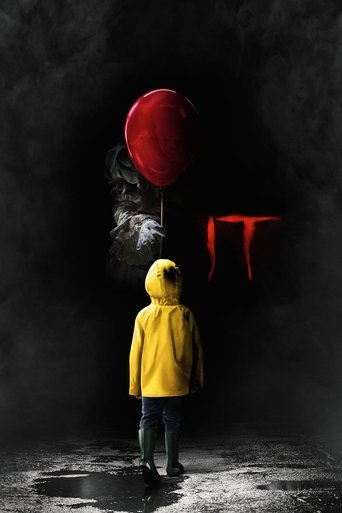
It
Andy Muschietti · 2017 · Film
85% shared signal
Prometheus
Ridley Scott · 2012 · Film
85% shared signal
See the full list of movies like Nope →
More lists like these: Movies like Alien · Movies like Talk to Me · Movies like It
Questions about Nope
The things people actually ask about this film, answered — including how it ends.
What is Jean Jacket in Nope?
An aerial predator, not a spacecraft. It lives in the cloud above the Haywood ranch, treats the valley as feeding territory, takes anything that looks directly at it, and cannot digest inorganic material. Emerald names it after a horse the family once owned.
How does Nope end?
Emerald lures the creature to Jupiter's Claim, photographs it with a hand-cranked well camera, and kills it by letting it swallow the giant inflatable Kid Sheriff, which bursts inside it. Holst is eaten getting his shot, and OJ is revealed alive in the final image.
What does the Gordy's Home scene mean?
It is the film's argument rather than its plot: an animal is not a performer, a camera will keep filming either way, and Jupe survives by being out of the chimp's eyeline and then spends his life believing he was chosen. That mistake is what kills him and his audience.
Does OJ die in Nope?
No. He rides out as bait and the film withholds him for about a minute, then shows him standing on the road at Jupiter's Claim in the closing shot. Peele treats it as a resolution, not an ambiguity.
Is Nope a horror movie or science fiction?
Horror, on our reading, and we score it as such. The creature functions as an animal with no motive, which puts it at 020 on our threat axis — the same end of the scale as Jaws — and the film's set pieces are built as predation rather than as contact.
Why is it called Nope?
It is the sound of refusing a spectacle. The people who decline to look are the ones who survive, and the plot's tension is that its heroes need a photograph and therefore have to look on purpose.
What should I watch after Nope?
Jaws for the animal that behaves like an animal, Us for the other half of Peele's argument about what is kept out of sight, and the creature tag for everything here built around a thing rather than a person.
These are ranked against Nope, not against you.
Build your own tape →