Film · 2015
The Invitation
Karyn Kusama
A dinner party where the host has news, and two hours of hoping you are wrong.
64Hard going to sit through, out of 100 — mostly how bleak it is
- PaceSlow burn30
- ThreatPeople, entirely92
- GoreShows some of it45
- ToneNo relief at all12
- RealityCould happen8
Era bias 85 · Thoroughly modern. Texture rather than fear, so it is not part of the grade. All six scores →
Horror movies where the monster is a person →
On VHSCREAM’s six-axis scale, The Invitation (2015) is most extreme on the threat axis: 92 out of 100, where 0 is a threat that is not human and 100 is human monsters. 89% of the 320 horror works we have scored come in lower on that axis. How we score →
The Invitation is a 2015 American film directed by Karyn Kusama, in which a man returns to his former home for a dinner party thrown by his ex-wife and her new husband. We score it 092 on the threat axis — 23 works in an index of 320 score higher — and 008 on reality anchor, because nothing in it is supernatural and everything in it is a decision somebody made.
Scored and reviewed by VHSCREAM on · how we score
How scary is The Invitation, actually?
Scored against the published rubric, here is what the numbers mean.
Threat 092 is far toward the human end — 23 works score higher. There is no entity and no ambiguity. Everybody who dies is killed by a dinner guest.
Reality anchor 008 ties the grounded floor of the index, shared with Lake Mungo, and 318 works sit above it. Nothing in the film departs from the possible for a second.
Tone 012 is bleak — 60 works score lower. Two people live, and the last shot takes the comfort back.
Pace 030 is on the dread side, with 74 works slower. Ninety minutes of dinner, then twenty of consequence.
Viscera 045 is just below the midpoint. The violence is sudden, close and mostly brief.
On jump scares: essentially none. The film's method is social discomfort held past the point of politeness.
Who should skip The Invitation
Skip it if slow-burn means slow to you. The film is a dinner party for most of its runtime and the pleasure is in watching people be polite.
Skip it if child bereavement is too near. Ty's death is the engine, returned to in flashback throughout.
Watch it for Kusama's staging, for Pruitt's monologue, and for one of the best final shots on this shelf. If you want the same paranoia with the question answered much earlier, Kill List is the harder companion; Session 9 is the better match for a man whose reliability is the real subject.
The Invitation on six axes of fear
Every work in the index is scored on six continuous axes of fear. This is what The Invitation looks like as a vector — and what each ten-point band looks like across everything else we hold.
Where that puts it: joint #1 grounded
Draft score — awaiting human review. About these scores
Disagree with a number? Say so on the axis itself. Nobody has confirmed this vector yet, and a score you challenge goes to the top of the queue to be re-scored by a human. Votes do not move the numbers — they decide what gets looked at first. How the scoring works →
Scored against the published rubric. This vector is a draft awaiting review — the method is public so you can argue with it.
The Invitation: the review
A film that spends two hours asking whether the man at the centre of it is unwell or correct, and does not cheat on the answer.
Will and his girlfriend Kira drive up into the Hollywood Hills for dinner at the house Will used to live in. Eden, his ex-wife, has invited old friends. Eden and Will had a son, Ty, who died; the marriage did not survive it. She has since been to Mexico, met David, and come back calm.
Kusama's control of the first ninety minutes is the reason the film has the reputation it does. Everything that unsettles Will is also completely explicable: the doors are locked because it is a nice house in the hills, the stranger in the bedroom is a guest who is tired, the group video is embarrassing in the way that group videos are, and Eden's serenity is what people who have found something look like. Meanwhile Will is drinking, wandering off, opening cupboards, and remembering his son in flashes that the film gives him unbidden.
The grief is the horror
What the film is actually about is two responses to an unbearable thing. Will has carried it; Eden has handed it to somebody who promised to take it. The film is careful to make Eden's version attractive — she is not stupid, she is not drugged, and what she says about pain is the thing anyone in pain wants to hear.
Tammy Blanchard plays her with a brittleness just under the calm, and Logan Marshall-Green plays Will as a man whose judgement cannot be trusted on anything except, possibly, this. The dinner party itself is a small triumph of staging: eleven people in a few rooms, shot so you always know where everybody is, so that when somebody is missing you feel it before the film tells you.
Where it frustrates
The final act, once it arrives, is swift and comparatively ordinary — a conventional sequence of violence in a house, well executed, after ninety minutes of something far rarer.
Pruitt's confession, delivered in one unbroken take, is the best scene in the film and it also hands the audience certainty a good twenty minutes before Will gets it.
The ending of The Invitation explained
The ending, in full. Open it when you have seen it.
What happens at the end of The Invitation?
The toast is the signal. The wine is poisoned, and the plan is for everyone in the house to die together. Will knocks the glass out of Kira's hand before she drinks and the evening comes apart. Several guests are killed, Pruitt and David among the killers; Eden, who has already taken the poison, shoots herself when Will refuses to go with her. Will and Kira survive and make it out to the terrace.
Then Will sees a red lantern burning on the porch, and the camera lifts to show the hills: red lanterns on house after house, all the way down into Los Angeles.
What do the red lanterns mean in The Invitation?
That it was not one dinner party. Every house with a lantern lit is another cell of the group doing the same thing on the same night, and the lantern is the signal that it is done.
It recontextualises the whole film in a single shot. For two hours the question has been whether Will is a paranoid man ruining an evening. The answer turns out to be that he was right, that being right saved two lives, and that it changes nothing — the thing he spotted was happening in parallel across a city, to people with no one at their table drinking too much and opening cupboards.
Was Will right the whole time?
Yes, and the film is scrupulous about how little credit that earns him. Every individual observation he makes is explicable and he is wrong about several specifics. His warning is delivered badly, at the worst moment, by the least credible person in the room.
What the film is interested in is that correctness and credibility are different properties, and that grief destroys the second one while leaving the first intact.
What is The Invitation group?
A grief cult. Eden and David met it in Mexico; it teaches that pain is optional and can be set down, and it offers a demonstration — the video the guests are shown, in which a woman dies apparently willingly and without distress. Pruitt, who killed his wife, has been forgiven by it.
The film never gives it a theology beyond that. What it sells is relief, and everyone in the house who accepts the offer is someone with something they cannot carry.
Why does Eden shoot herself?
Because the plan required her to die and she has already begun. When Will refuses to come with her, the last thing holding her to the room is gone. It is staged as the film's most intimate moment — the two of them on a bed, in the house where their son lived — and it is the only death in the film that is not rushed.
If The Invitation is your kind of fear
The eight works closest to The Invitation in the index on the five axes that describe fear, the same medium first — not by genre label, and not by what other people watched.
It Comes at Night
Trey Edward Shults · 2017 · Film
Shares human monsters.
91% shared signal
The Strangers
Bryan Bertino · 2008 · Film
Shares grounded realism.
89% shared signal
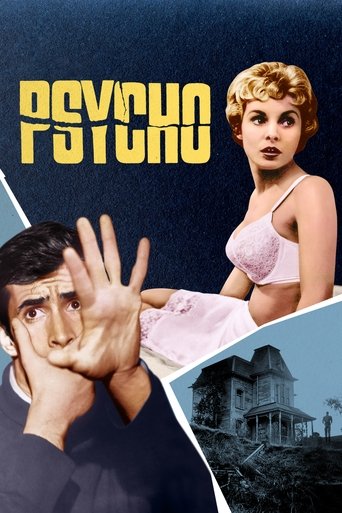
Psycho
Alfred Hitchcock · 1960 · Film
Shares a bleak, unforgiving tone.
81% shared signal
Hush
Mike Flanagan · 2016 · Film
Shares human monsters.
80% shared signal
Halloween Ends
David Gordon Green · 2022 · Film
Shares grounded realism.
79% shared signal
Goodnight Mommy
V. Franz & S. Fiala · 2014 · Film
Shares slow-burn dread.
79% shared signal
Halloween
David Gordon Green · 2018 · Film
Shares a bleak, unforgiving tone.
79% shared signal
The Hills Have Eyes
Wes Craven · 1977 · Film
77% shared signal
More lists like these: Movies like Psycho
Questions about The Invitation
The things people actually ask about this film, answered — including how it ends.
What do the red lanterns mean at the end of The Invitation?
Each lit lantern is another house where the same group has carried out the same plan that night. The closing shot pans across the Hollywood Hills showing dozens of them, revealing that the dinner party Will disrupted was one cell of many acting simultaneously.
What happens at the end of The Invitation?
The toast is poisoned. Will knocks the glass from Kira's hand and the evening collapses into violence; several guests are killed by the hosts. Eden, who has already drunk, shoots herself. Will and Kira escape, and then see red lanterns burning across the city.
Was Will right in The Invitation?
Yes. Every suspicion he voices is individually explicable and he is wrong about details, but his central read is correct and it saves two lives. The film's point is that being right and being believed are separate things, and grief had already cost him the second.
What is the group in The Invitation?
A grief cult Eden and David joined in Mexico, which teaches that pain can be set down and demonstrates it with a video of a member dying willingly. It has no theology beyond relief, and every member shown is someone carrying something unbearable.
Why does Eden kill herself in The Invitation?
The plan required her death and she had already taken the poison. When Will refuses to leave with her, nothing is holding her in the room. It is the film's most intimate scene, staged on a bed in the house where their son lived.
Is The Invitation supernatural?
No. We score it 008 on reality anchor, near the grounded floor of the index. There is no entity, no curse and no ambiguity about cause — every death is caused by a person with a weapon or a glass of wine, acting on a decision.
These are ranked against The Invitation, not against you.
Build your own tape →